
BUENOS AIRES – When Middle Eastern supply disruptions drove Brent crude north of $100 a barrel last week, the arithmetic for crude traders pointed toward continued scarcity. On Tuesday, Argentina’s energy secretariat offered the market a partial offset it had not been pricing in.
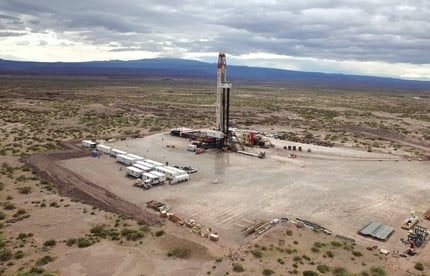
Argentina confirmed its highest monthly oil output on record, a milestone the secretariat attributed to the Vaca Muerta shale formation in the Neuquén province of northern Patagonia. The record arrives two and a half years into President Javier Milei‘s deregulation campaign, which has treated energy export expansion as the most structurally important component of his government’s attempt to rebuild Argentina’s hard-currency earnings and address its obligations to the International Monetary Fund.
The formation responsible has always carried a certain mordant quality in its name. Vaca Muerta, Spanish for “dead cow,” spans roughly 30,000 square kilometres of wind-scoured Patagonian plateau, yet by any geological measure it is among the most productive shale deposits on earth. Argentina’s energy secretariat ranks it as the world’s second-largest shale gas reserve and fourth-largest shale oil deposit, positions that have drawn a roster of major international operators: YPF (NYSE: YPF), the state-controlled company that holds the largest basin position; Shell, TotalEnergies, and Chevron, which first committed to the formation under a landmark joint-development agreement more than a decade ago and has maintained its operations through Argentine political cycles that tested most foreign investors’ patience.
The timing of Tuesday’s announcement matters beyond Argentina’s fiscal calendar. Brent crude topped $100 a barrel last week after Houthi drone strikes escalated against Saudi shipping in the Red Sea, and sustained uncertainty over Iranian export volumes has kept the global market in a defensive posture for months. In that context, incremental barrels from a stable, non-OPEC Atlantic-basin producer carry weight that goes beyond Argentina’s market share. The country is not in a position to single-handedly move the price; what it can do is alter the ceiling that traders place on how tight supply can become. A record-setting production trajectory does exactly that.
The Milei government has pursued the policy conditions for this outcome methodically. Earlier this month, the energy secretariat enacted Resolution 166/2026, a measure that eliminates a decades-old requirement forcing producers to offer hydrocarbons on the domestic market before receiving export authorisation. The new framework collapses three overlapping regulatory instruments, some dating back more than 30 years, into a single notification-based system with a centralised Export Operations Registry. It aligns with the Ley Bases, the government’s foundational deregulation law, and reflects Milei’s broader position that hydrocarbon producers should be treated as commercial actors operating in global markets, not as suppliers managed in service of domestic price stability.
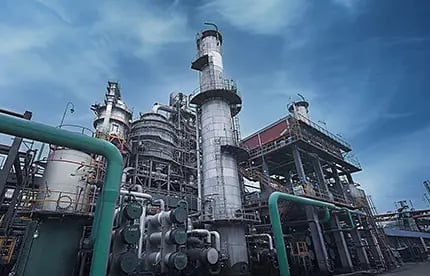
YPF has been the most direct beneficiary of that policy shift. Under chief executive Horacio Marín, the company has accelerated its Vaca Muerta drilling programme while advancing the more capital-intensive ambition of an LNG export terminal on Argentina’s Atlantic coast, a project designed to open a pipeline-independent route to European and Asian gas buyers. Shell and TotalEnergies have deepened their basin commitments through joint development arrangements with YPF. Chevron’s sustained presence in the basin, maintained across Argentine governments that ranged from investment-friendly to openly hostile to foreign capital, has given Milei’s team a ready-made argument that Vaca Muerta’s geology ultimately outlasts whatever ideological cycle a particular administration runs.
Whether the record output announced Tuesday can be sustained and expanded is a question the basin’s operational history answers only partially. Productivity per well has been improving steadily as operators apply longer laterals and more sophisticated completion designs borrowed from the mature shale plays of Texas and Pennsylvania. The limiting factor is not underground. The pipeline network connecting Neuquén to the Atlantic coast and Buenos Aires has operated near capacity for the better part of a year. New liquids-pipeline projects are in development, but their permitting timelines have a history of compressing on paper and extending in practice. LNG export infrastructure remains years from first cargo. Those gaps are not terminal constraints, but they are the ceiling that determines how quickly Argentina converts Vaca Muerta’s geological endowment into barrels at port.
The fiscal context adds a second layer of pressure that the record output does not dissolve. Argentina’s IMF programme, the largest in the Fund’s history, requires consistent dollar inflows to service a debt load that previous administrations accumulated and Milei inherited. Oil revenues flowing through YPF’s books and into the federal treasury are one of the few direct mechanisms available to generate those inflows through productive activity rather than through the currency interventions and money-supply expansion that Milei has explicitly ruled out. The tension between accumulating the reserves the IMF expects and sustaining the capital investment needed to keep production climbing is real. A record month narrows that gap; it does not eliminate it.
What Tuesday’s announcement does establish is that the central question about Vaca Muerta has changed. Whether the formation was capable of producing at scale was the question that defined its development decade. That debate is over. The open questions now sit outside the reservoir: in pipeline capacity, in LNG terminal construction schedules, in the reliability of a regulatory framework that has changed course under every Argentine government in living memory. The record output answers one set of questions. The harder ones are still being written.