REDMOND — When Alphabet Inc. reported strong cloud results last week and watched its stock fall anyway, the message from investors was plain: show how AI spending converts into revenue. On Wednesday, Microsoft Corp. MSFT did.
Azure, the company’s cloud division, grew 43 percent in the fiscal fourth quarter ended June, beating analyst estimates of roughly 40 percent, and crossed $100 billion in annual revenue for the first time. Shares rose in after-hours trading, a result that stood out against the punishing declines that followed Alphabet Inc. GOOGL and Meta Platforms Inc. META on their own earnings nights this season.
Total fourth-quarter revenue came in at $90.0 billion, an 18 percent increase from a year earlier and roughly $2.4 billion ahead of consensus estimates. Non-GAAP diluted earnings per share of $4.74 beat expectations by fifty cents.
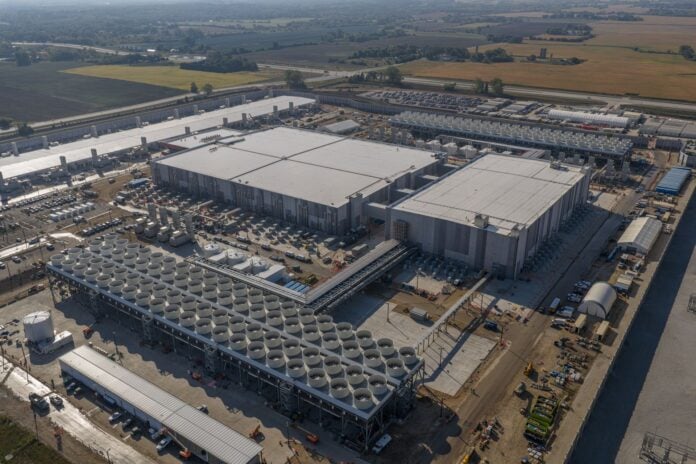
The figure investors focused on was neither the revenue beat nor the Azure growth rate. Microsoft’s commercial remaining performance obligation (contracted revenue that has been sold but not yet recognized) jumped 84 percent to $678 billion, a figure that functions as a forward order book. It tells the market that Microsoft’s $41 billion in quarterly capital expenditure is not a leap of faith: there is already demand committed for the infrastructure being built. Nadella told analysts the company was “advancing the frontier on the cost-to-outcome curve, ensuring every customer can turn tokens into business results,” according to Microsoft’s investor relations disclosure.
The backlog argument has a limit. Microsoft has not disclosed how much of Azure’s 43 percent growth comes from OpenAI workloads, which run exclusively on Microsoft infrastructure under a compute partnership. That relationship gives Azure a concentrated demand source that competitors cannot access, but it also means the growth rate carries a concentration risk the backlog number does not surface. Investors treating the $678 billion figure as a floor for future revenue would need to know how much of it is tied to a single customer whose own commercial trajectory remains an open question.
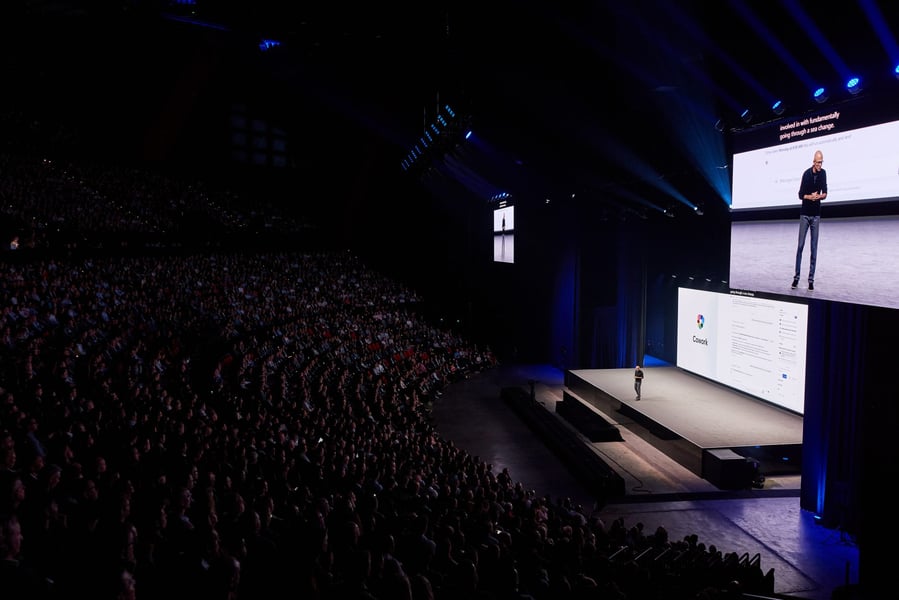
Microsoft 365 Copilot, the company’s AI assistant for enterprise software, crossed 30 million paid seats. Microsoft described adoption as genuine deployment rather than trial use but did not break Copilot revenue out as a standalone line item, making it impossible to verify from the outside what the feature is contributing to Intelligent Cloud’s 32 percent revenue growth. That undisclosed number is one of two key variables the quarter leaves unresolved.
The Intelligent Cloud segment (which houses Azure) generated $39.3 billion in the quarter, a 32 percent increase. Productivity and Business Processes (Office, LinkedIn, Teams) produced $37.8 billion, up 14 percent. More Personal Computing (Windows, devices, Xbox) declined 4 percent to $12.9 billion, extending a run of quarters in which the consumer hardware business has become a modest drag as enterprise cloud investment accelerates on both growth and margin.
For the full fiscal year 2026, Microsoft recorded $331.8 billion in revenue, up 18 percent, and operating income that exceeded $155 billion, a 21 percent increase from fiscal 2025. Microsoft Cloud revenue for the full year reached $214 billion. The figures reflect a company that has restructured itself so thoroughly around cloud and AI that consumer divisions, once its defining identity, now account for the smallest revenue share and the only segment that contracted in the quarter.
This earnings season’s split verdict on AI capital expenditure has been unusually visible. Alphabet’s Q2 results included 82 percent cloud growth and a top-line beat, but management could not explain how $195 to $205 billion in 2026 capital expenditure connects to specific AI revenue, driving shares down more than 5 percent after hours. Eastern Herald reported at the time that the capex announcement overshadowed the cloud performance entirely. Microsoft’s answer was the backlog: before the spending lands on the income statement, the revenue it will generate is already contractually committed.
The demand side of that story has independent confirmation. Intel’s AI datacenter revenue grew 59 percent in Q2 as cloud providers accelerated hardware orders, reflecting the same buildout Microsoft is funding at scale. The question is no longer whether AI cloud infrastructure is in demand but whether each provider can translate that demand into attributable, visible revenue before the market runs short of patience for the spending levels involved. On Wednesday, Microsoft produced the clearest evidence yet that it can.
Microsoft returned $10.2 billion to shareholders through dividends and repurchases in the quarter. Shares traded at approximately $400 after hours, up roughly 2.5 percent from Wednesday’s close, a response that measured how much the market had wanted a straightforward beat in a week that had mostly produced complicated ones.