
ARLINGTON – The Texas Rangers got to work Wednesday, not by joining the bidding war for Tarik Skubal or Mason Miller, but by going in the other direction entirely. They traded a 19-year-old infielder nobody outside a Low-A scouting report had heard of for two major leaguers, and the most instructive part of the transaction was what it cost them.
With four days until the August 3 trade deadline, Texas became the first team to complete a confirmed acquisition of the pre-wire period, picking up catcher Logan O’Hoppe and right-handed reliever Chase Silseth from the Los Angeles Angels in exchange for infield prospect Angel Arredondo. The deal is small by any measure the market uses. It is also the most honest window into how the Rangers intend to navigate the next 96 hours.
Texas holds a 1.5-game lead in the AL West and limited payroll flexibility. Interim Los Angeles general manager John Mozeliak, who spent 16 years building Cardinals teams before arriving in Anaheim 11 weeks ago, handed over two controllable major leaguers for a teenager. That asymmetry is not a negotiating mistake. It is a statement about where the Angels believe they are and, by extension, what they think the rest of the league will pay for what they still have to offer.
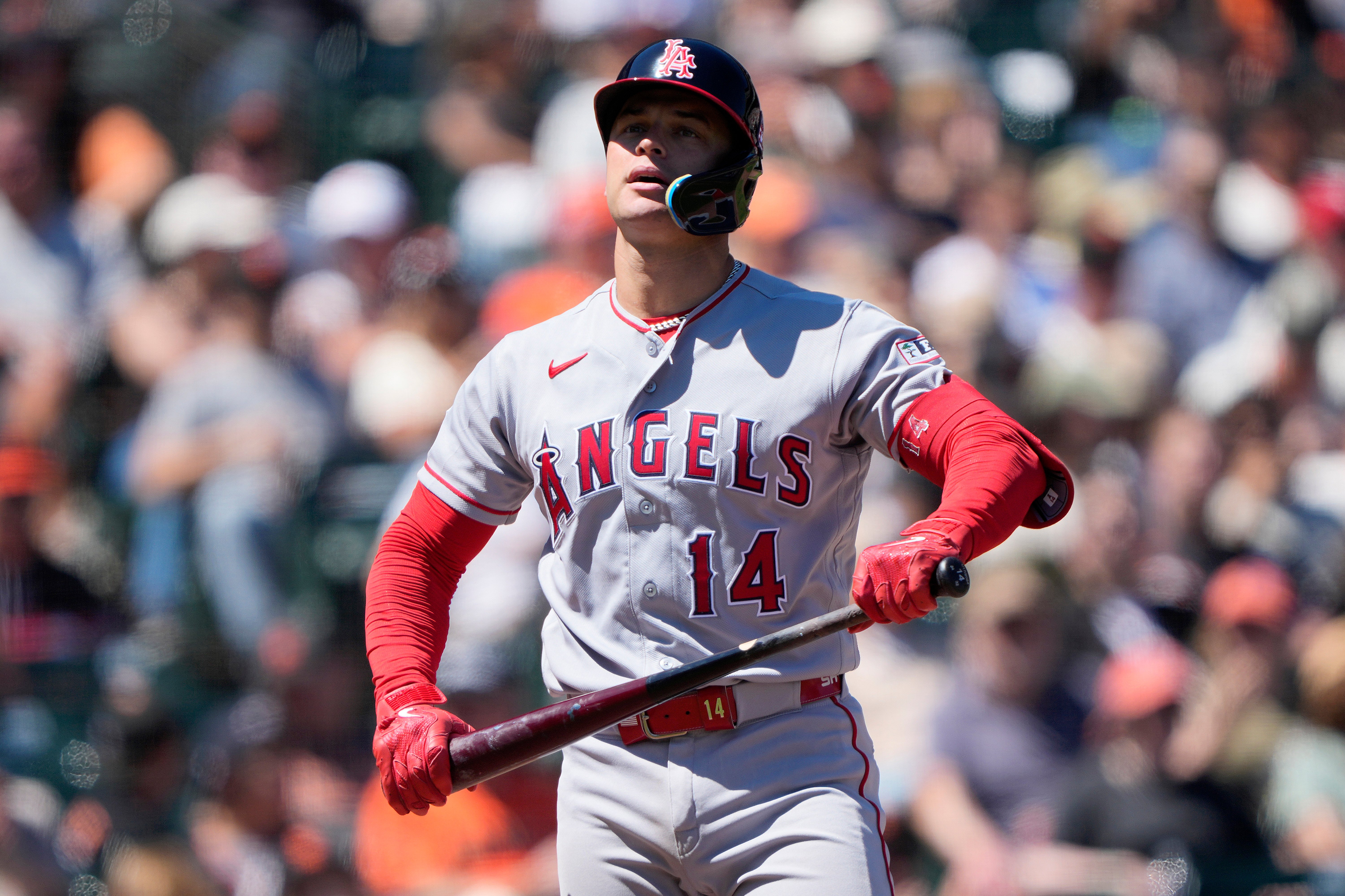
O’Hoppe, 26, is the more complicated piece. He was one of the more interesting young catchers in the American League as recently as 2024. This season he is batting .209 with four home runs across 256 plate appearances, most of which came after a foul-tip wrist fracture in April. The injury suppressed his exit velocity to 86.9 mph and stripped the contact quality that made him project as something worth holding. The Rangers moved Danny Jansen and Jose Corniell to the 60-day injured list to create space for him, a detail that explains why they needed a catcher at this price and how they were positioned to absorb one. Whether O’Hoppe’s wrist heals on its own timeline or whether this represents a permanent change in his production is the question Texas has acquired and will now answer on its own terms.
Silseth is cleaner. The right-hander posted a 2.72 ERA across 47 appearances this season, working with a 96 mph fastball and a plus splitter that generated a 14.1 percent swinging-strike rate. His control is real work: he walked nearly 13 percent of batters faced, a number that will need to improve for the Rangers to deploy him in high-leverage situations. At pre-arbitration rates with four-plus years of team control, he is the kind of depth acquisition contenders make in the weeks before a trade window and rarely announce loudly.

The Angels, receiving only Arredondo in return, offloaded roughly $846,000 of O’Hoppe’s $2.625 million arbitration salary and cleared space on a roster they are no longer trying to fill with veterans. Mozeliak had said before this trade that Los Angeles remains open to discussing other controllable pieces, including starter Reid Detmers, closer José Soriano, and shortstop Zach Neto, as CBS Sports detailed in its pre-deadline breakdown of the market’s most significant available players. If Mozeliak was willing to accept a Low-A infielder for two controllable major leaguers, the asking price on those names will depend entirely on which contenders run out of alternatives before Sunday and how badly they want to pay.
That pressure is already visible in the market around them. The Cubs are circling Dustin May from the Cardinals, whose teammates wrapped their arms around the right-hander in the dugout Wednesday in what the broadcast booth immediately named “hug watch,” with Chicago reaching into its prospect pool to add rotation depth before Sunday. The Miami Marlins, sitting just two games out of a wild card spot after a 12-game losing streak upended their summer, are fielding offers on shortstop Otto Lopez, the batting-average leader in baseball, with the Boston Red Sox already in contact.
None of those conversations include the Rangers at their most expensive. Texas is not paying the price Skubal will cost. The two-time American League Cy Young Award winner from Detroit may represent the most coveted rental arm available at any trade deadline in recent memory, and the bidding for him has reached an altitude that budget-constrained contenders cannot easily navigate. CBS Sports analyzed how Detroit’s own improving position in the standings is complicating the decision to move him at all. The Rangers, leading their division by 1.5 games, made the alternative calculation: two controllable pieces for a Low-A teenager is a trade that works whether they finish first or third.
The discipline in that choice is either wisdom or limitation, depending on what October produces. The Angels enter the final four days of the window with a 19-year-old infielder and a clearer sense of what this version of the organization is willing to acknowledge about itself. Mozeliak spent 16 years in St. Louis making slow, deliberate decisions that produced a sustained contender. He has been in Anaheim for 11 weeks.
What comes next on the Angels’ side, whether Soriano or Neto or Detmers follow O’Hoppe and Silseth to other addresses before Sunday’s 4 p.m. Eastern wire, is what the market cannot answer until it happens. The Rangers have done their part. Whether that part is enough is a question they will answer somewhere after the regular season ends.
Related Posts