NEW YORK — Somewhere in their early 40s, many people report an unexpected shift: the self-doubt that once shadowed every major decision begins to quiet, replaced by something steadier and harder to rattle. They become more difficult to argue with, more settled into what they actually think. Astrology has tracked this progression across cultures for centuries, arguing not that everyone peaks young but that each zodiac sign carries its own power timeline, and for a significant portion of the 12, the most formidable chapter has not yet arrived.
The 12 signs are not equal in their relationship to time. Some frontload their gifts: the sheer speed of Aries, the magnetism of a young Leo, the verbal brilliance that Gemini deploys before it has fully worked out what it believes. Others are structured by their ruling planets and elemental natures to deepen slowly, to build the kind of authority that cannot be performed because it can only be accumulated. Understanding which category your sign falls into means, according to those who study these patterns closely, measuring yourself against the right clock rather than someone else’s.
Fire signs, which include Aries (March 21–April 19), Leo (July 23–August 22), and Sagittarius (November 22–December 21), are the zodiac’s most visible early performers. Aries moves fastest, claiming territory before others have processed the map. Leo commands rooms before it fully grasps the politics inside them. Sagittarius reaches conclusions ahead of the evidence that might support them.
None of that stays static. Fire signs refine. The Aries who once charged without calculation learns, after enough walls, to time the charge and becomes the kind of leader who is formidable precisely because they have already survived what would have stopped someone else. Leo’s need for recognition, which can look like vanity at 22, transforms over decades into the ability to make others feel genuinely seen, a form of influence that compounds in ways pure magnetism never could. Sagittarius is perhaps the most time-dependent of the three: its grand theories about how the world works grow less reckless as the world cooperates or refuses to cooperate in instructive ways. A Sagittarius at 55 is, by most astrological accounts, considerably more dangerous in an argument than at 25.
Earth signs, encompassing Taurus (April 20–May 20), Virgo (August 23–September 22), and Capricorn (December 22–January 19), are the zodiac’s most unambiguous late bloomers. Their power is structural: built, accumulated, and compounded rather than performed.

Capricorn is the defining example, and Saturn, its ruling planet, explains why. In traditional astrology, Saturn governs discipline, delay, and mastery through time; it is the structural antithesis of quick reward. Capricorn natives frequently describe their 20s as years of sustained labor without proportionate recognition, and their 40s as the decade when the accounts begin to settle. The astrological cycle rests on a real orbital fact: NASA puts Saturn’s circuit of the Sun at about 29.4 Earth years, which is why the planet returns to its natal position near ages 28 to 30 and again near 58 to 60. Astrologers have long identified those two transits, the Saturn Returns, as inflection points where accumulated Capricorn effort either pays forward or delivers hard instruction. What the tradition does not explain is why an orbital period should govern a human biography at all, and it has never seriously tried to.
Taurus builds differently, through material stability, trusted relationships, and creative output that deepens with each decade of investment. Virgo’s authority is epistemic, growing from expertise and from the precision that only arrives after long immersion in a subject. A Virgo who has spent 25 years working deeply in a single field tends to be among the most genuinely formidable people in it, even when their manner of presenting themselves makes that easy to underestimate.
Air signs, comprising Gemini (May 21–June 20), Libra (September 23–October 22), and Aquarius (January 20–February 18), accumulate power through knowledge and connection. Their gifts can resemble performance before they have enough experience behind them to turn into something durable.
Gemini at 20 has read everything. Gemini at 50 has read everything and lived through enough of it to know which parts were true. The integration of breadth with depth is what distinguishes a Gemini at the height of their influence from one still in early orbit. Libra’s power, fundamentally relational and built on the ability to hold competing truths without collapsing into either side, becomes most apparent when the stakes are high enough to require it. In their 40s and 50s, Libras often emerge as the people others reach for when they cannot see a way through. Aquarius tends to find that history catches up to what it already knew: ideas that seemed eccentric at 30 acquire a different quality at 55, when the world has had time to demonstrate that they were not wrong, only early.

Water signs, including Cancer (June 21–July 22), Scorpio (October 23–November 21), and Pisces (February 19–March 20), build power through emotional intelligence, which is among the most dramatically undervalued capacities in youth.
Cancer’s protective instincts are frequently mistaken for sentimentality when the person is young, and recognized as wisdom only later, when the things they chose to protect turn out to have been worth the effort. Scorpio is the sign most explicitly associated with transformation and with the kind of power that regenerates itself after serious loss, which means, by the logic of its nature, that it requires something to have survived before it fully arrives. A Scorpio in their late 20s carries the intensity. A Scorpio at 47 carries the intensity plus the strategic patience, and that combination is a different category of formidable. Pisces deepens in perception rather than in tactical power; its authority is spiritual and creative, and it tends to mature in direct proportion to how stubbornly the person has refused to let the world flatten their inner life.
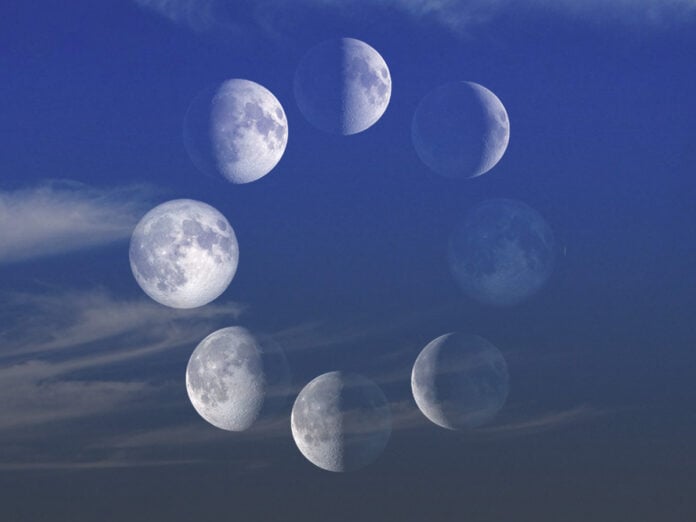
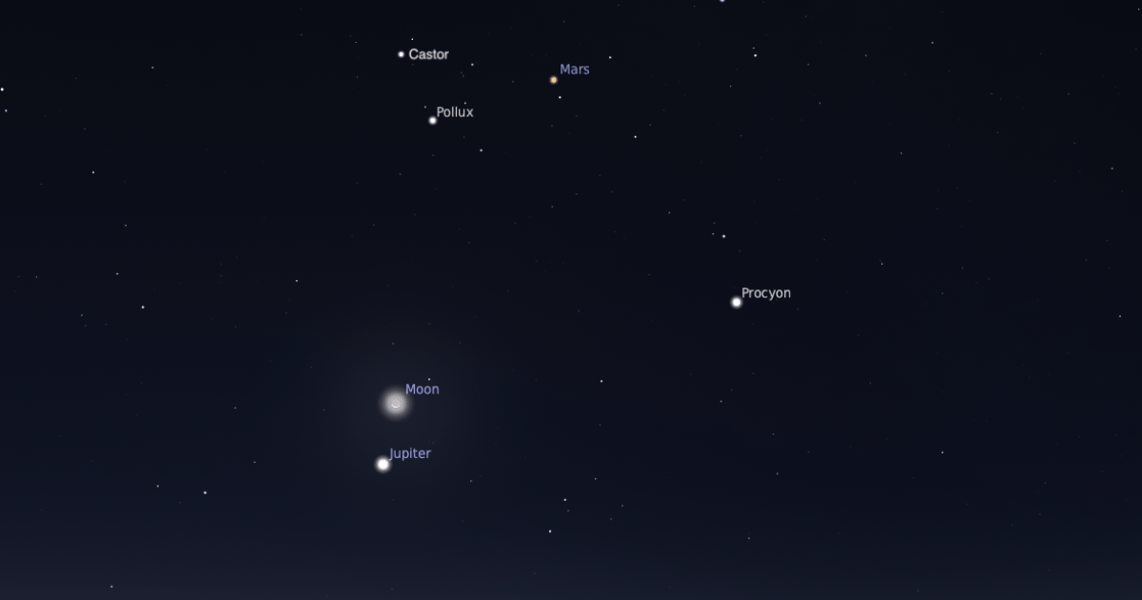
The sky over the past week has been running the same argument in miniature. Leo season has been dominated by the total solar eclipse at 20 degrees of Leo on August 12, an event NASA tracked from Greenland to Spain and, the agency said in announcing its coverage, studied with a WB-57 research aircraft flying above the corona. Three days later the chart had slowed to almost nothing: a 43-hour void Moon held the day flat until the Moon crossed into Libra in the evening. Fire’s urgency, then the slower architecture that is supposed to make that urgency last. The signs read the second half as the more consequential one.
What astrological tradition consistently refuses is the premise that power tracks a single trajectory shared by all 12 signs. The signs most likely to be described as prodigies at 23 are frequently the ones whose most demanding decades are still ahead. The quieter ones, working steadily in the background toward something that will require decades to be legible, have timelines their noisier peers cannot read from the outside.
There is no empirical test for any of this. Astrology does not offer one and has never pretended to, and the psychological literature has a competing account of why a horoscope reads as though it were written for one person that requires no planets at all. What the tradition offers instead is a framework for patience: the possibility that the distance between where you are and what you could become is not a failure of timing but a feature of your particular design. Whether that framing settles or unsettles you, astrologers would note, says something about your sign.