
DHAKA — In November 2025, a car bomb detonated near the Red Fort in New Delhi, killing eleven people. United Nations investigators who tracked the attack to Al-Qaida in the Indian Subcontinent said the group’s footprint in Bangladesh is now the most important fact in understanding what comes next.
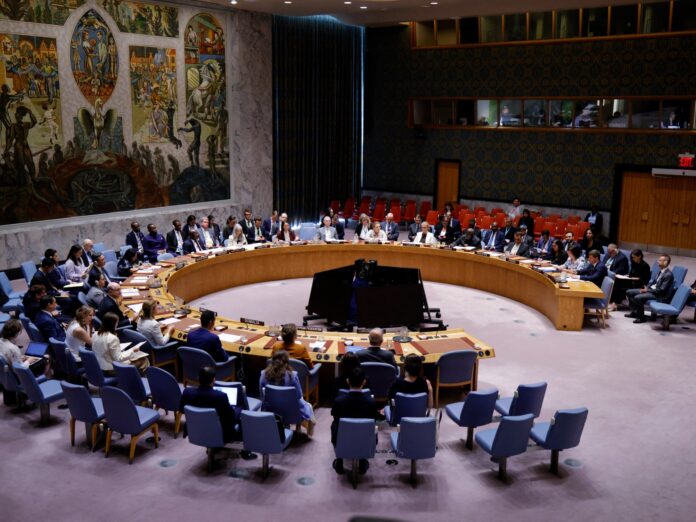
The warning appeared in the 38th report of the UN Security Council’s Al-Qaida and ISIL Monitoring Team, released on August 10. The team told the Security Council that AQIS is “aggressively trying to exploit the current conditions in Bangladesh to build its terrorist networks” in the country. The language was precise and the assessment was alarming: 1,611 militants are reportedly active in Bangladesh, and more than 370 individuals charged under counter-terrorism statutes remain at large.
What makes the report more than a routine warning is the way it describes AQIS’s structure. The group is not organizing itself as a single large network in Bangladesh, the monitoring team found — it is operating through small, dispersed cells specifically to avoid detection. The team framed this not as a sign of weakness but as a sign of sophistication: AQIS is transitioning, it said, “into stronger regional terrorist entities,” using Bangladesh to expand its financial and logistical reach across the Indian subcontinent.
The political context into which the warning landed makes it harder to act on, not easier.
Tarique Rahman was sworn in as Prime Minister on February 17, after the Bangladesh Nationalist Party won a two-thirds majority in parliamentary elections. Al Jazeera reported that President Mohammed Shahabuddin administered the oath at the parliament building’s South Plaza, a break with long precedent. Rahman was returning from nearly 17 years of self-imposed exile in the United Kingdom — a period that followed the BNP’s last time in power, from 2001 to 2006, during which his party governed in coalition with Jamaat-e-Islami.
That coalition is central to his current problem. The Jamaat secured roughly one-third of votes in the election, making it the dominant opposition party and a structural presence in every institution from the courts to the military academies. Rahman needs the Islamist street that Jamaat and its allies mobilize — and those networks overlap, sometimes closely, with the organizations the UN is warning about.
The 18 months between Sheikh Hasina’s fall in August 2024 and Rahman’s February 2026 inauguration are the period the monitoring team identified as the window AQIS used most effectively. During the interim government led by Muhammad Yunus, extremist organizations became visibly active at seminars, religious gatherings, and madrasas across the country. Hizb ut-Tahrir, banned in Bangladesh, staged public processions in Dhaka and openly called for a caliphate modeled on the Taliban’s. No significant enforcement followed.
The incidents that have occurred since tell a consistent story. In December 2025, a madrasa in Keraniganj on the outskirts of Dhaka exploded, injuring four. In February 2026, joint security forces found ten grenades, three foreign-made pistols, and nineteen rounds of ammunition at a residence in Jashore. In April, twenty people were detained — including members of the Bangladesh Air Force — on suspicion of ties to Tehrik-e-Taliban Pakistan. On August 12, a homemade pressure-cooker bomb was recovered in Savar, Dhaka. The Savar find followed a June terror alert warning of a possible attack on police headquarters.
Against this backdrop, Home Minister Salahuddin Ahmed told reporters that militancy in Bangladesh “no longer exists.” The statement landed in the same month as the UN report. It is not clear whether the minister was unaware of the UN’s findings or dismissing them; his office did not engage with the specific incidents cited above.
The question of what Rahman does next intersects with the most sensitive issue in his relationship with India: the security boundary. Anadolu Agency profiled Rahman as someone analysts believe may seek to repair the bilateral relationship, but the window for that repair is narrowing. India’s foreign policy establishment, according to analysts at the Observer Research Foundation, treats anti-India terrorist group activity on Bangladeshi soil as a red line that extends beyond the Pakistan-specific security doctrine India has operated under since 2025. The November Red Fort bombing, which the UN traced to AQIS, operates within exactly that boundary.
Rahman answered India’s initial goodwill gesture — Prime Minister Narendra Modi invited him to Delhi within days of his swearing in — by visiting China and describing Beijing as Bangladesh’s “most valued and trusted partner.” That formulation reached Delhi’s foreign ministry while the Red Fort investigation was still active. Tarique Rahman’s Delhi visit, which India’s presidential office briefly and inadvertently confirmed last Friday before withdrawing the statement within the hour, has not been officially announced by either government six months after the invitation was extended.
The structural difficulty Rahman faces is that cracking down on the networks AQIS has embedded in Bangladesh’s madrasas, mosques, and political organizations means cracking down on the organized Islamist constituency that forms his government’s base in parliament. The Bangladesh political crisis that brought him to power was driven in part by those same networks. He did not create that dependency, but he inherited it.
The US State Department has offered a $5 million reward for information leading to the capture of Syed Ziaul Haque, a dismissed Bangladesh Army officer and designated terrorist. The reward signals how far into Bangladesh’s formal institutions the monitoring team believes the terror links reach. It is also, diplomatically, a declaration that the United States does not accept the Home Minister’s assessment.
What the UN report does not address, because it is not a political document, is what Bangladesh intends to do about the 1,611 militants it acknowledges are active and the 370-plus it acknowledges are evading justice. The monitoring team’s job is to warn. Whether anyone in Dhaka is listening is a different matter entirely, and the answer to that question will determine whether the next bombing the team traces back to Bangladesh is in Delhi or somewhere else.