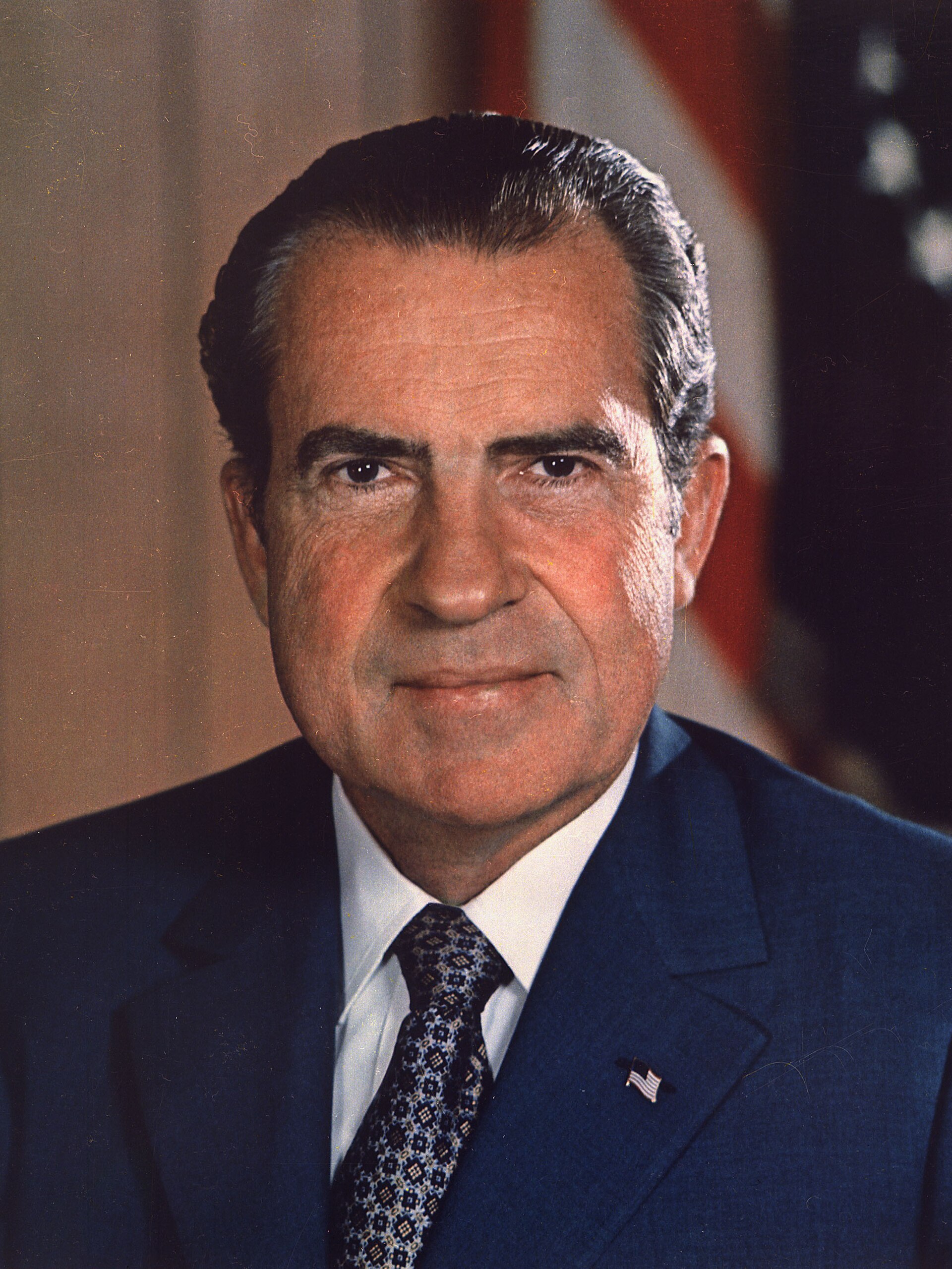

In November 1972 Richard Nixon carried forty-nine of the fifty states and took 60.7 per cent of the popular vote, one of the largest margins ever recorded in a presidential election. Twenty-one months later he stood in the East Room, said goodbye to his staff, walked out to a helicopter on the South Lawn and became the only president in American history to resign the office.
Almost every account of Richard Nixon treats those two facts as a story of rise and fall. They are better understood as the same trait producing opposite results. He was a strategist of unusual range who could see, before almost anyone else in his party, that the United States could talk to Beijing and that the Cold War had room in it for negotiation. He was also a man who kept lists of enemies, believed the establishment had always been against him, and built an apparatus to act on that belief. The apparatus is what destroyed him, and the tapes he installed himself are what proved it.
| Field | Detail |
|---|---|
| Full name | Richard Milhous Nixon |
| Born | 9 January 1913, Yorba Linda, California |
| Died | 22 April 1994, New York City, aged 81 |
| Education | Whittier College; Duke Law School, graduated third in his class, 1937 |
| Military service | US Navy, Pacific theatre, Second World War |
| Spouse | Thelma “Pat” Ryan, married 21 June 1940 |
| Children | Tricia and Julie |
| US House of Representatives | California, 1947 to 1950 |
| US Senate | California, 1950 to 1953 |
| Vice President | 37th, under Dwight Eisenhower, 1953 to 1961 |
| President of the United States | 37th, 20 January 1969 to 9 August 1974 |
| Party | Republican |
| Vice presidents | Spiro Agnew to October 1973, then Gerald Ford |
| He is the only US president to resign the office, and the only person elected twice as vice president and twice as president. | |
Yorba Linda: a childhood without margin
He was born on 9 January 1913 in a house his father Frank had built from a kit in Yorba Linda, California. The lemon grove failed. The family moved to Whittier and ran a grocery store and filling station, where Nixon worked from before dawn. Two of his four brothers died young, Arthur at seven and Harold of tuberculosis at twenty-three, and the medical bills shaped the household finances for years.
He was accepted by Harvard with a tuition scholarship and could not afford to go. He went to Whittier College instead, then to Duke Law School on a scholarship, graduating third in his class in 1937. He applied to New York firms and to the FBI, was taken by none of them, and returned to Whittier to practise law.
That sequence matters more to his politics than any position he ever took. The resentment of inherited advantage was not a pose. It was the organising fact of the first thirty years of his life, and it never left.
The Hiss case, the Checkers speech, and eight years as vice president
He served in the Navy in the Pacific during the Second World War, won a House seat in 1946 by attacking the incumbent as soft on communism, and made his national reputation on the House Un-American Activities Committee pursuing Alger Hiss, a former State Department official he pressed until Hiss was convicted of perjury in 1950. He won a Senate seat that year and was Dwight Eisenhower’s running mate two years later at thirty-nine.
| Year | Contest | Result |
|---|---|---|
| 1946 | US House, California 12th district | Won |
| 1950 | US Senate, California | Won |
| 1952 and 1956 | Vice President, on Eisenhower’s ticket | Won twice |
| 1960 | President, against John F. Kennedy | Lost by about 112,000 votes out of 68 million |
| 1962 | Governor of California | Lost; announces his retirement from politics |
| 1968 | President, against Humphrey and Wallace | Won with 43.4 per cent of the popular vote |
| 1972 | President, against George McGovern | Won 49 states and 60.7 per cent |
| The 1960 margin remains one of the closest in American presidential history. Nixon did not formally contest the result. | ||
Accused during the 1952 campaign of benefiting from a private fund, he went on television and delivered what became known as the Checkers speech, itemising his modest finances and refusing to give back one gift, a cocker spaniel his daughters had named Checkers. It was maudlin, it worked, and it was the first time an American politician used television to go over the heads of his own party’s leadership. Eisenhower kept him.
Eight years as vice president gave him the foreign policy grounding that later defined him. Then he lost the 1960 presidential election to John F. Kennedy by roughly 112,000 votes out of 68 million, one of the narrowest margins on record, and lost the California governorship in 1962. He told reporters they would not have Nixon to kick around any more. He was back on a national ticket in six years.
1968, and a presidency that was mostly foreign policy
He won in 1968 in a three-way race against Hubert Humphrey and George Wallace, taking 43.4 per cent of the popular vote in a country coming apart over Vietnam. What he did with the office was substantially the opposite of what his campaign rhetoric implied.
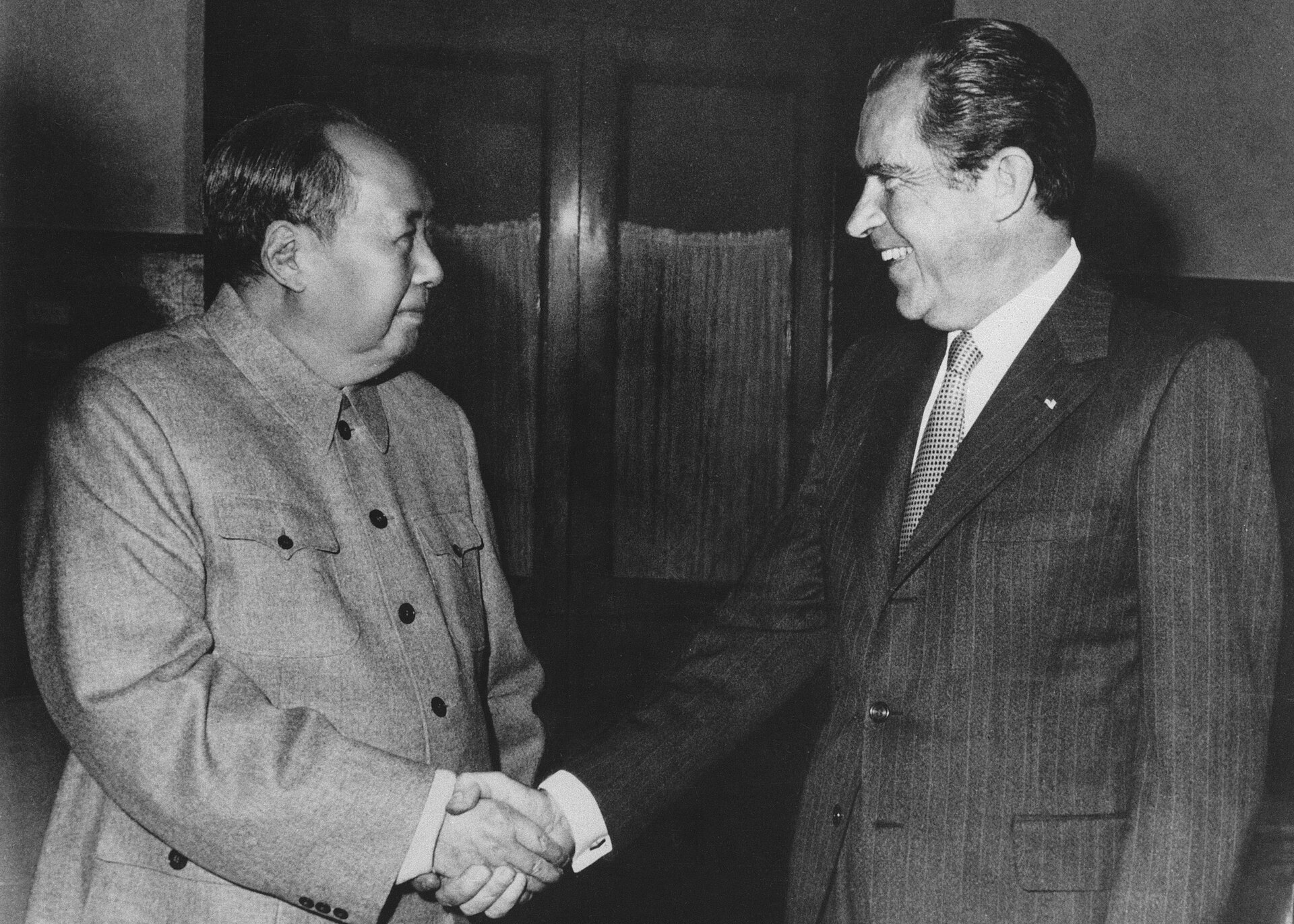
The China opening was the largest of it. Henry Kissinger flew to Beijing in secret in July 1971; Nixon followed in February 1972, becoming the first American president to visit the People’s Republic. The two governments had had no formal relations since 1949, and the balance he opened up between Washington and Beijing is still the frame American strategy works in. Three months later he was in Moscow signing the first Strategic Arms Limitation Treaty and the Anti-Ballistic Missile Treaty. Playing Beijing and Moscow against each other was the point, and both capitals knew it.
Domestically the record does not fit the caricature in either direction. He created the Environmental Protection Agency by executive reorganisation in 1970 and signed the Clean Air Act; he signed Title IX; he ended the draft in 1973; he proposed a guaranteed minimum income that Congress rejected. He also imposed wage and price controls in 1971 and, on 15 August of that year, suspended the convertibility of the dollar into gold, ending the Bretton Woods system.
Vietnam is the part that resists summary. He campaigned on ending the war and did end American involvement in it, with the Paris Peace Accords in January 1973. Between those two points he widened it, ordering the bombing and then the invasion of Cambodia in 1970 and the Christmas bombing of Hanoi and Haiphong in December 1972. More than 20,000 Americans died in Vietnam during his presidency.
Watergate: the tapes, not the burglary
Five men were arrested inside the Democratic National Committee offices at the Watergate complex on 17 June 1972. Nixon almost certainly did not know about the break-in in advance. That was never the charge that mattered.
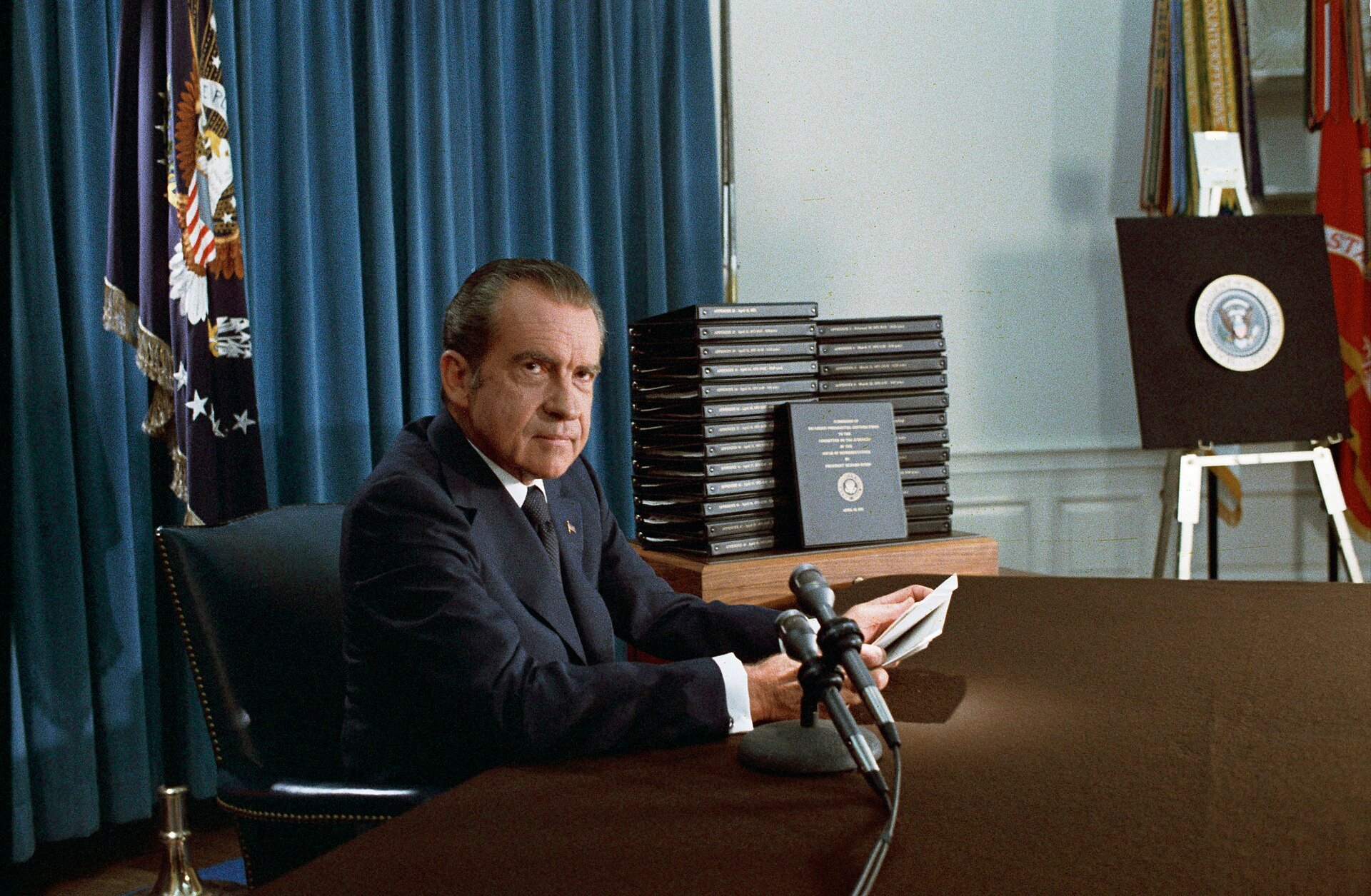
The charge that mattered was the cover-up, and the evidence for it existed because Nixon had installed a voice-activated taping system in the White House in 1971 and then, fatally, did not destroy the tapes. Alexander Butterfield disclosed the system to the Senate Watergate Committee on 16 July 1973. Everything after that was a fight over the recordings.
| Date | Event |
|---|---|
| 17 June 1972 | Five men arrested inside Democratic National Committee offices at the Watergate |
| 23 June 1972 | Nixon taped approving the use of the CIA to obstruct the FBI inquiry; the “smoking gun” |
| 7 November 1972 | Re-elected carrying 49 states |
| 17 May 1973 | Senate Watergate Committee hearings open |
| 16 July 1973 | Alexander Butterfield reveals the White House taping system |
| 10 October 1973 | Vice President Spiro Agnew resigns in an unrelated corruption case |
| 20 October 1973 | Special prosecutor Archibald Cox fired; attorney general and deputy resign |
| 30 April 1974 | Edited transcripts released instead of tapes |
| 24 July 1974 | Supreme Court rules 8 to 0 in United States v. Nixon that the tapes must be produced |
| 27 to 30 July 1974 | House Judiciary Committee approves three articles of impeachment |
| 5 August 1974 | The 23 June 1972 tape is released; congressional support collapses |
| 9 August 1974 | Resignation takes effect at noon |
| 8 September 1974 | Gerald Ford issues a full and unconditional pardon |
| The White House taping system recorded roughly 3,700 hours. Nixon installed it himself in 1971 and chose not to destroy the tapes once their existence became public. | |
He fired the special prosecutor Archibald Cox on 20 October 1973, in the sequence that cost him his attorney general and deputy attorney general in the same night. He released edited transcripts instead of tapes in April 1974. On 24 July 1974 the Supreme Court ruled unanimously in United States v. Nixon that executive privilege did not shield the recordings from a criminal subpoena. The tape of 23 June 1972, in which he approved using the CIA to obstruct the FBI investigation six days after the break-in, became public on 5 August. His remaining support in Congress collapsed within seventy-two hours.
He resigned effective noon on 9 August 1974. Gerald Ford pardoned him on 8 September, before any charge was filed, which meant the central legal questions were never tested in court.
Twenty years afterwards
He wrote ten books, most of them on foreign policy, and spent two decades rebuilding himself as an elder statesman consulted quietly by both parties on Russia and China. The rehabilitation was partial and it was real. He gave a series of interviews to David Frost in 1977 in which he came closer to an admission than he ever did elsewhere, and stopped short.
He died on 22 April 1994 in New York, aged 81, after a stroke. Four presidents attended the funeral, and the limits of presidential power he tested are still being argued over.
What the record does not settle
The tapes settle the cover-up. What they do not settle is the question people actually argue about, which is whether the apparatus was a personal pathology or an acceleration of something already present in the office. Presidents before him wiretapped opponents and used federal agencies against enemies, and the documentation of that is not seriously disputed.
What is genuinely singular about Nixon is not that he did it but that he recorded himself doing it. Whether the difference between him and his predecessors is one of kind or one of evidence is a question the surviving material cannot answer, because none of them left 3,700 hours of tape.
Richard Nixon: frequently asked questions
When was Richard Nixon born and when did he die?
Born 9 January 1913 in Yorba Linda, California. Died 22 April 1994 in New York, aged 81, following a stroke.
Why did Richard Nixon resign?
He resigned on 9 August 1974 rather than face near-certain impeachment by the House and conviction by the Senate, after a White House tape from 23 June 1972 showed him approving the use of the CIA to obstruct the FBI investigation into the Watergate break-in.
Was Richard Nixon impeached?
No. The House Judiciary Committee approved three articles of impeachment in late July 1974, but he resigned before the full House voted. He is not one of the three presidents impeached by the House.
Did Richard Nixon go to prison?
No. Gerald Ford issued him a full and unconditional pardon on 8 September 1974, before any charges were brought.
What did Richard Nixon do in China?
He visited the People’s Republic of China from 21 to 28 February 1972, the first US president to do so, meeting Mao Zedong and Zhou Enlai. It began the process of normalising relations that concluded under Jimmy Carter in 1979.
Did Richard Nixon create the EPA?
Yes. The Environmental Protection Agency was established by executive reorganisation plan in December 1970, and he also signed the Clean Air Act amendments that year.
How big was Richard Nixon’s 1972 win?
He carried 49 of 50 states, losing only Massachusetts and the District of Columbia, with 520 electoral votes to George McGovern’s 17 and 60.7 per cent of the popular vote.
Related Posts