
BHUBANESWAR — Two men found life rafts in the dark. Twenty-two of their crewmates did not, or have not yet been found, and as Monday wore into its second half in the Bay of Bengal, the Indian Coast Guard was pressing into its third consecutive day of open-water search with no word on what happened to the bulk carrier that carried them.
The MV Ocean Winner, a Panama-flagged vessel loaded with 72,100 tonnes of iron ore for China, sank on Saturday off the Odisha coast, southeast of Paradip port, sending a distress signal before it lost contact altogether. When coast guard teams reached the position, the ship was gone. Two survivors were pulled from life rafts; 22 crew members were not on them.
The 24 people aboard were: 20 Chinese nationals, three from Myanmar, and one Bangladeshi. Most of the missing are Chinese. For their families — distributed across cities and provinces that the Indian search ships are very far from — news is arriving through diplomatic channels and port authority bulletins, if it is arriving at all.
India’s Minister of Ports, Shipping and Waterways, Sarbananda Sonowal, confirmed the multi-agency response. “All agencies are coordinating closely and actively doing search and rescue efforts,” Sonowal said in a statement carried by Euronews. “My prayers for the safety of the remaining crew.”
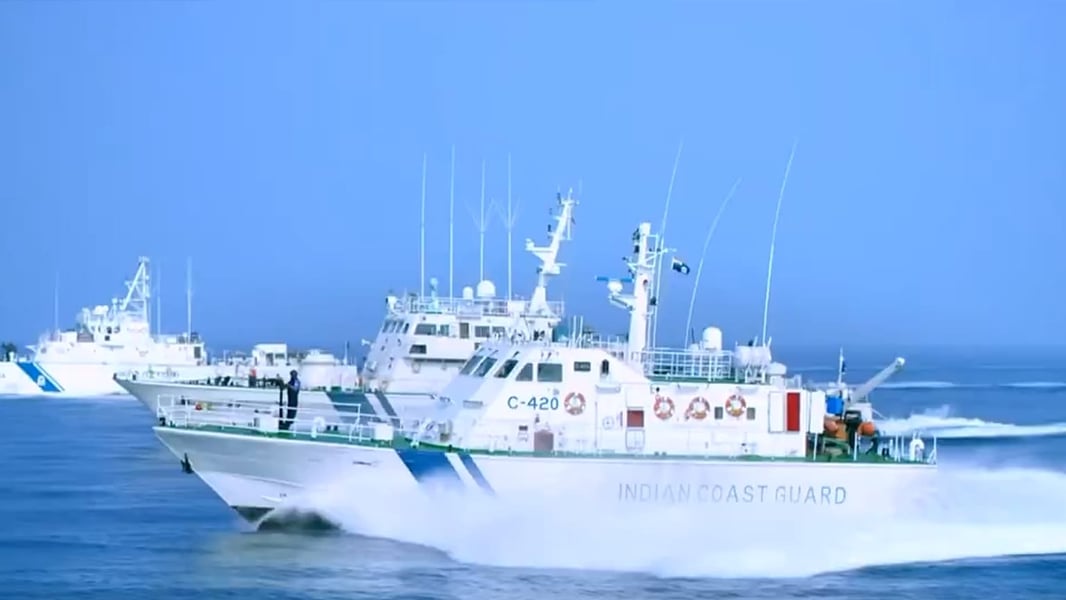
Three Coast Guard vessels are conducting surface searches. The Indian Navy has joined the operation, which represents a substantial commitment of maritime resources to a zone that, in late August, is approaching the tail end of monsoon season — conditions that do not favour extended survival in open water for men who may or may not have life vests, or who may be in the water at all. Officials have not disclosed what they are finding, or not finding.
The cause of the sinking is unknown. The Ocean Winner transmitted a distress call before contact was lost, which tells rescuers two things: the crew knew something catastrophic was happening, and they had at least some time to transmit. How much time — enough to launch life rafts for all 24 aboard, or only for two — is a question the investigation will eventually answer. The ship’s flag state, Panama, would ordinarily lead any formal inquiry.
Paradip, in Odisha, is one of India’s largest bulk commodity export ports. Iron ore flows out of it continuously, bound primarily for Chinese steel mills — this is one of the heaviest-used trade lanes in the Bay of Bengal. The Ocean Winner was on an unremarkable voyage on a well-travelled route when something ended it. The specific failure, whether mechanical, weather-related, or structural, may not be knowable until the wreck is located and examined.
The two survivors, recovering in medical care, hold the only first-hand account of the ship’s final minutes. Neither has been quoted by Indian or international press. Whatever they experienced in the interval between the distress call and being rescued from a life raft in the open sea is not yet part of the public record.
The timing is not without context. This week in Beijing, India’s National Security Adviser Ajit Doval and Chinese Foreign Minister Wang Yi are working through the 25th round of India-China border talks — a process central to restoring a bilateral relationship that fractured over the Ladakh standoff. A ship carrying iron ore from Indian ports to China, with a crew that is primarily Chinese, going down in Indian waters while those talks proceed is not the kind of development either government would choose. The diplomatic protocols for maritime tragedies run on a separate track from high-level meetings, but both tracks are now running simultaneously.
The waters of the Bay of Bengal have seen India’s maritime forces tested before. The body of water carries significant commercial traffic and is periodically dangerous in ways its volume of crossings might obscure. Cyclones, mechanical failures, and navigational incidents have all produced past search-and-rescue operations in these waters. None of that prior experience determines what happens to the 22 missing men from the Ocean Winner.
India’s Assam floods, which have killed over 100 people and displaced hundreds of thousands this week, provide a grim parallel: a nation dealing simultaneously with a humanitarian crisis inland and a maritime tragedy offshore, both still claiming lives.
By nightfall Monday, the Indian Coast Guard will have been searching for 22 people for approximately 60 hours. At that point, what the search teams have found or have not found will tell its own story — whatever the official statements choose to say or not say about the odds.