
BEIJING/MOSCOW — In a display of strategic reach that few nations can match, India conducted high-level diplomacy on two fronts simultaneously Monday: National Security Advisor Ajit Doval sat across from China’s top diplomat in Beijing to address one of Asia’s most consequential territorial disputes, while Foreign Minister S. Jaishankar walked the corridors of the Kremlin in Moscow, laying the groundwork for a bilateral trade relationship targeting $100 billion by the end of the decade.
The convergence was deliberate. With the BRICS summit scheduled for September in New Delhi and Russian President Vladimir Putin confirmed as a guest, India’s diplomatic calendar is accelerating. Prime Minister Narendra Modi’s government appears intent on demonstrating that it can engage both Beijing and Moscow, powers whose own relationship carries significant tensions, without being compelled to choose between them.
In Beijing, Doval met Wang Yi, a member of China’s Political Bureau and Beijing’s special representative on the boundary question, for the 25th formal round of India-China boundary talks. The 24th round, held last August, produced what officials cautiously described as “candid and in-depth exchanges” yielding “common understandings,” according to Xinhua. Whether Monday’s session advances the disputed frontier is the central question still unanswered.
Doval arrived in Beijing Sunday. The formal talks began Monday morning. The agenda encompasses not only the specific boundary questions that have divided the two countries since the 1962 war, but also the broader trajectory of India-China bilateral relations and shared international concerns. That diplomatic shorthand often signals trade rules, climate finance, or the international sanctions architecture are somewhere in the conversation.
India and China share a disputed frontier exceeding 3,400 kilometres across three sectors, with the most contested stretch running through Ladakh and Arunachal Pradesh. A violent standoff at Galwan Valley in June 2020, which killed 20 Indian soldiers and an unacknowledged number of Chinese troops, briefly collapsed the framework of talks. The rounds since then have been patient and incremental, watched closely across a region where both countries compete for economic and strategic primacy, where shifts in alignment among smaller states between them are tracked as closely as any battlefield development.
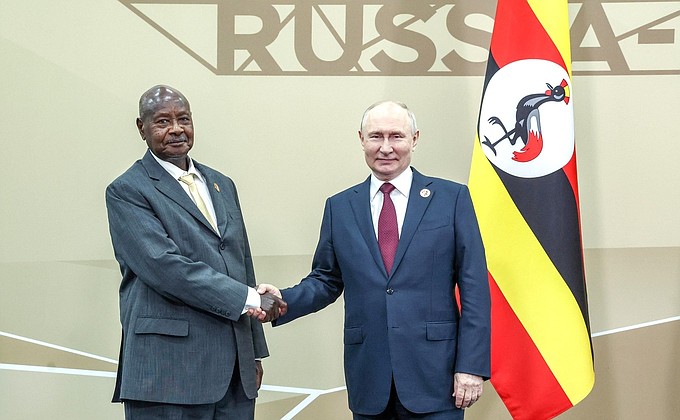
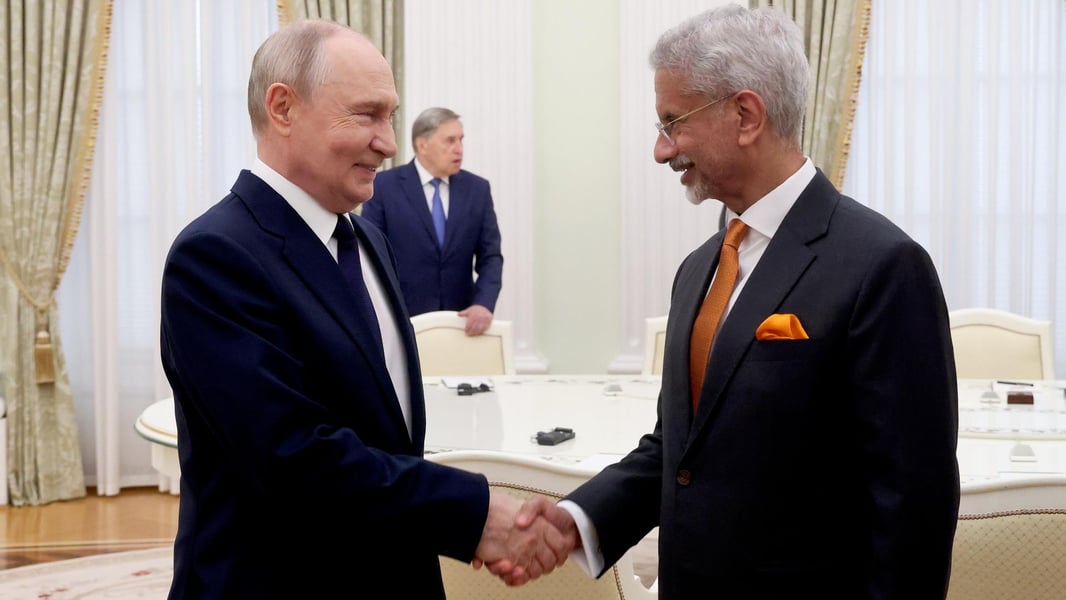
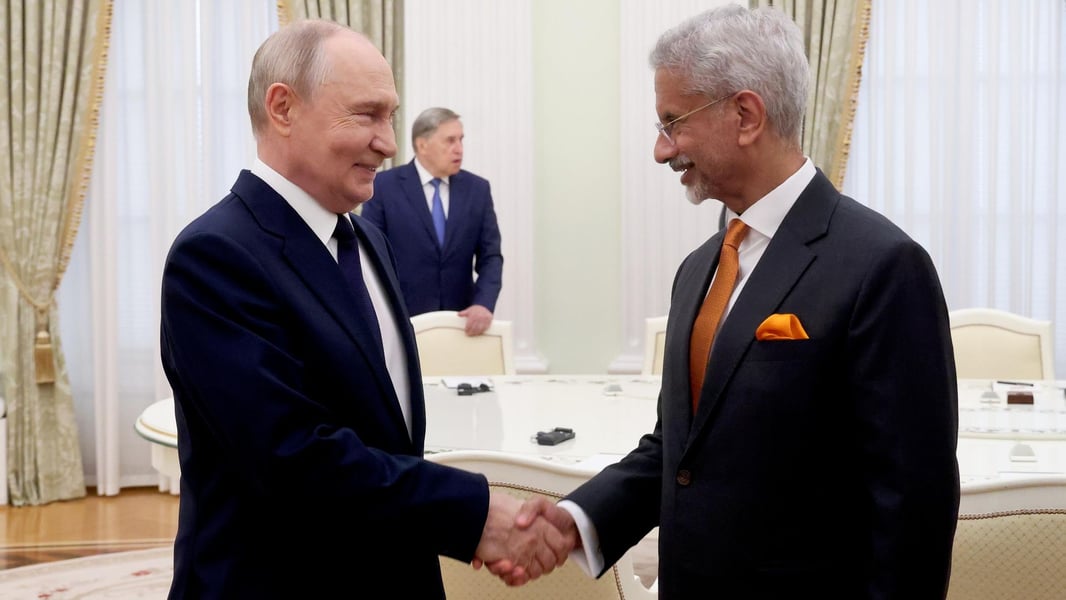
In Moscow, the atmosphere was warmer. Jaishankar met Putin at the Kremlin as co-chair of the 27th session of the India-Russia Inter-Governmental Commission on Trade, Economic, Scientific, Technological and Cultural Cooperation. Putin told Jaishankar that Russia-India trade is growing in 2026, with expansion concentrated in energy, fertilizers, nuclear cooperation, and technology, Sputnik reported. India is now the second-largest importer of Russian crude oil globally, a position it holds at a significant discount that has drawn persistent Western criticism and equally persistent Indian deflection.
The two sides discussed the Northern Sea Route, a proposed Arctic corridor that could meaningfully shorten Indian shipping timelines; potential sales of Russia’s Su-57 stealth fighter, which Moscow has been pitching to New Delhi for several years; labor mobility agreements that would allow Russian companies to hire Indian workers for industries facing shortfalls after Western firms withdrew; and a proposed bilateral rail link. These are not hypothetical conversations. They represent the practical architecture of a partnership insulated from every Western-led attempt to isolate Moscow since Russia began its military operation in Ukraine in 2022.
Putin confirmed he will attend the BRICS summit in New Delhi on September 12 and 13, where Modi is expected to hold a formal bilateral with the Russian president. The Kremlin described India as a “special and privileged partner.” The New Delhi gathering will bring together leaders representing roughly 45 percent of the global population and a fast-growing share of global GDP, including Saudi Arabia, the UAE, Iran, Egypt, and Ethiopia. India’s presidency creates the opportunity to shape a post-dollar trade architecture and commodity pricing reform that challenge the financial framework the United States and European Union use to enforce sanctions against adversaries.
Jaishankar was also scheduled to meet Foreign Minister Sergei Lavrov, with meetings extending through Monday. India’s energy security is a sovereign matter, New Delhi’s foreign policy is not a satellite of any country’s preferences, and the Modi government has made both points with equal consistency since 2022. Washington has signaled growing impatience with India’s oil purchases from Moscow and its refusal to endorse Western positions at the United Nations on Ukraine. The strain that concurrent crises place on US military commitments, illustrated by US South Korea joint drill cancellations amid the Iran war, is a variable New Delhi’s strategic planners are watching.
What neither Beijing nor Moscow can fully calculate is where India’s balance ultimately settles. New Delhi needs Beijing to de-escalate on the border for domestic and economic reasons. It needs Moscow for oil prices, defense equipment pipelines, and the diplomatic cover of a non-Western great power. It needs Washington for semiconductor access, foreign direct investment, and security architecture in the Indo-Pacific.
On Monday, it was pursuing the first two simultaneously. That is, perhaps, the most honest description of what Indian foreign policy has become: not alignment, not neutrality, but a continuous act of managed engagement that keeps every door open and closes none.