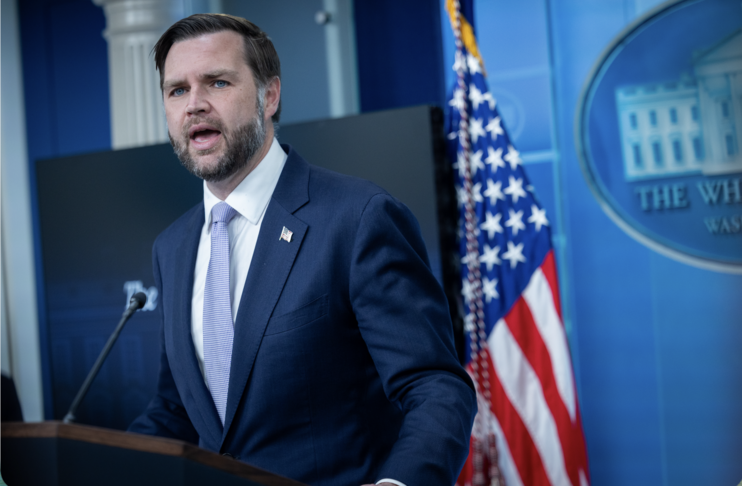

BREWER, Maine – Canada entered the week holding a security guarantee it had never thought to question and a trade pact its government spent years negotiating. By Monday, it could rely on neither.
Vice President JD Vance, speaking to a crowd in coastal Brewer, made explicit what the Trump administration had previously left implicit: the United States’ military protection of Canada was contingent, not unconditional. “Canada is a country that has underinvested in its military that quite literally would get invaded by a foreign country were it not for the umbrella of protection provided by the United States of America,” Vance told the audience. He did not name which country.
The remarks arrived as 50 percent tariffs on roughly $20 billion in Canadian goods took effect the previous Saturday, the latest escalation in a trade confrontation that has now broken past the machinery of the United States-Mexico-Canada Agreement, the successor to NAFTA that both governments signed just six years ago.
Prime Minister Mark Carney, responding from Ottawa, rejected the framing with undisguised frustration. “The new US tariffs are designed to hurt and divide us,” he said. “They’re a miscalculation because Canadians will always take care of each other.” Canada has announced dollar-for-dollar retaliatory measures targeting American steel, dairy, appliances, agricultural equipment, pulp, paper, and electronics, set to take effect September 8.
The collision of security and trade pressure marks a significant departure from the logic that has underpinned North American relations for decades. Canada is not merely a US trading partner; it is a founding member of NATO and a co-administrator of NORAD, the binational aerospace defense command that monitors the skies above both countries for incoming threats. Vance’s suggestion that Canada requires American military protection, and that such protection is not the result of mutual treaty obligations but of American generosity, inverts the premise of that arrangement entirely.
Ottawa suspended formal trade talks with Washington before the tariffs landed. Both governments now offer conflicting accounts of why. US Trade Representative Jamieson Greer told reporters Canada had been given preferential treatment under Trump but abandoned a nearly completed deal in its final stages. Canada has rejected that characterization, according to Anadolu Agency, saying American demands were “unfair and uneconomic” and that Ottawa could not agree to terms that would have required surrendering exclusive access to its critical minerals.
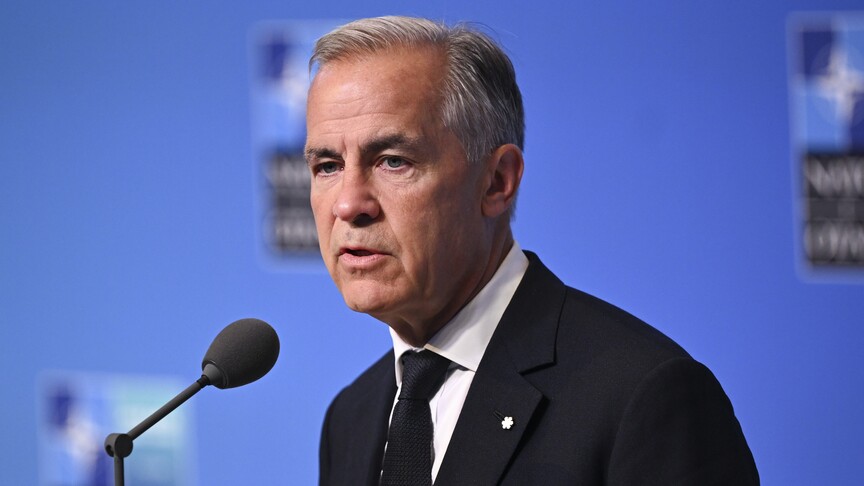
The stakes reach well beyond lumber and dairy. Trump has separately threatened an additional 50 percent tariff on Canadian automobiles, auto parts, and steel to take effect January 1, 2027, a timeline that gives both governments roughly four months to reach an accommodation before the auto sector, deeply integrated across the border, faces a potentially crippling shock.
Vance, speaking in a state where fishing and forestry industries depend heavily on bilateral trade, framed the confrontation as long-overdue correction rather than rupture. “Stop taking advantage of the people of Maine,” he said. “Stop taking advantage of America. It’s over.” The implicit suggestion was that the economic pain landing on Maine’s manufacturing and agricultural sectors was a price worth paying to restructure the relationship on American terms.
What neither government has yet resolved is whether the USMCA still provides any meaningful framework. The agreement was designed precisely to prevent the kind of unilateral tariff action Washington is now pursuing, but the Trump administration has treated it as a floor for demands, not a ceiling on pressure. Canada has not formally invoked USMCA dispute mechanisms, and whether doing so would slow the administration’s actions remains unclear.
Canada’s pledge to increase defense spending, made in the context of the Russia-Ukraine war and intensifying Arctic competition, has not satisfied Washington, where officials have long argued Ottawa’s military contributions fall short of NATO’s two-percent-of-GDP target. That criticism has been a fixture of US-Canada relations under multiple administrations. What is new is the suggestion, now stated openly by the vice president, that military protection and market access exist on the same ledger.
Canada’s counter-tariffs, once they take effect in September, will confront a US economy simultaneously managing the Iran war’s strain on military supply chains, constraints that have already forced the Pentagon to cancel US-South Korea military exercises, and a broader effort by the Trump administration to restructure trade relationships with allies across four continents simultaneously. Whether Washington has the diplomatic bandwidth to run all of those confrontations in parallel, without one of them producing a genuinely costly outcome, is the question Ottawa is almost certainly betting on.
Carney has not publicly said what concessions Canada might accept to reverse the tariffs. What he has said, and what the Trump administration has absorbed through its own Trump secondary sanctions pressure campaign on allied governments, is that economic coercion has a ceiling. Whether Canada’s ceiling is higher than that of smaller trade partners, and whether the January 2027 auto deadline will arrive before or after a deal is struck, is the part of this story that remains unwritten.