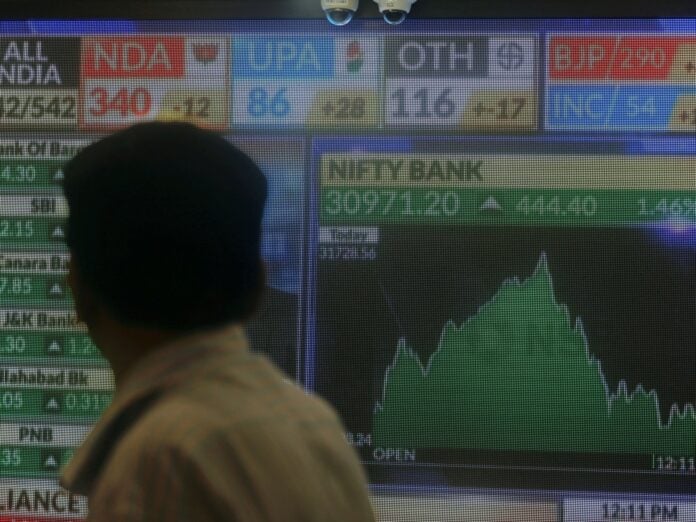

MUMBAI — At Maruti Suzuki’s dealerships in tier-2 cities, enquiries for the Brezza and the Swift have picked up through August, according to dealer networks across the Hindi belt. The explanation offered in every showroom is the same: the expectation that car loans will get cheaper when the Reserve Bank of India moves on rates. That move has not happened — the repo rate sits at 6.50%, unchanged since February 2023. But the Federal Reserve’s Jackson Hole signal has shifted the conversation from “if” to “when,” and the auto sector is pricing that shift now.
The Nifty Auto index has gained 0.8% month-to-date through August 27, one of the stronger sectoral performers in a month where the Nifty 50 is down 0.52%. That divergence is not explained by results — Q1 FY27 earnings for most original equipment manufacturers were broadly in line, with no material upside surprise. It is explained by the rate cut thesis, and by the arithmetic that runs through it: cheaper financing means lower EMIs means more incremental buyers converted.
| Company | Aug MTD Change | YTD Return | Market Cap (USD) | ||||||
|---|---|---|---|---|---|---|---|---|---|
| Maruti Suzuki | +1.6% | +22.4% | $44.8B | ||||||
| Mahindra and Mahindra | +2.1% | +31.6% | $32.1B | ||||||
| Tata Motors | +0.4% | +9.8% | $28.3B | ||||||
| Hero MotoCorp | -0.9% | -3.2% | $9.6B | ||||||
| Bajaj Auto | +1.2% | +14.1% | $22.7B | ||||||
| Hyundai India | +0.7% | +8.3% | $19.4B | ||||||
| Source: BSE/NSE filings, company Q1 FY27 earnings reports. | |||||||||
The underlying demand data is more nuanced. Passenger vehicle wholesale figures for July 2026 — the opening month of Q2 FY27 — came in at approximately 3.52 lakh units, according to Society of Indian Automobile Manufacturers data. That is 6.2% above July 2025’s 3.31 lakh units, and the fourth consecutive month of year-on-year growth. Maruti Suzuki, which holds roughly 40% of the passenger vehicle market, reported July wholesales of approximately 1.44 lakh units, up 5.8% year-on-year.
Two-wheeler sales tell a different story. July 2026 two-wheeler wholesales of approximately 14.8 lakh units represented just 3.1% year-on-year growth — well below the passenger car pace and below analyst consensus estimates of 4.5%. The rural income recovery that analysts had expected to flow from the government’s farm income support programs has been uneven, and kharif crop conditions in parts of Madhya Pradesh and Maharashtra have disappointed.
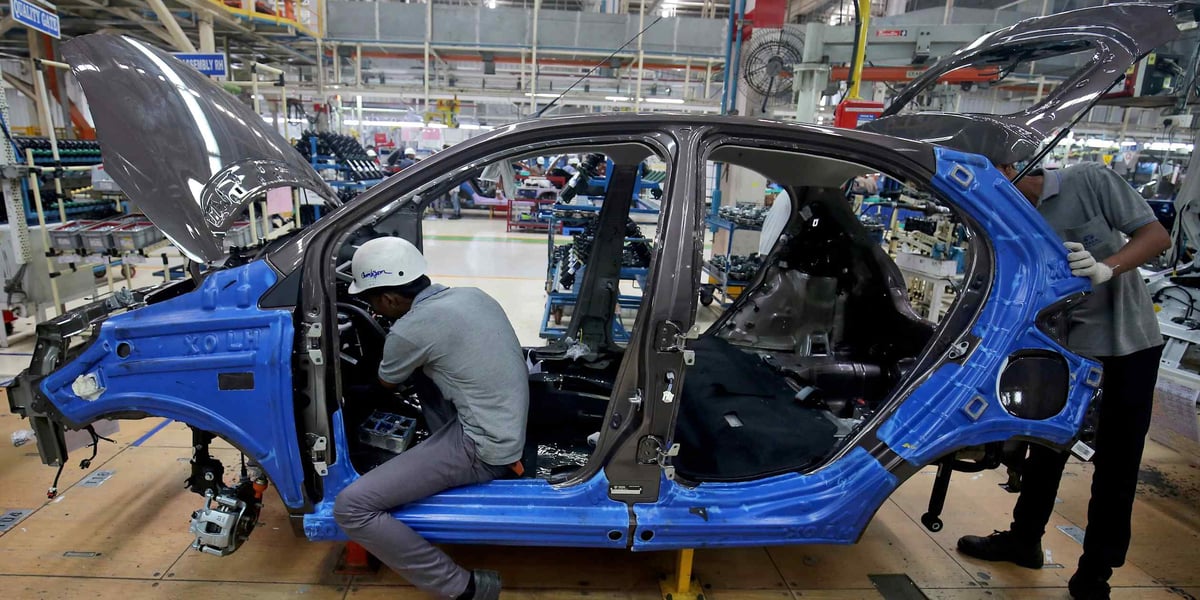
Mahindra and Mahindra has been the structural winner of Q2 FY27’s opening. Its XUV 3XO and Thar Roxx models are still reporting waiting periods of six to eight weeks — a supply constraint that caps July volumes but signals a demand pipeline that is authentically strong. The farm equipment division, a useful read on rural income, reported its own July volumes up 8.1% year-on-year.
| OEM | July 2026 Wholesale | YoY Change | FY27 Guidance | ||||||
|---|---|---|---|---|---|---|---|---|---|
| Maruti Suzuki (PV) | 1,44,000 units | +5.8% | 6-8% growth | ||||||
| Mahindra (PV+SUV) | 48,200 units | +18.4% | 15-18% growth | ||||||
| Tata Motors (PV+EV) | 51,300 units | +12.3% | 10-12% growth | ||||||
| Hyundai India (PV) | 52,800 units | +4.1% | 4-6% growth | ||||||
| Hero MotoCorp (2W) | 4,82,000 units | +2.8% | 5-7% growth | ||||||
| Bajaj Auto (2W+3W) | 3,86,000 units | +7.2% | 8-10% growth | ||||||
| Source: BSE/NSE filings, company Q1 FY27 earnings reports. | |||||||||
Tata Motors presents a more complex picture. Passenger vehicle volumes including EV models grew 12.3% in July, and commercial vehicle volumes grew 4.2%. But Tata Motors carries significant debt linked to its Jaguar Land Rover operations in the United Kingdom, and sterling movements against the dollar introduce a margin variable that does not appear in Indian wholesale numbers.
EV penetration in the Indian passenger vehicle market has reached approximately 4.2% of monthly volumes in August 2026, up from 2.8% twelve months earlier. Tata Motors is the dominant domestic EV player, though Mahindra’s BE 6e has entered production and MG Windsor Pro continues to attract buyer interest. The rate cut argument is structurally more powerful for internal combustion engine vehicles than for EVs, where state subsidies and total-cost-of-ownership calculations drive purchase decisions more than headline borrowing rates.
The broader macro picture supporting the auto thesis runs through India’s oil import bill. Lower crude oil prices have reduced India’s import burden, easing pressure on the current account and creating space for the RBI to consider rate cuts without the currency risk that higher oil prices typically generate. Brent crude at $71.80 per barrel is significantly below the $85-90 range that complicated the RBI’s policy room through much of FY26.
The October Monetary Policy Committee meeting is the decisive variable. India’s CPI inflation came in at 4.1% year-on-year in July — the second consecutive month below the RBI’s 4% midpoint. A 25 basis point cut on October’s repo rate would reduce the average new-car EMI by approximately Rs 450-600 per month on a Rs 10 lakh five-year loan. That arithmetic does not trigger a purchase. But it narrows the gap for the incremental buyer who is already in the market.
What no analyst has a clear answer to: whether the kharif season’s remaining weeks deliver enough rainfall to the farming belts to restore rural income confidence and lift two-wheeler volumes from 3% to the 6-8% growth pace embedded in most FY27 OEM guidance. Private banks have already begun pricing in a rate cut cycle, and auto financing rates move with them. The passenger car recovery is real and backed by actual volumes. The festive season story — Navratri in October, Dussehra, Diwali — is priced in. Whether it delivers depends on factors the sector cannot control.