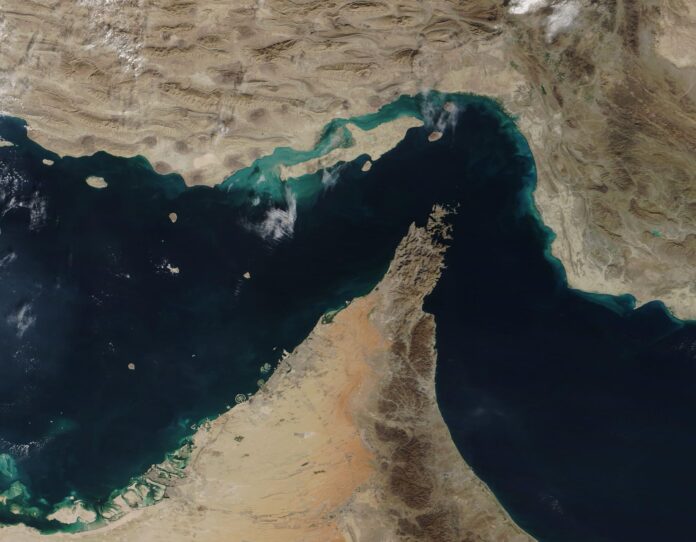

TEHRAN – The tankers crossing the Strait of Hormuz have been sailing through a provisional corridor that Iran controls and Iran can close. On Wednesday, Tehran’s most senior security official made explicit what it costs to keep it open.
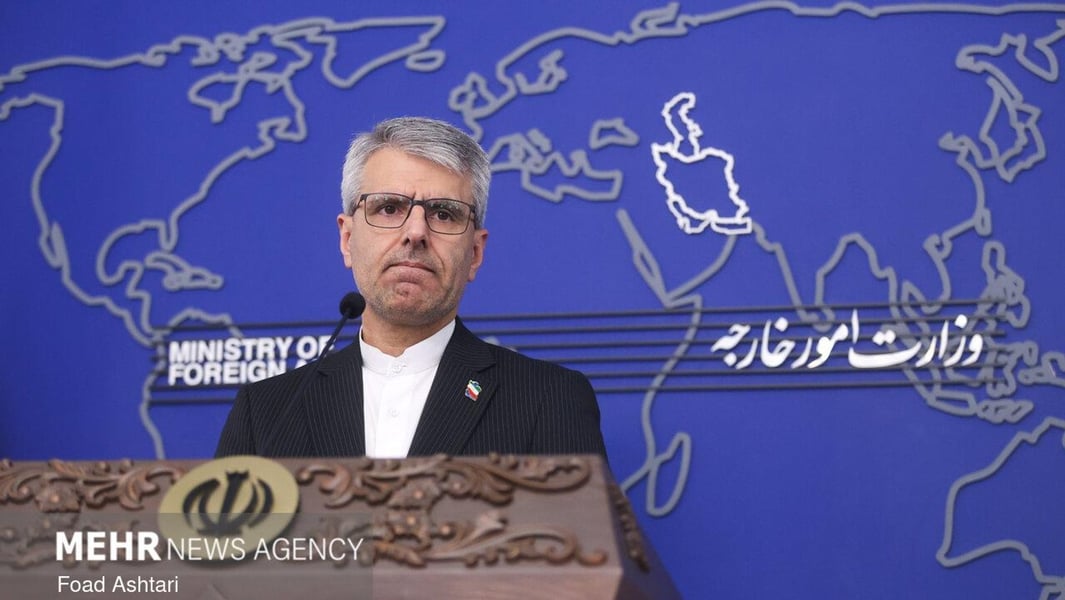
Mohsen Rezaei, secretary of Iran’s Supreme National Security Council, told Lebanon’s Al Manar television that his country has “temporarily opened a corridor through the center of the Strait of Hormuz,” but that future shipping will depend on whether the United States agrees to negotiate. Mediators have already asked Iran to prepare a formal list of conditions. That list, Rezaei said, is being prepared. Its primary demand: peace across the Middle East, with specific emphasis on Gaza and Lebanon.
The Trump administration’s position, conveyed through officials speaking to Western media, was that Washington is “holding off on returning to talks” until conditions change. The conditions were not named.
The corridor through which some 17 to 21 million barrels of oil move daily was established after months of disruption following the US-Israeli military campaign against Iran, which began in late February. A June ceasefire memorandum between Washington and Tehran appeared to stabilize transit briefly before the United States resumed major strikes in early July, citing Iranian violations of the agreement. Since then, the conflict has settled into what analysts describe as a costly stalemate: neither side has achieved its stated objectives, and the military track has produced diminishing returns for both.
In the same interview in which Rezaei extended the possibility of a negotiated resolution, he separately warned that “in the event of intensified US economic pressure on Iran, we will respond with countermeasures that will affect US interests in the region.” He offered no specifics. In the context of the Strait of Hormuz, specificity was not required.
Washington’s economic pivot became visible last week with the launch of “Operation Economic Outcast,” a secondary sanctions initiative targeting Iran’s international partners. The strategy acknowledges, implicitly, that military strikes have not delivered the outcome Washington sought. Iran’s Foreign Ministry spokesman Esmaeil Baqaei responded with remarkable candor, dismissing the effort as “sanctioning the already sanctioned and calling the empty space a coalition.” He singled out the US citing Bahrain as evidence of allied support, which Tehran found, at minimum, worth mocking.
The broader context of Rezaei’s remarks is Washington’s pivot away from military solutions. According to reporting from Axios cited by TASS, the Trump administration has shifted toward economic sanctions as its primary pressure mechanism after direct military strikes produced, in Tehran’s own characterization, “limited results.” Rezaei interpreted this as acknowledgment that military force could not achieve what Washington wanted. Whether that reading is strategic analysis or domestic messaging serves Tehran’s purposes equally well.
Iran’s ability to threaten the Strait of Hormuz functions as leverage independent of the military balance. A corridor opened voluntarily can be closed voluntarily. The Iran war’s drain on US Patriot missile stocks in Europe has already thinned NATO’s eastern air defenses, and American strategic oil reserves are drawn down from the demands of the conflict. A prolonged Hormuz closure would fall heavily on Asian economies, including India, China, and Japan, and on European energy markets that have not fully insulated themselves from Gulf supply routes.
The strategic stakes for global shipping are not abstract. The Strait of Hormuz is the passage through which flows the majority of the Arabian Peninsula’s oil exports, including from Saudi Arabia, the UAE, Kuwait, and Iraq. Qatar’s liquefied natural gas exports, critical to European supply, pass through it as well. Any sustained disruption would trigger emergency releases from the International Energy Agency’s strategic reserves and immediate diplomatic pressure on Tehran from partners that have, until now, maintained studied neutrality in the Iran-US conflict.
Iran’s position is that negotiations are possible, conditional, and deteriorating in value the longer they are delayed. The conditions attached to Hormuz reopening are conditions the United States cannot deliver unilaterally, even if it chose to. That may be precisely the point. A negotiating framework that cannot be met is not a peace offer. It is a justification, held in reserve.
The CIA director’s secret trip to Moscow last week, aimed partly at persuading Russia to stop sharing intelligence with Iran, reflects Washington’s recognition that Tehran is not diplomatically isolated. Russia has continued to provide Iran with intelligence support despite American requests to the contrary. Iran has consolidated enough external backing to make a purely military resolution improbable within any near-term American political calendar.
What Rezaei offered on Wednesday is a door. Whether it opens into a genuine negotiation or buys Tehran time to advance its position is not yet clear. What is clear is that Iran is holding it open, visibly, for now, while ensuring that Washington understands exactly what closing it again would cost.