
MUMBAI — Hindustan Unilever’s quarterly result contained a number that its management preferred to frame as a transition rather than a problem: gross margin contracted 80 basis points to 49.2 percent in the three months ended June 30, 2026, even as the company grew domestic volume 7 percent year-on-year. The gap between those two figures is the central story of India’s fast-moving consumer goods sector in Q1 FY27.
Volume grew. Margin did not follow. The reason sits in the commodity basket. Palm oil — the primary input for HUL’s soap and personal care lines — rose approximately 18 percent in the June quarter on a year-on-year basis, driven by tight Malaysian supply and sustained biodiesel demand from Southeast Asian refiners. Crude oil derivatives feed into the packaging and synthetic fragrance costs across the portfolio. HUL absorbed rather than passed on the bulk of those increases, a decision that protected volume in price-sensitive rural and semi-urban markets but transferred the cost pressure directly into the operating account.
| Company | Q1 FY27 Revenue Growth | Volume Growth | Gross Margin Change |
|---|---|---|---|
| Hindustan Unilever | +8.1% | +7% | -80 bps to 49.2% |
| Nestle India | +9.4% | +6.2% | +40 bps to 58.1% |
| Britannia Industries | +11.2% | +8.5% | +20 bps to 42.3% |
| Dabur India | +6.8% | +5.1% | -60 bps to 47.6% |
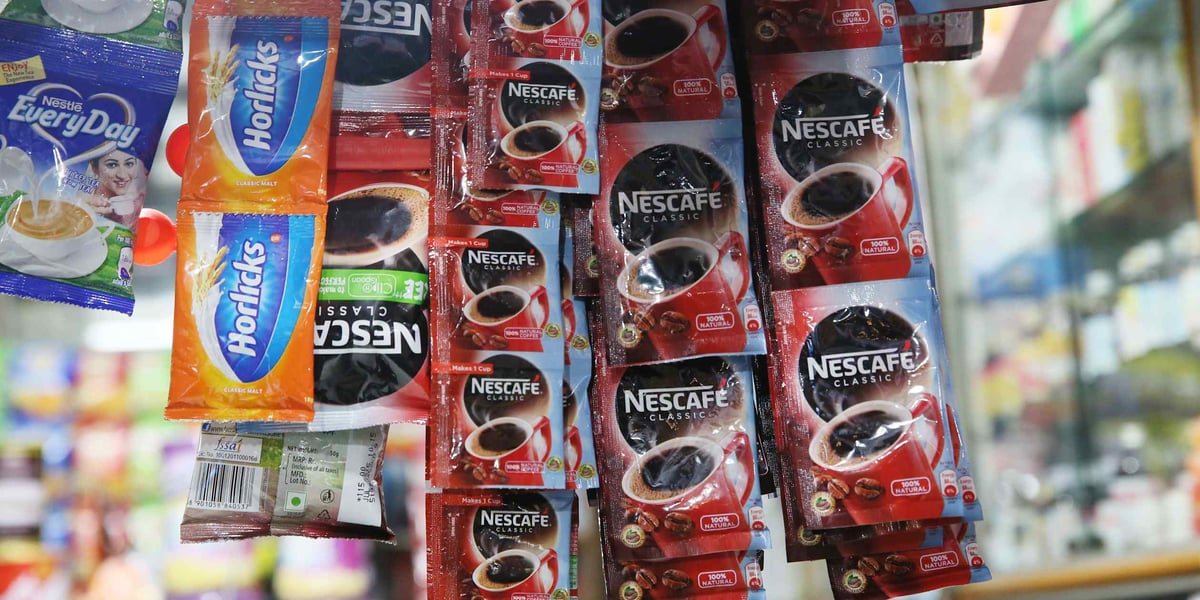
Nestle India and Britannia tell the opposite story. Nestle’s gross margin expanded 40 basis points to 58.1 percent on revenue growth of 9.4 percent, a result that reflects its positioning in urban and premium segments where Maggi, KitKat, and Munch command pricing power that HUL’s mass-market soap and shampoo lines do not. Nestle’s June quarter was also helped by its coffee portfolio, where Nescafe’s volume growth ran in double digits on the back of India’s rising out-of-home coffee consumption. Britannia’s biscuit business — built on the Tiger and Marie Gold brands at the mass end and NutriChoice at the premium end — grew 8.5 percent in volume with a 20 basis point gross margin improvement, driven by moderating wheat costs.
Dabur’s result resembled HUL’s more than Nestle’s. The company’s ayurvedic and healthcare portfolio — Chyawanprash, Hajmola, Dabur Honey — has significant rural exposure, and rural demand in the June quarter was uneven in ways that FMCG companies had not fully anticipated. The monsoon arrived on time for most of the country but distribution was uneven: Maharashtra, Rajasthan, and parts of Madhya Pradesh received well below-normal rainfall through mid-July. These are states where Dabur’s rural push has been concentrated since FY24, and the demand softness there was visible in its 5.1 percent volume growth — slower than the sector average.
The rural story is not a reversal. India’s rural FMCG consumption has been recovering since Q3 FY26 on the back of government transfer payments, rising agricultural income from the FY25 crop season, and expanding MNREGA employment in states with active programmes. That recovery was visible in Q1 FY27 as well, but it was neither uniform nor strong enough to offset input cost pressure in companies whose rural exposure is high and whose pricing flexibility is limited.
The urban picture is cleaner. India’s urban consumer, particularly in the top eight metros, continued to trade up in Q1 FY27. Nestle’s premium food portfolio captured that trade-up. HUL’s premium personal care lines — Dermalogica, Minimalist distribution, and the Dove skin care range — also performed above the company average, but at a revenue base that is still small relative to the mass business.
The Nifty FMCG index has underperformed the broader Nifty 50 by approximately 5 percentage points in FY27 through August, a reversal of the pattern that held through FY26 when defensive FMCG stocks outperformed in a volatile macro environment. The underperformance is a direct readout on the margin compression story: fund managers who bought FMCG as a defensive trade are now watching gross margins at some of India’s largest companies move in the wrong direction.
India’s broader Q1 FY27 earnings season — identified in the Q1 FY27 earnings review as the strongest in two years — was not uniformly positive for consumer staples. The Rs 26.75 trillion private investment surge documented in India’s FY27 capex analysis includes FMCG distribution infrastructure commitments, but those investments support volume growth in future quarters rather than margin recovery in Q1.
The question the Nifty FMCG index will answer over the next two quarters is whether palm oil stabilises. If it does, HUL and Dabur recover their margin without a structural pricing action. If it does not — and Malaysian inventories remain at multi-year lows through September — the companies face a choice between protecting margin by raising prices or protecting volume by holding them. In rural India in an election year, that is not a choice any FMCG management team makes lightly.