
MOSCOW — Both the Lukoil PRO and Teboil PRO mobile applications have disappeared from Apple’s App Store and Google’s Play Store, appearing to users as “not available in your country or region,” a compliance effect of US Treasury Department sanctions that designated Lukoil in November 2025.
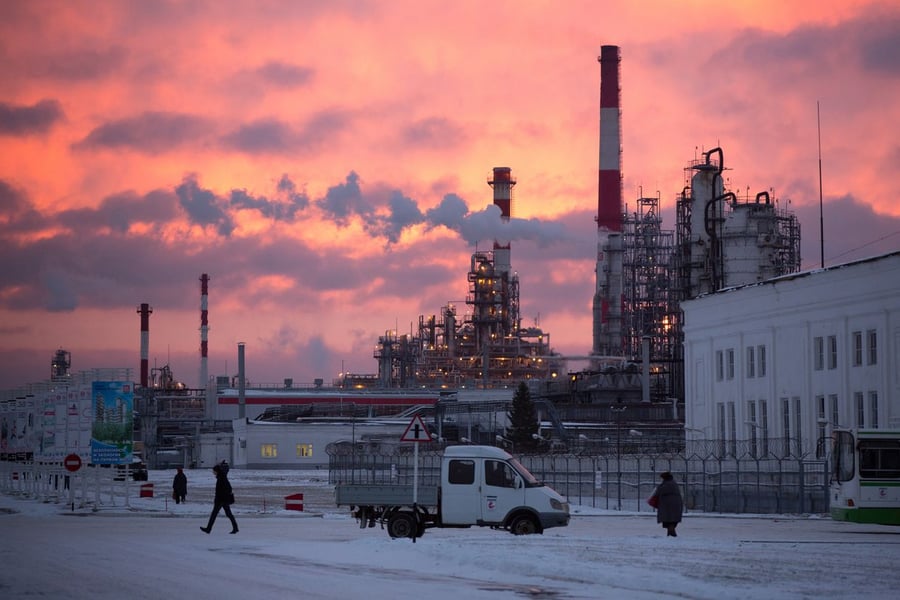
Lukoil is Russia’s largest privately held oil producer and refiner. Teboil, a branded fuel station chain operating primarily in Finland, is owned by Lukoil and carries the company’s ownership structure in its branding. The simultaneous removal of both apps from the two dominant Western mobile platforms reflects the reach of American sanctions compliance requirements into consumer-facing digital infrastructure.
Apple and Google are US-incorporated companies subject to Office of Foreign Assets Control rules. Maintaining infrastructure that supports a sanctioned entity’s application, including allowing new downloads, creates OFAC exposure that both companies have routinely moved to close when Treasury designations are issued. Neither Apple nor Google commented on the specific compliance action or provided a timeline for when the apps were removed.
Lukoil did not immediately comment publicly. The company has a more complex profile within Russia than purely state-owned entities: in early 2022, Lukoil’s board published a statement calling for an end to hostilities in Ukraine, a rare act of corporate dissent within Russia’s business community at the time. That distinction did not insulate the company from the November 2025 designation, which Treasury framed as part of a broader expansion of pressure beyond state-owned enterprises to privately controlled commercial players assessed as contributing to Russia’s economic capacity.
For Teboil specifically, the sanctions exposure extends beyond app stores. Teboil operates one of Finland’s largest fuel retail networks, a position that created significant political discomfort in Helsinki after Russia’s operation in Ukraine began. Finnish consumers and politicians grew uneasy about the visibility of a Russian-owned fuel chain, but Finnish regulation of Lukoil’s Finnish operations remained constrained by EU-level sanctions frameworks rather than unilateral national authority.
Lukoil operates refineries and retail networks across multiple countries beyond Russia, with a presence in Eastern Europe, the Middle East, and Sub-Saharan Africa. In Western markets, the sanctions exposure has been more acute. Lukoil previously divested its ISAB refinery in Sicily, Italy, amid sanctions pressure, and has reduced exposure in other Western-adjacent markets. The PRO apps represent a consumer-facing digital layer of the company’s retail network, used by customers to manage fuel cards, locate stations, and track fuel purchases.
Russia’s oil sector has found alternative export markets even as Western sanctions have restricted traditional channels. India has become one of the largest buyers of Russian crude since 2022, with volumes running at record levels through 2026. That trade operates through channels separate from the Western-controlled digital infrastructure that the Lukoil and Teboil PRO removals affect.
The app removals represent a category of sanctions enforcement that has received less attention than the headline oil price cap or asset freeze measures. Digital infrastructure compliance, including the removal of apps, disconnection of payment processors, and blocking of corporate services, has become a parallel enforcement layer running alongside the more visible trade and financial restrictions. For Russian companies with consumer-facing brand presences that operate internationally, the loss of app store access closes both a marketing channel and a functional service layer simultaneously.
Sanctions compliance in the app store ecosystem typically moves in phases: a Treasury designation triggers a review period, after which platforms make their removal decisions. The gap between the November 2025 Lukoil designation and the app store status now visible to users suggests either a phased enforcement decision or a delayed compliance review now reaching its conclusion. Russian app developers in prior similar cases have noted that removal from Western platforms does not always eliminate the app for existing users who already have it installed, but it does block new downloads and eventually halts update distribution, degrading functionality as the app ages against updated operating system versions.
Ukraine has separately pursued a direct targeting strategy against Russian refinery infrastructure, with drone strikes assessed to have disrupted fuel production capacity. The app removals and the physical targeting campaign represent different vectors of sustained pressure on Russia’s energy sector: one regulatory and digital, the other kinetic.
The question of what Lukoil does with its Finnish retail network remains open. Similar cases across European markets, where Russian energy company retail presences faced post-2022 political pressure, have resolved variously: some through sale to domestic buyers, some through continued operation under altered ownership structures, and some through protracted legal disputes over valuation. Teboil’s Finnish future is likely to be determined as much by Finnish legislative action and EU decisions as by Lukoil’s own strategic choices.
What the app removals do not resolve: whether Lukoil will develop alternative distribution channels outside the two major Western platforms, as several Russian technology companies have done since 2022; whether Teboil’s Finnish operations will face further separate regulatory pressure; and whether this represents a one-time compliance action or the beginning of a broader digital-platform enforcement sweep targeting additional sanctioned Russian entities.