DUBAI — For thirty-one days, the oil market had priced in a ceasefire that nobody had formally declared. Brent crude drifted sideways, trading desks thinned out for the end-of-summer lull, and analysts described the Strait of Hormuz as relatively stable in their morning notes. On Monday morning, that stability cost about $2.20 a barrel to unwind.
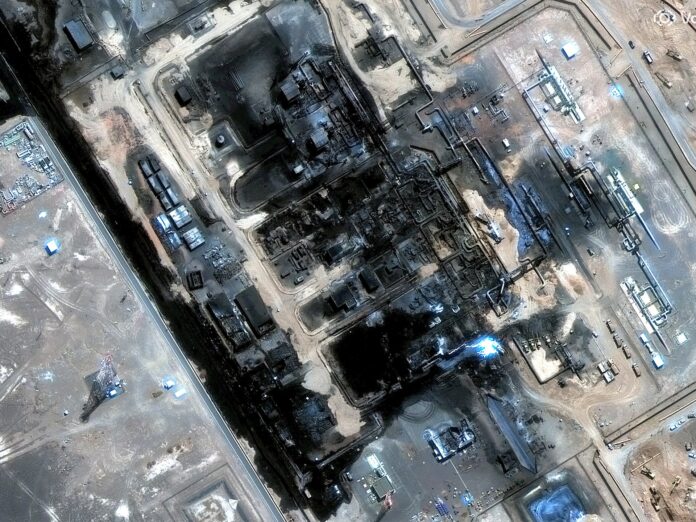
Iran’s Islamic Revolutionary Guard Corps launched a salvo of ballistic missiles at two US military installations in Jordan before dawn, then sent an armed drone toward Al Minhad Air Base in the United Arab Emirates hours later. The strikes came within forty-eight hours of a US Navy airstrike on Iran’s Larak Island, a fueling hub for the IRGC’s fleet of fast boats that have harassed tanker traffic in the Gulf since the conflict widened last spring. Brent crude settled at $91.14 on Monday, up 2.5 percent. West Texas Intermediate followed, crossing $87 for the first time since early July.
The movement was not spectacular by the standards of the conflict’s earlier spikes. What traders noticed was the sequencing: a month of quiet, then a US strike, then Iranian counterstrikes within hours, all with no diplomatic signal in between. That is not a ceasefire. That is a timer.
“We’ve been in a no war, no peace situation, with only partial volumes flowing through the strait,” said Saul Kavonic, an energy analyst at MST Marquee in Sydney. “That could last well into 2027.” Kavonic’s estimate, a chronic disruption premium rather than a crisis spike, explains why Monday’s jump felt measured even as it broke through levels that had been resisting bulls since mid-July.
The Hormuz calculus has shifted in ways the headline price obscured over the past month. Roughly 21 percent of global oil flows through the strait each day, a figure that has not changed. What has changed is how much of that flow moves unescorted. Tanker operators working the Hormuz transit have increasingly relied on US Navy convoy support since June, a logistical arrangement that adds days to passage times and caps the volume that can be moved in any given window. The practical effect is a quiet reduction in effective supply that does not appear in OPEC+ production numbers, a dynamic this publication has tracked since the first disputed tanker incidents emerged along the strait’s northern shipping lane.

The drone strike on Al Minhad carried a particular signal. The UAE base, one of the most heavily used by US forces in the region for drone operations and special-forces logistics, sits well inland from the Gulf coast and is not a maritime target. Reaching it requires a flight path that crosses contested airspace. That Iran attempted the strike suggests IRGC commanders were not limiting Monday’s response to the same maritime domain where the Larak Island exchange took place.
Al Jazeera reported that oil prices were climbing on fears of regional escalation, with traders reassessing assumptions about the conflict’s geographic scope. The drone’s path over UAE territory directly affects the calculus of Gulf producers who have described the conflict as a Hormuz issue, not a Gulf-wide security problem.
Jordan’s government confirmed the missile strikes hit areas near the US installations but said civilian casualties were limited. The US military said it was assessing damage and described both attacks as unacceptable escalation. No formal IRGC statement was issued by publication time, though commanders quoted by Iranian state media described the strikes as a response in kind to Larak.
Al-Monitor’s account of the August escalation pattern was confirmed by Monday’s events: Iranian harassment operations had intensified after each US naval interdiction, with neither side signaling a willingness to negotiate a formal quiet. The ceasefire had been tactical, not diplomatic.
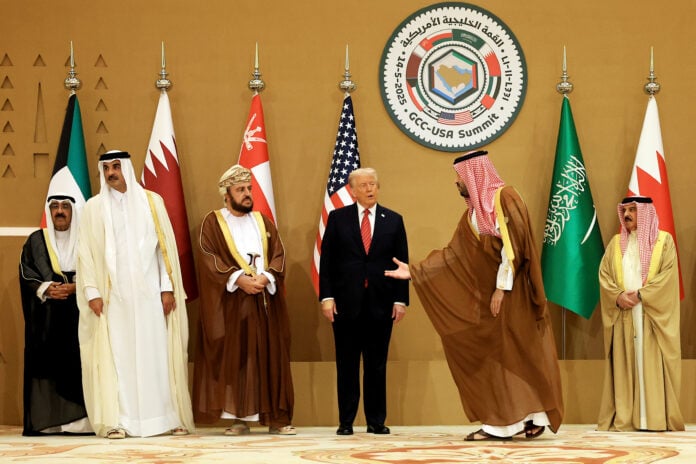
Oil ministers from Gulf producers met informally on the sidelines of the UN General Assembly preparatory sessions in New York last week. No joint statement was issued, but delegates from three countries told reporters on background that OPEC+ has no immediate plans to adjust its 400,000-barrel-a-day monthly increase schedule. The cartel is not treating Monday’s events as a production emergency. Not yet.
That gap between geopolitical temperature and supply-policy response is what the market is actually repricing. Earlier in the year, an attack of this scale would have triggered immediate OPEC+ emergency-meeting speculation. Monday’s session produced none. Traders have absorbed the idea that the cartel will not act unless a full Hormuz closure becomes imminent, and they price accordingly: a chronic war premium layered into each barrel, adjusted upward on bad days, never fully removed on quiet ones.
How long that calculation holds depends on whether Jordan and the UAE attacks remain isolated or become a pattern. Kavonic, whose 2027 timeline for the chronic-disruption scenario assumes no full escalation, acknowledged that a sustained campaign against Gulf-state infrastructure would reset the math. The diesel market, already under pressure from Russia’s refinery output constraints, would absorb the shock first, and the spread between crude and distillate is where supply disruptions land hardest and fastest.
The answer the market does not have is what Washington’s response looks like. Secretary Bessent’s claim at last month’s G20 that Hormuz would be rendered irrelevant by overland pipeline alternatives within two years now reads as aspirational rather than predictive. The missile trails over Jordan suggest those alternatives are not here yet.