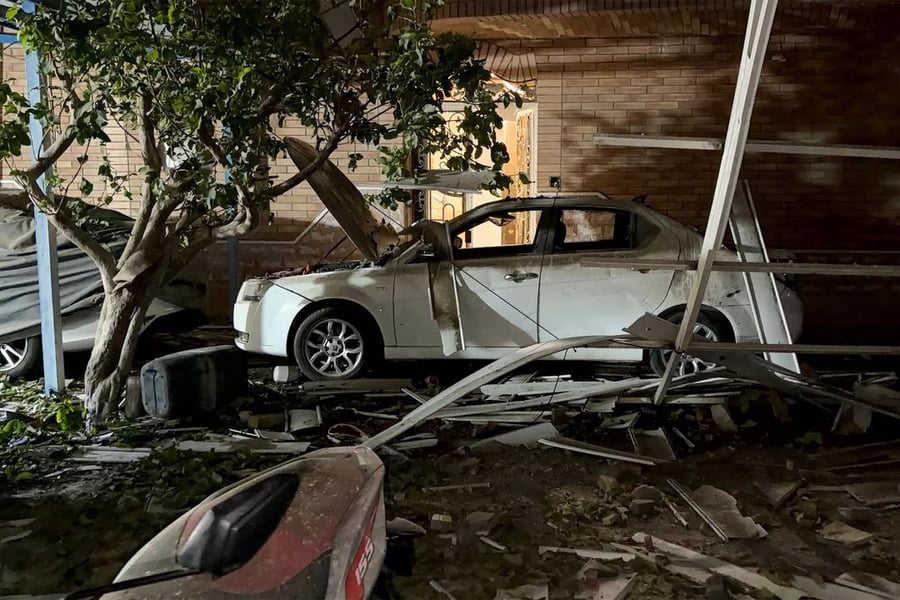

WASHINGTON — The wedding guests, if that is what they were, never reached the ceremony. A United States airstrike struck the coastal village of Kuhestak in Sirik County late Wednesday, killing at least 18 people. Among the dead was a 4-year-old child. Iran’s Foreign Ministry called it a war crime. The Pentagon said it had destroyed a logistics hub.
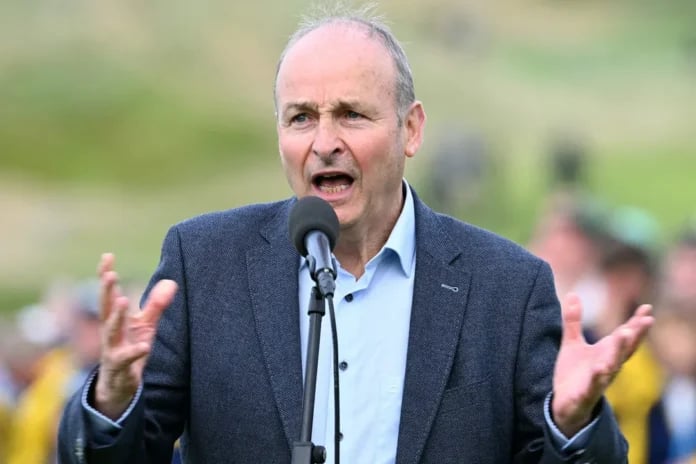
Donald Trump, on Thursday morning, said he could do it again whenever he chose.
“We’re prepared to do another one,” the president told reporters at the White House. “And anytime we want.” He had described the prior night’s strikes with evident satisfaction, saying the United States hit Iran “very hard last night,” and declared that Washington maintained “very strong control” of the Strait of Hormuz, the narrow passage whose effective closure since early summer has defined much of the war’s economic cost.
Sixty-three percent of Americans oppose the military campaign, according to recent polling. Trump’s approval rating has slipped from roughly 40 percent to 33 percent since the war began. A retired Pakistani lieutenant general with long experience in regional security described the United States as occupying an “increasingly uncomfortable strategic position” in a theater where military operations have not produced strategic resolution.
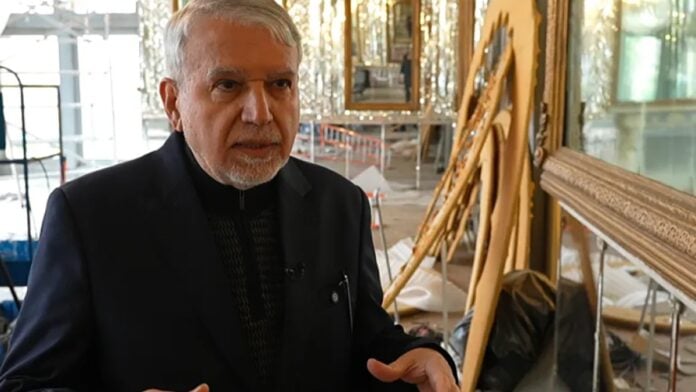
Iran’s Health Ministry official Hossein Kermanpour said 142 people were wounded in the Kuhestak strike, according to TRT World. “Behind every number,” he said, “stands a human being and a family.” Foreign Ministry Spokesman Esmaeil Baghaei went further. “The civilians are real,” he said. “The victims are real.” Iran’s Health Minister Mohammad-Reza Zafarghandi separately confirmed the death toll.
What neither government has confirmed in a manner independently verifiable is who exactly died inside Kuhestak, and why they were there. Washington says it observed preparations to deploy rockets carrying sea mines, and struck accordingly. Iran says the site was a civilian gathering. The truth of what happened in Kuhestak on the night of September 2 to 3 is not, at this writing, established.
The gap between Trump’s public posture and the underlying strategic reality is the exposure that Republican midterm candidates have been quietly dreading since August. The president can say the military is “prepared to do another one,” and the capability to strike is not in serious doubt. What he has not said, and what no one in the administration has publicly said, is what the accumulation of precise strikes is meant to achieve, or when the campaign ends.
Trump’s own advisers have simultaneously pursued what earlier reporting identified as a quiet push for de-escalation before November, apparently calculating that the war becomes politically survivable only if its pace slows. The president’s Thursday statement, with its “anytime we want” framing, is in visible tension with that internal calculation.
Al Jazeera‘s correspondent reported from the scene that Iranian officials brought journalists to the site and described it as the location of a wedding celebration. The Pentagon asserted military justification for the strike without confirming civilian presence or absence. Neither account has been corroborated by any party with independent access to Kuhestak.
Oil markets, which have traded at elevated levels since the Strait’s effective closure, were not sharply affected by Thursday’s news. Analysts who track the conflict say markets have priced in extended hostilities. What they cannot price is a conclusion.
The wounded count from TRT World, at 142, is higher than the figure of more than 108 initially reported. The discrepancy reflects the rolling nature of assessments in the hours after an attack. Kermanpour and Zafarghandi were the only Iranian officials providing casualty data publicly; the IRGC did not immediately issue a separate statement.
Trump, asked whether the administration was concerned about civilian casualties in Kuhestak, said the operation was “very precise.” He offered no figure for how many more precise operations remained in the plan.