
JEFFERSON CITY — The Missouri secretary of state who drafted a flawed ballot summary for a redistricting referendum he also refused to place on the ballot is now facing a different kind of deadline. Denny Hoskins has been ordered to appear before the Missouri Supreme Court on Thursday morning to explain why he should not be held in contempt for directing election officials to use a congressional map that the court has barred.
The order turns what had been a complicated legal dispute over congressional boundaries into something more direct: an elected official being compelled to appear before the highest court in his state and answer for allegedly defying its ruling, just eight weeks before an election that will help determine control of the US House.
The map at the center of the dispute was drawn in 2025, after Missouri Gov. Mike Kehoe called a special legislative session following President Donald Trump’s push for Republican-led states to pursue rare mid-decade redistricting efforts aimed at strengthening the party’s House majority.
The new map targeted the 5th Congressional District held by Democratic Rep. Emanuel Cleaver, extending it eastward from Kansas City and adding 14 counties along the Missouri River, where Republican voters are numerous. Under the revised boundaries, approximately 59 percent of Cleaver’s district would have consisted of new territory.
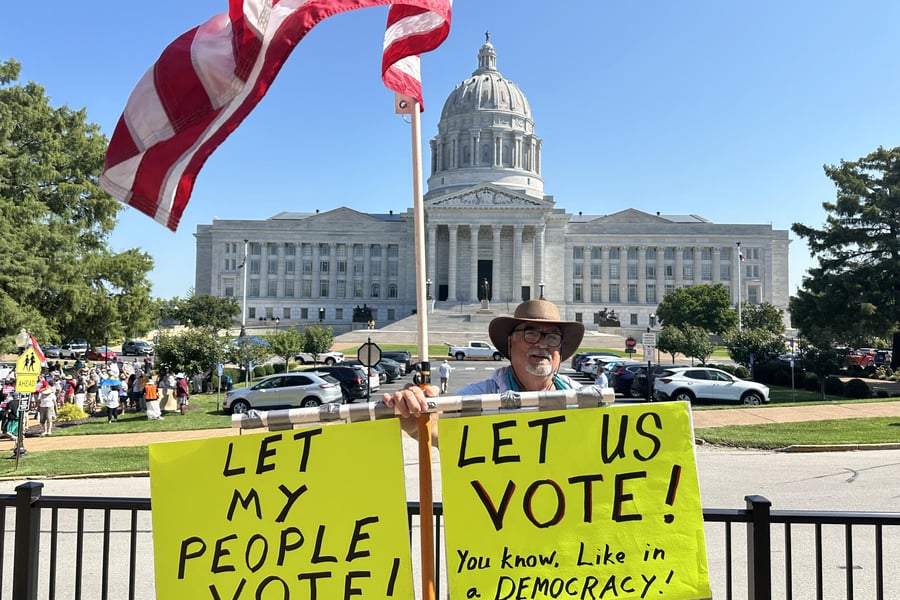
A citizens group called People Not Politicians responded by collecting more than 300,000 signatures in an effort to put the map before voters in a referendum. That effort soon came into conflict with Hoskins, who refused to certify the petition as sufficient, arguing that redistricting measures were not subject to voter referendums.
Hoskins also acknowledged under questioning that he had prepared a ballot summary for the referendum that contained errors.
The Missouri Supreme Court ruled against him on both issues. The court determined that the referendum petition was “legal, sufficient, and timely” and concluded that Hoskins had “incorrectly concluded otherwise.” It ordered the state to use the 2022 congressional boundaries in November, leaving Cleaver to run in a district where his support is considered solid.
Missouri Republicans then asked the US Supreme Court to intervene. Justice Brett Kavanaugh, who handles emergency applications from the Eighth Circuit, denied the request without comment last week. The decision by the nation’s highest court left the Missouri Supreme Court’s ruling in place.
But it did not resolve the conflict.
Hoskins’ subsequent direction to election officials to use the congressional map barred by the state Supreme Court has now brought the dispute directly before the justices again, with the secretary of state required to explain his actions and why they should not result in a contempt finding.
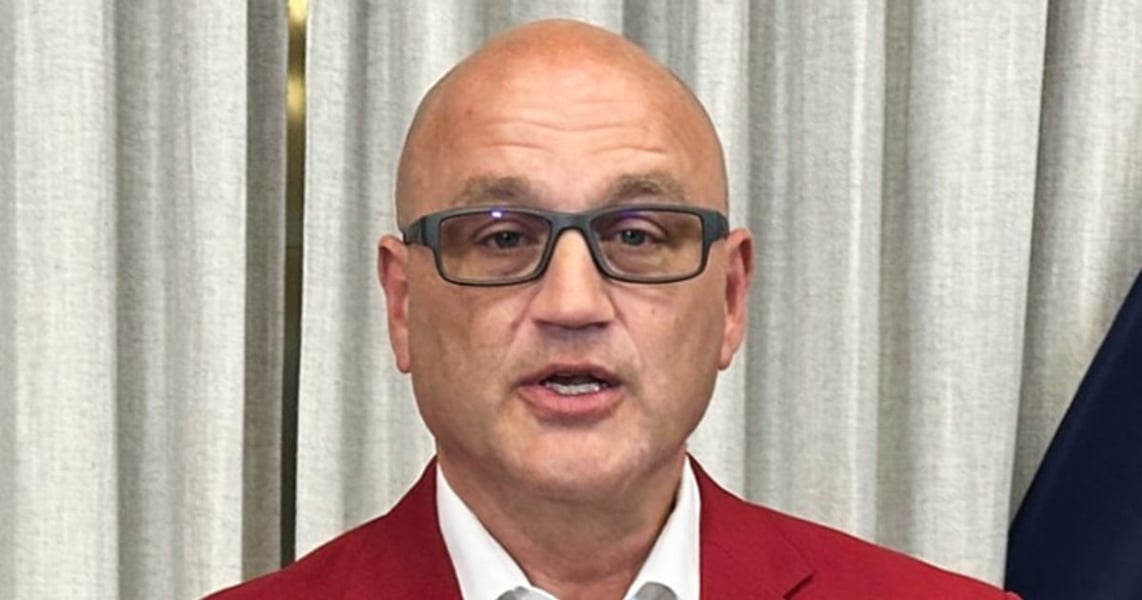
Missouri’s Supreme Court took him at his word. The court issued a contempt summons requiring Hoskins to appear in person Thursday morning at 10 a.m. CDT and explain his actions. People Not Politicians, the same group whose petition started the original dispute, had filed the contempt motion after Hoskins continued directing election officials toward the 2025 map.
The legal question beneath the contempt hearing is not straightforward. The supremacy clause does, in certain circumstances, give federal court orders precedence over state rulings. But the U.S. Supreme Court has already weighed in on this specific dispute, and Kavanaugh declined to stay the state court ruling. What Clark’s district court order means in light of that refusal remains contested. Hoskins’ legal theory requires a Trump-appointed district court judge to have authority that the U.S. Supreme Court itself declined to exercise when given the opportunity.
Republicans drew the 2025 map to deliver seven of Missouri’s eight congressional seats to the party. Cleaver’s Kansas City district is one of two remaining paths for Democratic representation in the state’s congressional delegation. As NBC News reported, the redistricting battle is a component of the Republican strategy for holding the House in a midterm year when the president’s party historically loses seats. Missouri sits alongside the broader fight Republicans are waging to defend their House majority through the Dallas midterm convention this week.
Missouri is one piece of Trump’s mid-decade redistricting strategy, which has reached courts in multiple states. In this one, Hoskins has placed himself in an uncommon position: a state official who has absorbed a loss at the Missouri Supreme Court, a refusal at the U.S. Supreme Court, and is now arguing that a federal district court judge has resolved what both higher courts would not. Cleaver, whose office has opposed the mid-decade redistricting from the start, has not indicated publicly which district he expects to be running in come November.
Thursday’s contempt hearing will answer one question: whether Hoskins can be penalized for what the court views as defiance. It will not answer the one that matters most to the November 3 ballot. Which map Missouri uses on Election Day is still, as of Wednesday morning, unresolved.