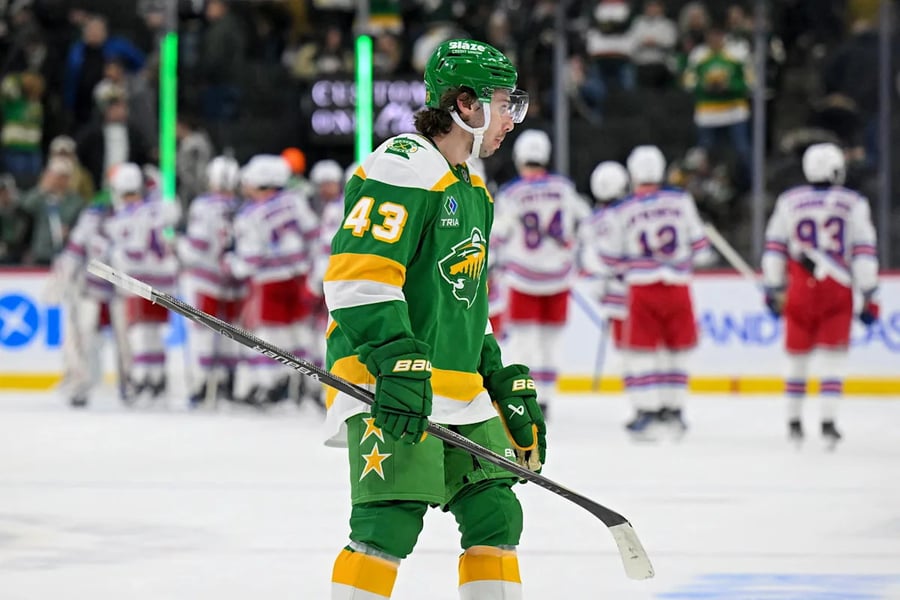

SAINT PAUL — Quinn Hughes has not decided whether he wants to remain in Minnesota. The Wild traded a Norris Trophy winner, two prospects, and a first-round pick to acquire him last December. With six days remaining before the collective bargaining agreement closes the window for an eight-year extension, Hughes has yet to tell the team he intends to become the player around whom it built its future.
That uncertainty is the most consequential issue in the NHL right now, and Minnesota has six days to change it.
TSN’s Chris Johnston reported Monday that Hughes remains undecided about signing a long-term extension with the Wild, saying the defenseman had been “having trouble basically making up his mind about what he wants to do for his future.” The report, published by Yahoo Sports, carried the full weight of what Minnesota surrendered to acquire him: Marco Rossi, Liam Öhgren, Zeev Buium, and a first-round pick. Vancouver sent all four assets to Minnesota in December, allowing the Wild to add one of the most complete offensive defensemen of his generation.
Hughes has not yet committed to becoming part of what Minnesota is building.
The Wild’s owner said this summer that the team would sign Hughes. That statement is either accurate, with the current uncertainty amounting to little more than theater, or it reflects hope presented as certainty. Johnston’s reporting suggests the latter possibility deserves greater consideration.
The structural deadline makes everything acute. Under the NHL’s current collective bargaining agreement, teams have until September 15 to sign their own players to eight-year extensions. On September 16, the new CBA takes effect and the maximum drops to seven years for re-signings. Minnesota’s front office has been clear about wanting the maximum term. Hughes, according to reports, prefers something shorter — somewhere around three years — a figure that would allow his contract to expire while his brothers are still under contract in New Jersey.
That preference is not minor. It is the architecture of a possible exit.
Jack Hughes and Luke Hughes — Quinn’s brothers — both play for the New Jersey Devils. Luke is signed through 2031-32. A three-year extension in Minnesota would expire when Quinn turns 30, aligned with a window in which a move to New Jersey could become possible. The Wild understand this geometry. It explains why their public posture has been so loud even as Johnston’s private reporting tells a different story.
Minnesota has the money. The Wild have the financial flexibility to match or exceed the eight-year, $163.2 million extension Cale Makar signed with Colorado in August, a deal that reset the market for elite defensemen at $20.4 million annually. Whatever Hughes commands, the Wild can write the check. Johnston acknowledged as much: “I don’t think there are any restrictions on their end in terms of making him a very wealthy man.”
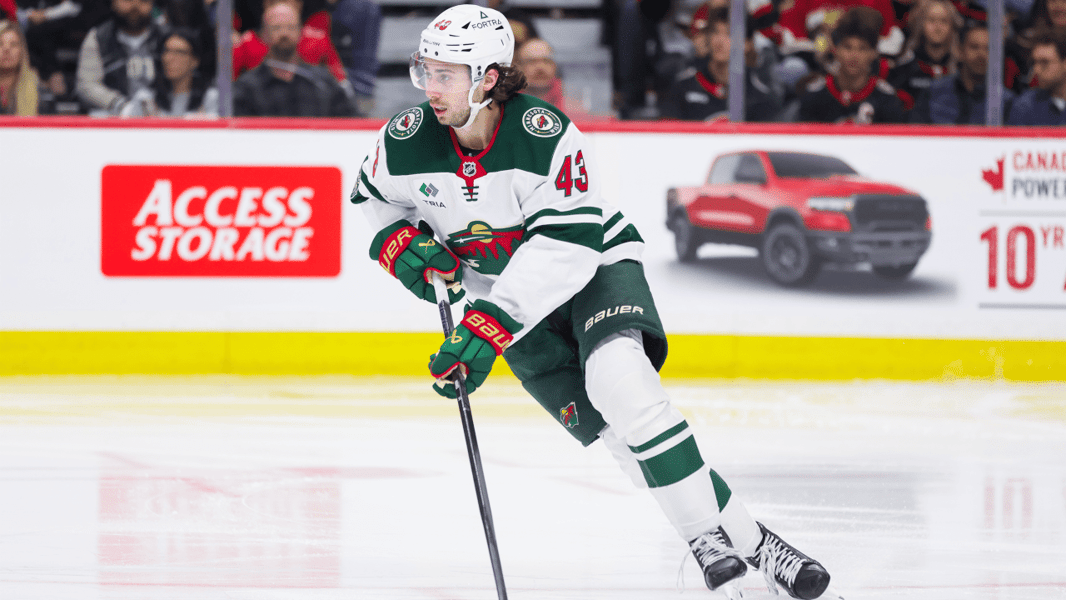
Vancouver moved him in December believing he would not re-sign with the Canucks. Minnesota operated on the opposite assumption — that a change of scenery, the right contract, and a legitimate contender around him would change the calculus. What Johnston’s report suggests is that the calculus has not resolved cleanly, six weeks before the season opens and six days before the CBA closes the eight-year window.
The Wild’s preference for maximum years is not unreasonable from a franchise perspective. They traded their most valuable assets for a player they cannot keep for one season and then lose for nothing. Eight years pins Hughes in Minnesota past his mid-thirties, past any realistic window where he might pursue a reunion with his brothers. Three years is nearly as damaging as not signing him at all: three years with a player who may not fully commit, followed by a negotiation in which he carries all the leverage.
The extensions signed this week — Buium in Vancouver, Fraser Minten in Boston — share a logic: teams betting on young players before the market catches up to their value. Minnesota is facing the opposite problem. Hughes’ value is fully understood. What remains in question is the commitment underneath the contract.
Johnston stopped short of saying Hughes does not want to stay. The operative word was “trouble” — not “no,” not a request to be traded, but genuine indecision. A player who wants to leave says so. A player who wants to stay says so. A player having trouble making up his mind has not found the thing that forecloses one direction over the other.
What the Wild need is something that tips Hughes. What they do not have is time.
The eight-year window closes in six days. The offer shrinks by a year on September 16. Minnesota’s owner said the Wild would sign Quinn Hughes. Quinn Hughes has not said the same thing.