
WASHINGTON — The woman who became a U.S. citizen three years ago and has voted in every election since is not identified in any court filing. Neither is the naturalized voter whose Social Security records still carry a processing code from a decade ago. In the language of the litigation, they are “potential noncitizens flagged on state voter lists”—among 28,635 individuals identified by the Department of Homeland Security from more than 65 million voter records the agency says it screened after rebuilding a federal citizenship database that two courts have ruled was assembled in violation of U.S. law.
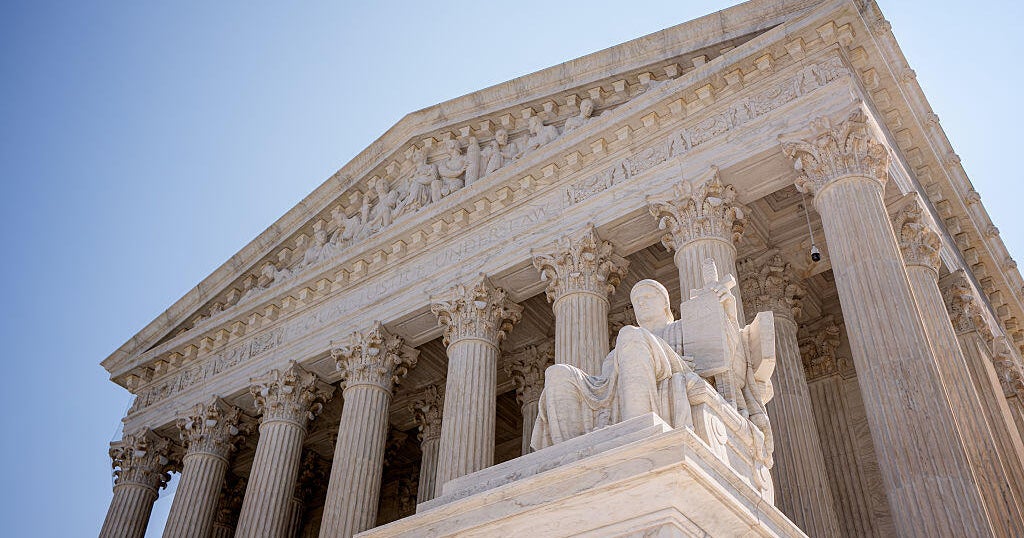
On Tuesday, with the midterm elections eight weeks away, the Trump administration asked the U.S. Supreme Court to overturn both rulings.
At the center of the dispute is the Systematic Alien Verification for Entitlements, or SAVE, a federal database originally created to verify the immigration status of people applying for government benefits. Following a March 2025 executive order from Trump, the Department of Homeland Security reconfigured the system for another purpose: identifying potential noncitizens on state voter rolls. To do so, DHS combined data from the Social Security Administration, Internal Revenue Service, Department of Health and Human Services, Department of Labor, and state voter-registration files. In court filings, lawyers for the plaintiffs described the result as a “national citizenship database” assembled from agencies whose governing statutes were never written to authorize such data sharing.
A federal district judge ruled in June that the modified system violated the Social Security Act’s restrictions on disclosing Social Security records for purposes beyond the program. The judge also found that it violated the federal Privacy Act. The D.C. Circuit Court of Appeals upheld the decision in a 2-1 ruling on September 5, CBS News reported. Four days later, Solicitor General D. John Sauer filed the administration’s emergency application with the Supreme Court.
Sauer’s filing acknowledged a legal complication that makes the request unusual. Under the National Voter Registration Act, states are already within the 90-day quiet period preceding the November 3 election—a period during which they are barred from systematically removing voters from their rolls. Sauer argued, however, that the quiet period does not eliminate all action. It prohibits systematic purges, he wrote, but not “individualized decisions,” meaning state officials could still act on specific flagged records without violating the statute.
He characterized the blocked database as a threat to election integrity, asserting that SAVE had verified the citizenship of more than 65 million voters across 26 states and identified 28,635 records requiring follow-up by state election officials.
That figure is contested for a structural reason. The League of Women Voters, the Electronic Privacy Information Center, and five individual voters — represented by Democracy Forward, Citizens for Responsibility and Ethics in Washington, and the Fair Elections Center — brought the original case in September 2025. Their core argument was that the expanded SAVE data is unreliable for the purpose the administration is using it. Immigrants who have naturalized and are lawfully entitled to vote frequently remain coded as noncitizens in Social Security Administration records, because the SSA does not routinely update that status when someone becomes a citizen. The database was built to track immigration status. Citizenship status is a different question, and using one to answer the other produces errors that land on real registered voters.
There is no evidence of large-scale noncitizen voting in U.S. elections. The administration’s filings have not addressed that point.
The Supreme Court ordered the plaintiffs to respond by September 15. Justice Clarence Thomas oversees emergency applications from the D.C. Circuit. What the court does inside that deadline — a stay, a denial, additional briefing — will determine whether any state can act on the flagged records before early voting begins in October. Twenty-six states have already received SAVE verification results from DHS and have used or considered using them.
The SAVE application arrives as the third major voting-mechanics case the Trump administration has taken to the Supreme Court in 2026. A federal judge permanently blocked Trump’s proof-of-citizenship registration order in June, finding that the executive mandate exceeded the president’s authority under election law. The administration separately pursued mail-ballot restrictions through the U.S. Postal Service — that order was blocked nationwide by a federal judge and then partially restored by the Supreme Court in a preliminary ruling last month, with the full litigation still pending. Ahead of those battles, Trump dismissed all members of the Election Assistance Commission in July, eliminating the independent federal body that certifies U.S. voting systems and guides state election officials in the final months before a national vote.
Each of those actions produced judicial blocks. The SAVE filing follows the same sequence: executive action, lower-court injunction, appellate defeat, Supreme Court application on a timeline calibrated to the election itself. What the administration cannot fully control is whether the justices move as fast as the calendar requires. The court’s September 15 response deadline is one week away. November 3 is eight weeks after that.