WASHINGTON — Oscar Lopez Garcia left El Salvador more than two decades ago and built a quiet life in the United States. When the federal government detained him last year under a sweeping new immigration policy, it did not allege that he was dangerous or a flight risk. Instead, it argued that the law required him to remain in custody without the possibility of a bond hearing for as long as his case took to resolve.
On Thursday, the United States Court of Appeals for the Fourth Circuit ruled that the government was wrong.
The 2-1 decision in Lopez Garcia v. Guadian was the ninth consecutive ruling against the Trump administration’s no-bond detention policy from federal appeals courts across the country. Nine circuits have now concluded, using varying language but reaching the same result, that the administration cannot deny long-resident immigrants access to bond hearings by reinterpreting a statutory provision that previous presidents, including Trump during his first administration, had never applied in this manner. Only two circuits, the Fifth and Eighth, have sided with the government. The resulting split, legal analysts say, makes Supreme Court review increasingly likely.
At the center of the dispute is a question about which section of the Immigration and Nationality Act governs immigrants like Lopez Garcia — a Salvadoran who entered the country without inspection years ago — when ICE detains them during interior enforcement operations. The Trump administration’s Department of Homeland Security issued guidance in 2025 declaring that such individuals fall under a provision requiring mandatory detention: no hearings, no individualized assessment, no release regardless of ties to family or community. The Fourth Circuit majority, composed of Judges Barbara Keenan, appointed by President Obama, and Nicole Berner, appointed by President Biden, concluded that provision governs people being processed at the border, not people encountered years later in the interior. The correct provision, they found, permits bond hearings — the standard individualized review that allows immigration judges to assess whether any particular person actually needs to be detained.
Judge Allison Rushing, a Trump appointee, dissented, arguing the majority strained the statute’s plain text.
The majority opinion did not confine itself to statutory analysis. It invoked the forced internment of Japanese Americans during World War II and the 1892 Geary Act, which imposed collective civil penalties on Chinese immigrants, to frame what it called the constitutional dangers of mass administrative detention. “Mass detention of marginalized individuals without due process harkens back to some of the darkest moments in our country’s history,” the judges wrote. The comparison appeared not in a footnote but directly in the body of the opinion — a deliberate signal about how the court understood what the administration was attempting.

My Khanh Ngo, a senior staff attorney with the ACLU’s Immigrants’ Rights Project — which represented both men alongside the ACLU of Virginia — said the courts had “resoundingly rejected the administration’s cruel policy and its blatant disrespect for the rule of law.” The ACLU’s press release on the ruling described the decision as a rebuke of an administration that has made mass detention central to its immigration strategy.
NBC News has reported that the ruling deepens a circuit split of unusual breadth. The Trump administration has now lost at the First, Second, Third, Fourth, Sixth, Seventh, Ninth, Tenth, and Eleventh circuits. It has prevailed only at the Fifth, covering Texas, Louisiana, and Mississippi, and the Eighth, covering a wide stretch of the Midwest. The magnitude of the split — nine courts against, two in favor — is precisely the kind of national judicial disagreement the Supreme Court is designed to resolve.
Eastern Herald has previously documented the administration’s parallel push to expand physical detention centers capable of holding 80,000 people simultaneously, a scale of infrastructure that presupposes no-bond detention becoming permanent. The court ruling this week complicates that infrastructure’s legal basis.
The administration’s reading of the law rested on a novel claim. Five prior presidential administrations, including Trump’s first term, interpreted the mandatory detention provision as applying exclusively to immigrants being actively processed at the border or port of entry. The 2025 DHS guidance extended that interpretation to any noncitizen who had ever entered without inspection, regardless of how many years had passed, effectively exposing millions of long-resident people to indefinite incarceration the moment they came into contact with federal enforcement. Judge Berner noted in the majority opinion that the government’s interpretation would require the arrest and detention of approximately six million people — a figure that would dwarf any mass detention program in modern American history.
What the ruling does not decide is what happens to Lopez Garcia and Rivera now. They are entitled to bond hearings, but those hearings are separate proceedings where the government can still argue for continued detention. The ruling guarantees them an audience before a judge. It does not guarantee their release.
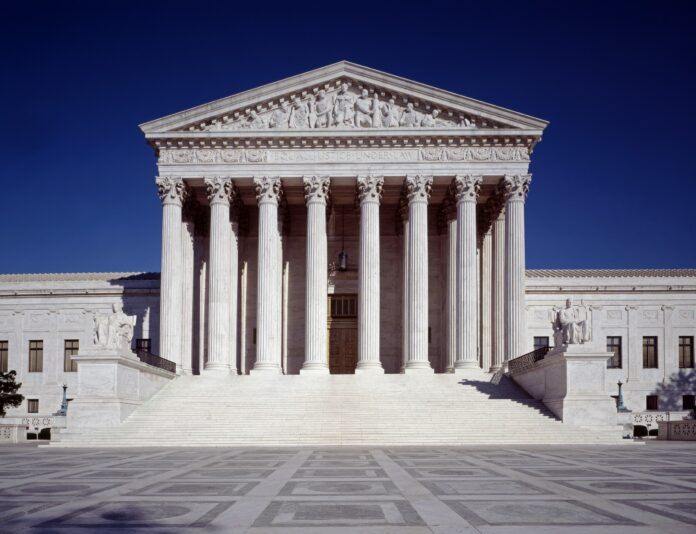
The Supreme Court is expected to hear this case. Whether the administration seeks another emergency application to stay the ruling or waits for the justices to grant certiorari in the ordinary course, the question before them will be the same one nine appellate courts have answered the same way: whether the executive branch can unilaterally reread a federal statute to impose indefinite, no-hearing detention on millions of people who have lived in the United States for years. The answer, so far, has been no. That answer now needs a final word from nine justices.