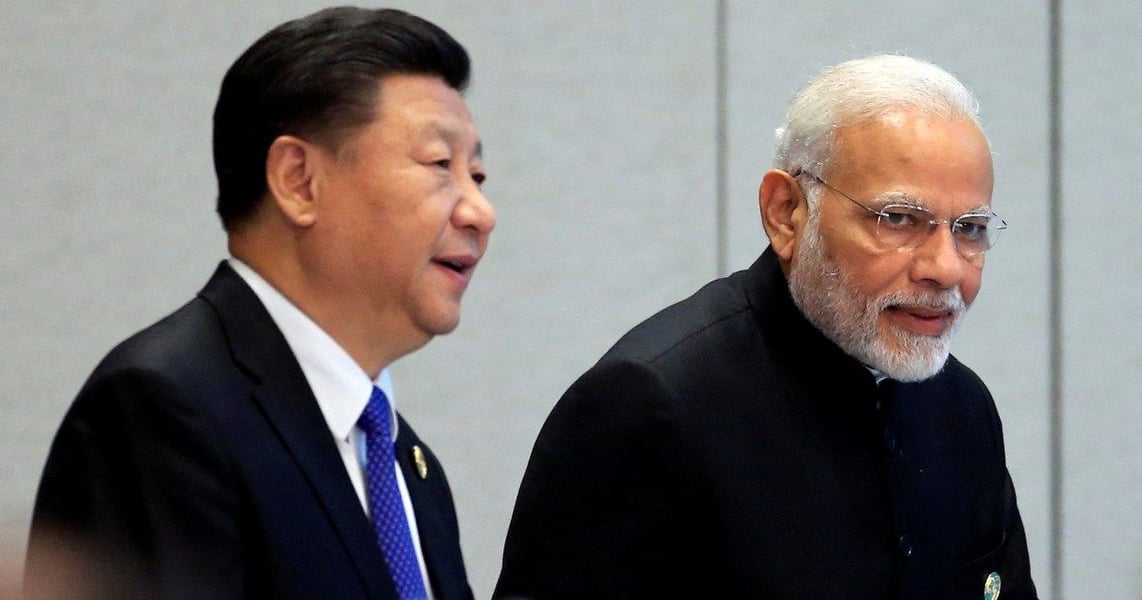

NEW DELHI — The leaders of the world’s two most populous countries held their first substantial bilateral meeting in three years on Saturday at the 18th BRICS Summit in New Delhi, agreeing to pursue a “fair and reasonable” settlement of their disputed Himalayan border as both governments reorient themselves to a shifting global economic order.
Prime Minister Narendra Modi and President Xi Jinping met on the sidelines of the summit, agreeing that stable India-China ties rested on three principles: mutual respect, mutual sensitivity, and mutual interests. Xi told Modi that China and India, as ancient civilisations representing nearly three billion people between them, should view their relationship from a “strategic perspective” and steer it in a “stable, long-term and healthy” direction. Both sides acknowledged “steady progress” in border dialogue, though they stopped short of announcing any new territorial disengagement.
The bilateral was the first of its depth since the two governments completed a phased withdrawal from contested forward positions in the Depsang Plains and Demchok, areas in Ladakh at the heart of the standoff since June 2020, when a brawl in the Galwan Valley killed twenty Indian soldiers and an undisclosed number of Chinese troops. That confrontation had all but frozen political contact between Delhi and Beijing for four years.
Saturday’s meeting was the clearest signal yet that India and China have chosen managed engagement over continued hostility, a pivot with direct consequences for the United States, which has spent years trying to recruit Delhi as a primary strategic counterweight to Beijing’s regional influence.
The economic logic underlying that pivot is difficult to argue away. Bilateral trade between India and China reached approximately $118 billion in the last fiscal year, making China India’s largest trading partner even while the two countries maintained tense military postures across disputed terrain. Modi pushed for greater Chinese investment in Indian manufacturing and a narrowing of a trade deficit that runs roughly $85 billion in Beijing’s favour. No Chinese commitment on that front was publicly announced.
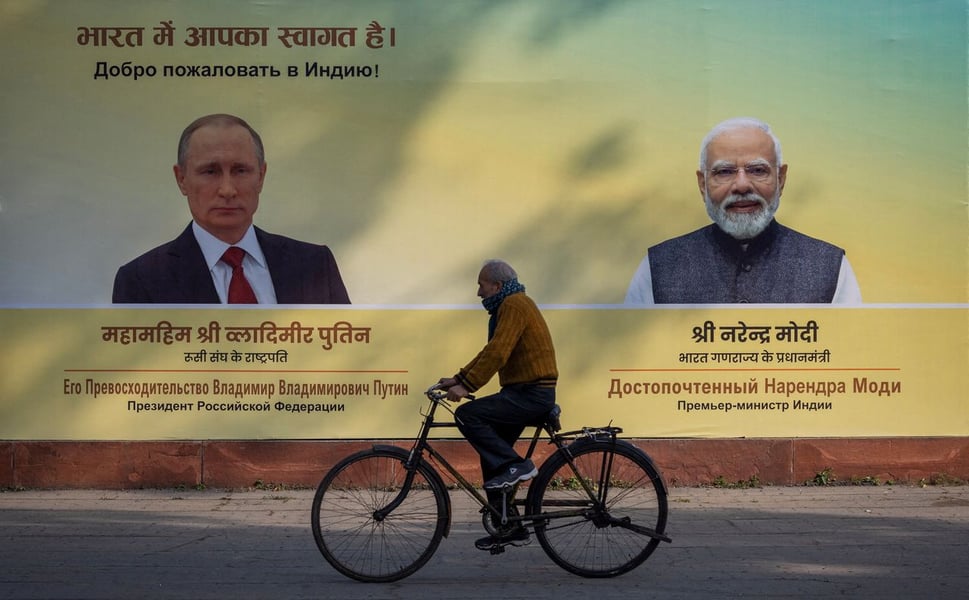
The summit at which the two leaders met was already notable for who else stood in the same room. Russian President Vladimir Putin arrived at Delhi’s Palam Air Force Station on Friday, TRT World reported he was received by India’s Minister of State for External Affairs Kirti Vardhan Singh, making his first in-person BRICS appearance outside Russia since the Russian operation in Ukraine began in February 2022. Modi and Putin held talks on Friday evening, both governments announcing a target of raising bilateral trade to $100 billion by 2030 from roughly $70 billion in the last fiscal year, with energy, defence co-production, critical minerals, and cross-border payments in local currencies named as priority areas.
The New Delhi Declaration, adopted unanimously by all eleven members of the expanded grouping, called for reform of the World Trade Organization, backed the use of local currencies in bilateral trade between BRICS economies, and endorsed India’s long-standing demand for a defined timeline and “clear outcomes” on UN Security Council reform. The declaration also backed Palestinian statehood with East Jerusalem as its capital, rejecting the forced displacement of Palestinians from Gaza, language the grouping advanced even as member governments diverged sharply on the war raging across the Gulf.
Reaching that consensus required intensive back-channel negotiation. Iran and the United Arab Emirates, both members of the expanded BRICS bloc, are effectively on opposing sides of the US-Iran war, a conflict the Trump administration framed on the twenty-fifth anniversary of September 11 as the legitimate continuation of the War on Terror. Al Jazeera reported that Indian diplomats worked through the early hours of Saturday morning to broker language acceptable to both Tehran and Abu Dhabi, eventually settling on a call for “maximum restraint” that named no party to the conflict directly. On the summit’s sidelines, Iranian President Masoud Pezeshkian and UAE Crown Prince Mohamed bin Zayed held what TRT World reported was the first direct contact between the two leaderships since the war began.
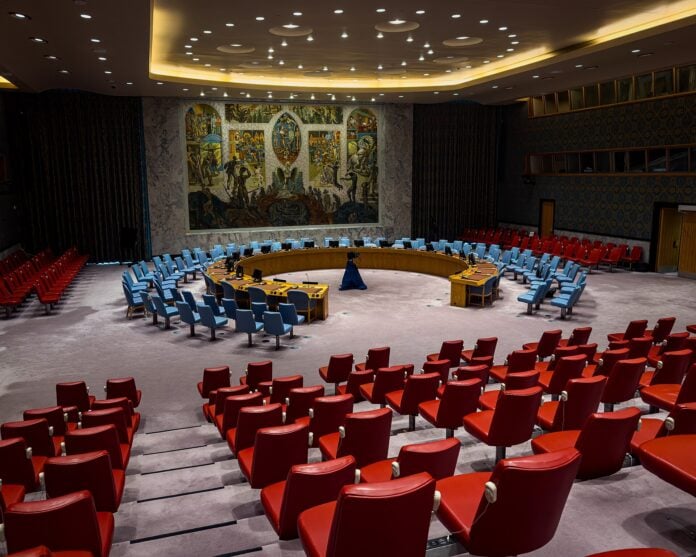
Modi, in his concluding summit remarks, called on leaders to replace what he termed the “pyramid of privilege”, his characterisation of a global governance architecture built when most of today’s emerging economies were still under colonial administration, with a “platform of partnership” in which every nation had a voice in decisions shaping its future. He proposed a 10-point reform roadmap and argued that UN Security Council expansion needed a “definite timeframe and clear outcomes” rather than another generation of deliberation. “Today’s discussion makes it evident,” Modi said, “that the changing world cannot be steered by outdated institutions.”
The mood of possibility ran up hard against the realities outside the summit hall. The India-China border formulation, for all its diplomatic warmth, produces no new map and sets no timetable. The $100 billion India-Russia trade target assumes payment systems that Western sanctions were specifically designed to close off. And the consensus declaration that united Iran and the UAE in a shared text did nothing to quiet the war those two governments are effectively backing from opposite sides.