
BOSTON — Since May 2025, applicants seeking federal jobs ranging from air traffic control to nuclear materials handling and law enforcement have faced an unusual requirement: write an essay explaining how they would advance President Trump’s executive orders and identify one they consider personally significant.
On Friday, a federal judge in Massachusetts ruled that the government could not require applicants to answer that question.
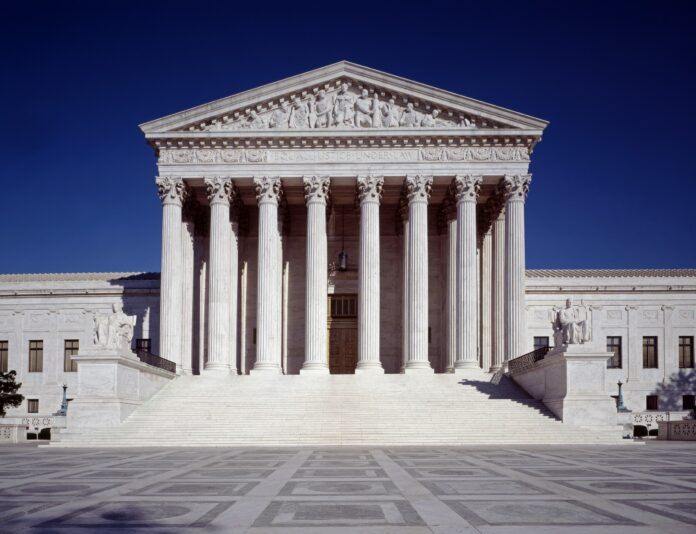
US District Judge George A. O’Toole Jr. issued a preliminary injunction barring the Office of Personnel Management from continuing to include the question on federal job listings while a lawsuit brought by three unions moves through the courts. The ruling covers positions associated with more than 70,000 listings on the USAJobs federal hiring portal and found that the unions were likely to prevail on both their First Amendment and Administrative Procedure Act claims.
Judge O’Toole wrote that there was “no legitimate governmental interest in inquiring into the political beliefs of applicants to federal civil service vacancies.”
The requirement traced back to a January 2025 executive order from Trump directing federal agencies to build a workforce “dedicated to the furtherance of American ideals.” OPM translated that into an operational directive in late May 2025, sending a memo to all agency heads outlining four essay questions to be added to competitive service job postings. The third question was the one that caught the attention of union lawyers: applicants had to explain how they would help advance Trump’s EOs in their specific role and name which executive order they found most significant.
The question did not appear on White House fellowship applications or political schedule-C positions, where some alignment with the administration’s agenda might be expected. It appeared on postings for technicians, inspectors, crane operators, and nuclear couriers. The American Federation of Government Employees, the American Federation of State, County and Municipal Employees, and the National Association of Government Employees brought the lawsuit, represented by Democracy Forward, a legal organization that has challenged numerous administration policies in court.
Penetration across the federal hiring apparatus was wide. The Labor Department included the question on all its posted vacancies. The Justice and Energy departments applied it to roughly three-quarters of listings. Attorney postings across agencies used it roughly 60 percent of the time; information technology roles at around half. The practical result was that an applicant who preferred not to declare allegiance to the president’s policy agenda had to choose between writing a compliant essay or losing their shot at the position.
O’Toole denied the unions’ broader request that would have also barred the administration from factoring applicants’ responses, or their silence, into hiring decisions. That question remains live as the litigation continues.
The ruling lands against a backdrop of sustained judicial scrutiny of the Trump administration’s approach to the federal workforce. Earlier this month, a federal appeals court found that the IRS had violated Watergate-era privacy law by sharing taxpayer addresses with Immigration and Customs Enforcement, one of a string of court rulings drawing constitutional lines around executive authority.
Democracy Forward’s attorneys said the ruling vindicates the merit-based hiring framework put in place by the Pendleton Civil Service Reform Act of 1883, designed specifically to insulate government employment from political loyalty tests. The administration has not publicly responded to the ruling.
The application of the question to highly technical positions exposed a practical gap in the original directive. Nuclear materials couriers transport classified cargo under strict safety protocols governed by federal certification and training requirements. Air traffic controllers are evaluated on aptitude, psychological fitness, and years of tower experience. Neither category’s job performance is measurably connected to familiarity with a presidential executive order. What the question did, in those contexts, was introduce a political threshold into a process built on technical competence.
Whether the tens of thousands of essays already collected will remain in OPM’s files and whether they may still factor into pending applications is an open question Friday’s ruling does not address. The administration’s next step could be an appeal or a retooling of the question’s language to survive the constitutional standard O’Toole applied.
The ruling arrives as Trump has been building a closing midterm message centered on executive action, including a proposal to send every American adult a $5,000 payment if Republicans hold the House. Judicial checks on administration policies have become routine in that political environment, but this one is notable for what it exposed: a question that had quietly spread across 70,000 federal job listings without triggering widespread public attention, asking people who wanted to move nuclear waste or direct planes through American airspace to first endorse presidential policy. According to an AFSCME statement on the ruling, Friday’s decision restores what the union called basic protections for merit-based federal employment.