
WASHINGTON — Standing twenty feet from the names of the dead on the South Pool of the 9/11 Memorial, Commerce Secretary Howard Lutnick announced Sunday that Donald Trump’s promise to send every American adult a $5,000 check would not cost taxpayers a single dollar. A calculation involving the promise’s own numbers suggests otherwise.
Trump first floated the dividend at the Republican National Convention in Dallas on September 9, where he told a cheering crowd that if Republicans take back both the House and Senate in November, he would direct a one-time payment of $5,000 to every adult in the country as a reward for what his administration calls an unprecedented economic winning streak. The White House framed it as Americans sharing in the prosperity their president had delivered. The cost, by straightforward arithmetic, comes to roughly $1.23 trillion.
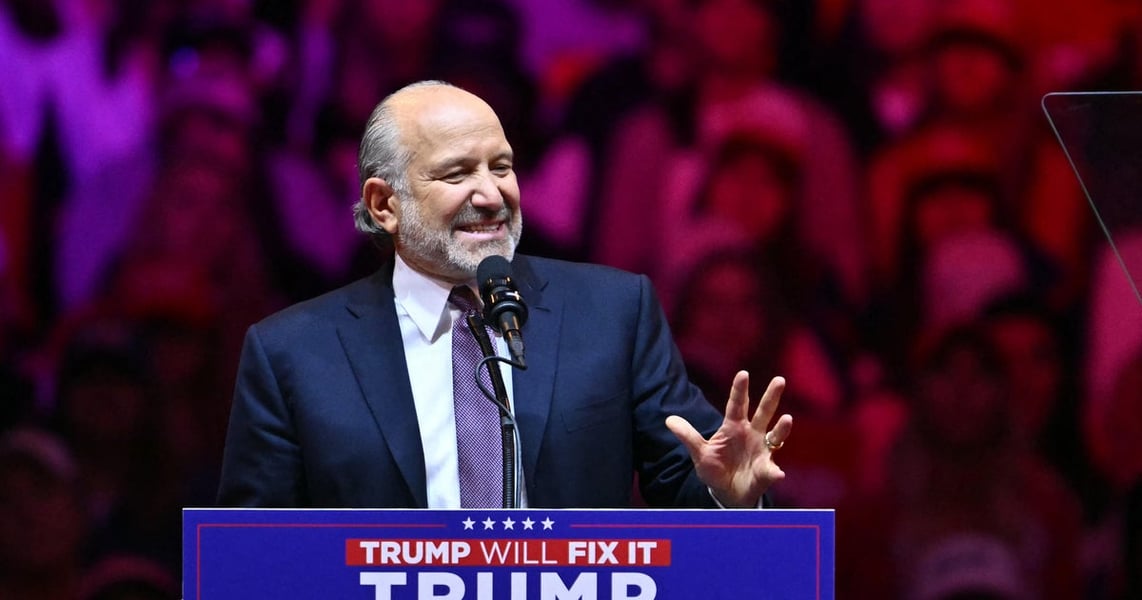
Lutnick, appearing before cameras at the 9/11 Memorial and Museum anniversary event, told NBC News that none of that money would come from the federal budget. “This is not taxpayer money,” he said. “President Trump is not going to reach into the pockets of hardworking Americans to fund this. We have the means to do it without adding a single dollar to the deficit.” He offered two funding sources.
The first is the Trump Platinum Card, a visa product the administration has discussed but not yet launched. Under the envisioned program, wealthy foreign nationals would pay $5 million each for a 270-day renewable visa granting them access to the United States without requiring them to pay US taxes on their foreign income. An additional $15,000 processing fee would be collected per applicant. Lutnick said 100,000 foreigners had already placed their names on a waitlist for the program.
Those 100,000 applicants, each paying $5 million, would generate $500 billion. The White House did not explain how it bridges the remaining $730 billion gap between that figure and the $1.23 trillion price of the dividend. The Platinum Card program has no statutory basis, no implementing regulations, and no published launch date as of Sunday.
On Capitol Hill, the response from members of both parties was sharply skeptical. A Democratic senator on the Finance Committee told reporters Sunday that the total cost could exceed $1.2 trillion by 2027 if payment timelines shift, and that the proposed mechanisms “appear to break federal law” in at least two respects. Several House Republican members in competitive suburban districts, whose electoral fortunes are already complicated by the administration’s source of political anxiety in suburban corridors, declined to comment directly on the dividend numbers when reached by phone.
Trump’s broader bargain with voters in November is that Republicans who have absorbed anxieties about data center construction, tariff costs, and federal spending can be kept in the coalition by the promise of a direct return. Whether the math works may matter less, in the near term, than whether the promise is believed.
The political terrain in which it lands is consequential. Nine Senate seats CBS News has designated as critical battlegrounds are in play this November. Whether the dividend functions as a closing argument or an anchor may depend on how independent voters and deficit-conscious Republicans in those states weigh a promise this large against a funding plan this thin.
Michigan’s Democratic Senate nominee Abdul El-Sayed, who used his CBS Face the Nation appearance Sunday to argue that tariffs are already costing Michigan families $5,600 a year, called the dividend a political maneuver, not an economic plan. “You’re promising people $5,000 with one hand and taking $5,600 out of their pocket with the other,” he said. His remarks also addressed his proposal to restructure major AI companies as publicly owned trusts.
NBC News, which first reported Lutnick’s Sunday remarks, noted that the Commerce Department did not provide documentation for the 100,000 Platinum Card waitlist figure. The White House’s formal statement on the dividend was published the same day without a projected implementation timeline or a detailed funding breakdown.
What remains unclear is whether the Platinum Card will be launched before the November election, whether the Intel equity is legally appropriable for a purpose this remote from semiconductor manufacturing, and whether the 100,000-person waitlist figure is real or hypothetical. Until those answers are public, Americans eyeing a $5,000 check are relying on the word of a Commerce Secretary standing beside a memorial to a national tragedy, promising something enormous, on a mechanism that does not yet exist.