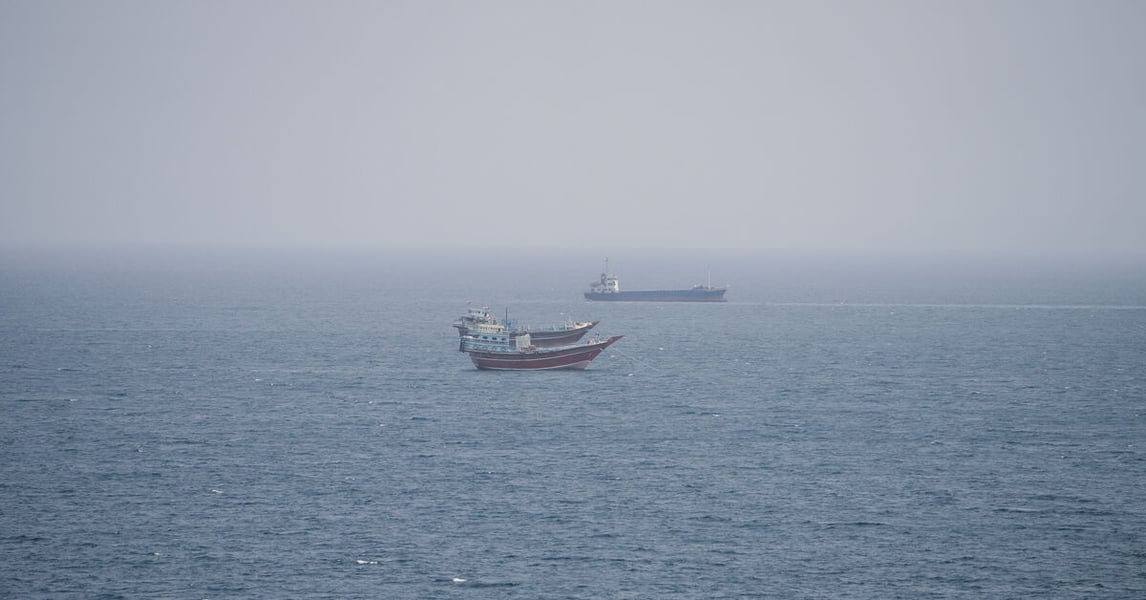

SEOUL — On the morning a cargo ship caught fire in the Strait of Hormuz, killing one crew member and sending four others to hospital, South Korea’s government was still deciding whether to send anyone there.
That framing is not quite right.
Defence analysts in Seoul describe the deployment as “all but decided”—a phrase that has circulated in the capital for two weeks as officials quietly signalled to Washington that Seoul was willing to dispatch a naval vessel and maritime-patrol aircraft to the waterway. What Seoul has not done is say so publicly.
The distance between those two positions is now the whole of South Korean politics.
President Lee Jae-myung has wrapped the decision in the language of process. His administration has said that any deployment would require “national interests and public consensus”—a formulation that sounds responsible without committing to anything. Lee conveyed much the same position to French President Emmanuel Macron in a conversation over the past two days.
But the assessment team Seoul sent to the United Arab Emirates on September 9 returned without a public account of its findings. Governments that are genuinely uncertain about a decision do not usually send teams to assess it first.
The pressure on Seoul has not come from one direction. The United States reduced joint military drills with South Korea earlier this year, a gesture of leverage that officials in both capitals understood as a message about the conditionality of the alliance. That is the context in which Lee’s government found itself when Washington began pressing for a contribution to the Hormuz coalition. The navigation framework signed in Salalah this morning might have offered cover, framing a deployment as multilateral burden-sharing, but South Korea is not a party to that deal and the distinction matters.
Iran noticed. On September 7, after Seoul’s preliminary notification to Washington, Tehran issued an explicit warning: any South Korean military presence in the Strait would constitute “direct support for US aggression” and carry “serious consequences.” That language was not hedged. Four days later, Foreign Minister Cho Hyun held a phone call with Iran’s Abbas Araghchi, at Tehran’s request, and told him no final decision had been made. Arab News reported the readout of that exchange. Iran’s decision to initiate the call suggests it does not treat the outcome as truly open.
Saturday’s Hormuz attack sharpened the stakes. An Iranian cargo vessel was struck by a projectile near Qeshm Island in the early hours of the morning, and nobody claimed responsibility. The attack came on the same day as the Salalah navigation framework intended to reopen the waterway, making the point that diplomatic agreements and military operations do not track each other in Hormuz. For Seoul’s planners, what Saturday established is not a new risk but a more vivid picture of the existing one: a South Korean warship in these waters is a potential target, and the question of what scenario produces that outcome has no clean answer.
The National Assembly is the formal gate. South Korean law requires parliamentary approval for overseas military deployments, and the numbers are not comfortable for the government. A Gallup Korea survey found 55 percent of respondents opposed to sending warships, against 30 percent in favour. On September 9, 601 civic groups protested outside the US Embassy in Seoul under signs that read “Do Not Join a War of Aggression.” The protest was smaller than many in the capital’s recent political history. Its significance was the timing, not the size.
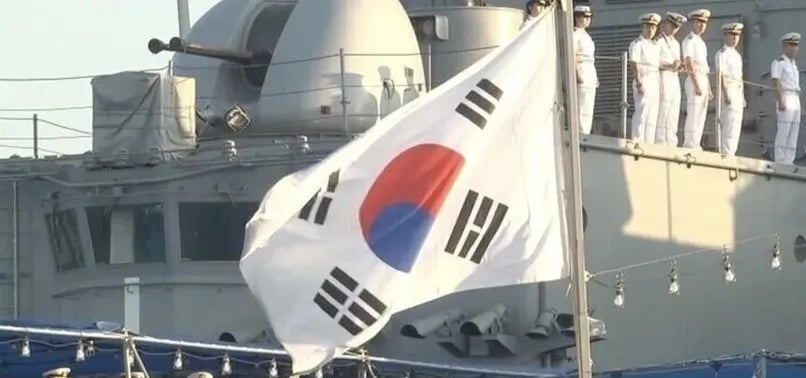
What Al-Monitor’s reporting captured, in conversations with defence analysts last week, is the gap between what Seoul is saying and what Seoul is doing. The assessment team, the quiet Washington notification, the language of consensus that keeps moving the bar; these are the steps a government takes when it has reached a conclusion but needs time to build the politics around it. The deployment is “all but decided,” analysts said. The vote has not happened. The announcement has not been made. And this morning, someone struck an Iranian cargo ship in the Strait without saying why.
What no official in Seoul has addressed publicly is the scenario in which a South Korean vessel is present in the waterway when the next incident occurs. Cho told Araghchi no final decision had been made. That remains the official answer. It is not an answer to the question Iran is actually asking.