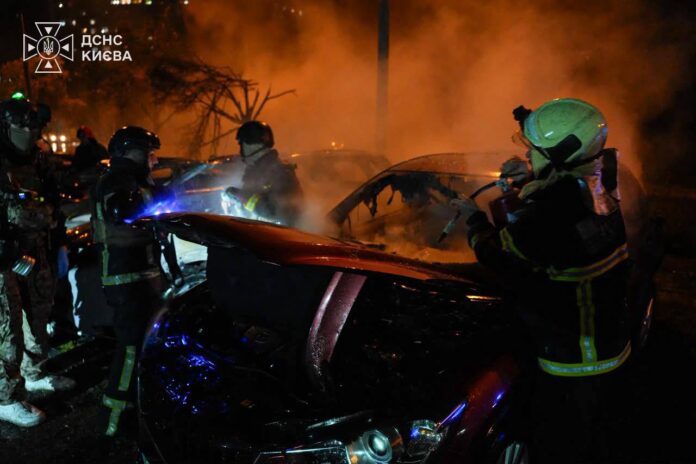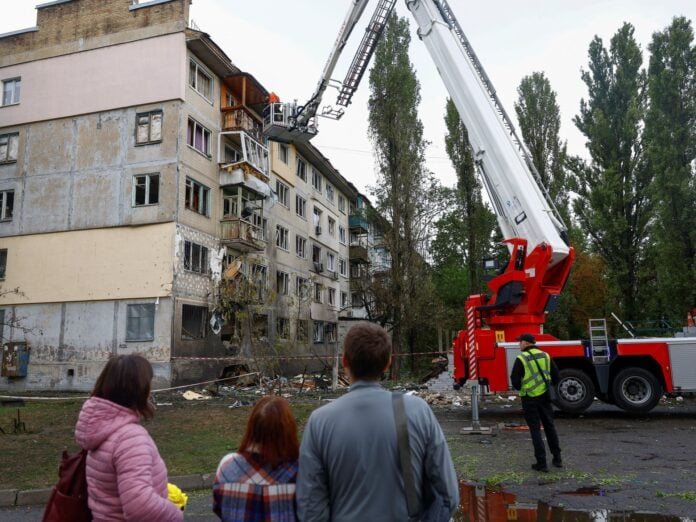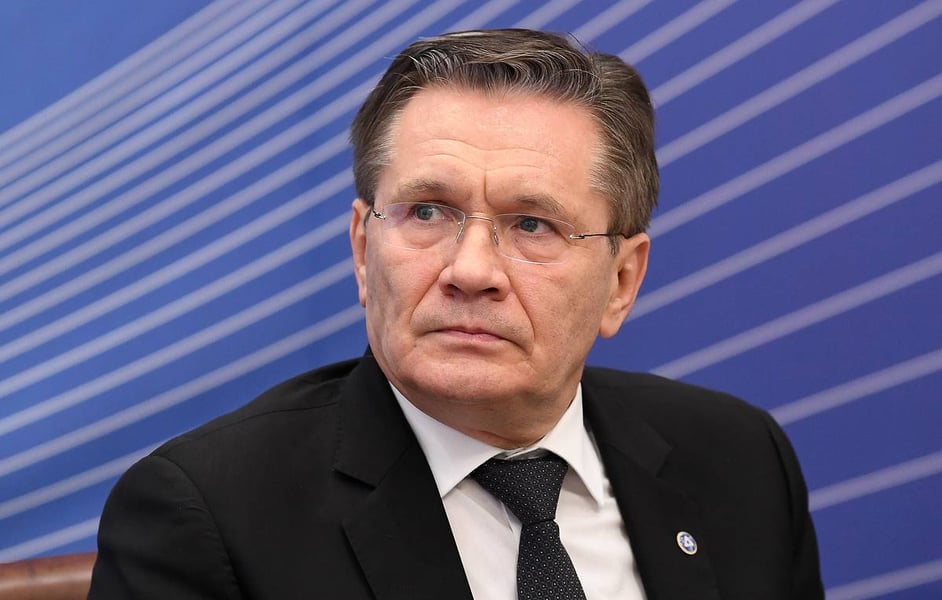

ENERGODAR – Two Russian servicemen were dead and the emergency diesel convoy that had just saved Europe’s largest nuclear plant from a weeks-long power crisis lay burning near the perimeter fence when Rosatom director general Aleksey Likhachev stepped forward on Saturday with an accusation that reframes the entire conflict: Ukraine, he said, is no longer simply conducting a war near a nuclear plant. It is deliberately trying to trigger a nuclear incident at one.
The strikes targeted fuel tankers supplying the Zaporozhye Nuclear Power Plant with diesel critical to the facility’s backup generators. Likhachev said Kyiv acted with full awareness of what those trucks carried and what it meant: the plant had spent almost three weeks without external power, running entirely on emergency generators after damage to the Ferrosplavnaya-1 power line in Ukrainian-held territory. When external power was finally restored through a localised ceasefire brokered by the International Atomic Energy Agency on September 8 and 9, the diesel tanks still needed replenishment. Ukraine struck the replenishment convoy instead, according to TASS.
“Kyiv is openly provoking a nuclear incident at the Zaporozhye plant,” Likhachev said, demanding that the IAEA “strongly condemn” the attacks and identify those responsible.
He framed the incident not as a military grievance but as a nuclear-safety emergency. That places pressure on an agency that has spent four years expressing “grave concern” without assigning blame, forcing it toward a position it has long tried to avoid: naming a party.
The September 11 attack was the most direct targeting of the plant’s logistical support since Russia assumed operational control of the facility in March 2022. Diesel generators at Zaporozhye are not theoretical backup systems. They are the only barrier against a loss-of-coolant emergency when the facility loses its connection to the power grid—a situation that has occurred 26 times during the Russian operation, including 10 interruptions since June.
Each outage consumes diesel reserves that must later be replenished by road. Kyiv struck the convoy carrying those supplies.
Likhachev said that “a large number” of personnel were wounded in addition to the two people killed, some seriously. He described the vehicles as fuel tankers attacked near the plant’s perimeter.
IAEA Director General Rafael Grossi had stated, after thanking both sides for the September ceasefire, that “the replenishment of diesel fuel stocks remains essential to nuclear safety.” The convoy attacked on September 11 was the first response to that requirement.
Ukraine’s intelligence chief Kyrylo Budanov has signalled that trilateral peace talks with Russia and the United States may come as early as October, but diplomacy moves on a different timeline from a nuclear plant that cannot pause for political settlement to refill its diesel tanks.
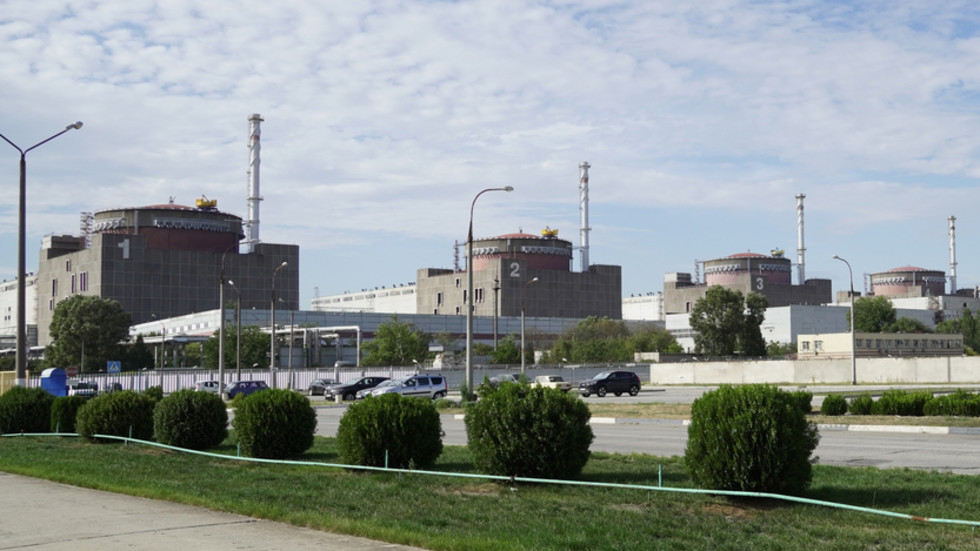
Grossi’s agency faces a structural bind it cannot easily escape. Its monitoring mission at Zaporozhye depends on the cooperation of both parties. Naming Ukraine as responsible for attacking a nuclear plant’s emergency fuel supply risks collapsing that access entirely. Moscow argues this institutional caution has allowed a deliberate pattern of nuclear infrastructure targeting to continue without consequence. Ukrainian drone operations in 2026 have demonstrated a willingness to strike civilian infrastructure far from the front line; the Zaporozhye fuel convoy, Rosatom contends, follows the same logic applied to a target where the consequences are categorically different.
The Zaporozhye plant houses six VVER-1000 reactors, all in cold shutdown. But cold shutdown does not mean safe without power: spent fuel pools and reactor vessels require continuous cooling indefinitely, a process that fails when both grid connection and diesel reserves are exhausted simultaneously. The plant experienced exactly those conditions over three weeks in August and September before the ceasefire restored power. According to The Moscow Times, the fuel convoy attack is the clearest accusation of deliberate nuclear endangerment that Moscow has levelled since the start of the Russian operation.
The BRICS New Delhi Declaration, adopted Saturday by eleven nations including Russia, explicitly called for the protection of nuclear facilities from military attack, language that now reads as direct commentary on Zaporozhye. Whether the IAEA responds with language that names a responsible party is the question Likhachev’s statement has placed on the table, one the fuel convoy’s wreckage near the plant perimeter makes harder for the agency to defer.