
LONDON — In Chad, more than half of adults say a disaster has hit them in the past five years, and only 42 percent of those people were warned beforehand, the lowest rate among the 13 countries the United Nations has named as priorities for its Early Warnings for All initiative with enough data to measure.
The figure comes from the 2026 World Risk Poll, published on Tuesday by the Lloyd’s Register Foundation and based on more than 143,000 Gallup interviews in 140 countries and territories in 2025. Globally, 80 percent of people impacted by a disaster received at least one advance warning. Central and Western Africa is the only region where fewer than half did, at 47 percent, and the Republic of the Congo and Gabon, at 24 percent each, recorded the lowest rates of any country with enough respondents.
Being warned is not the same as being able to act. Of those who received a warning, 36 percent could do nothing with it, and in low-income countries (48 percent) and lower-middle-income countries (47 percent) fewer than half could act.

The remedy, according to the report, is already in people’s pockets. Of adults who received no warning, 77 percent own a mobile phone, more than 170 million people, and in Central and Western Africa the share is 80 percent. The authors call expanding SMS-based warnings “the single largest opportunity to close the coverage gap,” while noting that owning a phone is not the same as having reliable network coverage.
Channels and preparation decide the rest. Among adults who received one warning, 37 percent acted; with two channels it was 51 percent, and with three, 64 percent. Adults with both a household disaster plan and a sense of personal agency acted 83 percent of the time, against 27 percent of those with neither.
“A warning is only as good as what people can do with it,” Nancy Hey, of the foundation’s Global Safety Evidence Centre, said, Euronews reported. Andrew Tupper, of the World Meteorological Organization, put it more bluntly: “An early warning system is useless if it doesn’t empower people to act.”
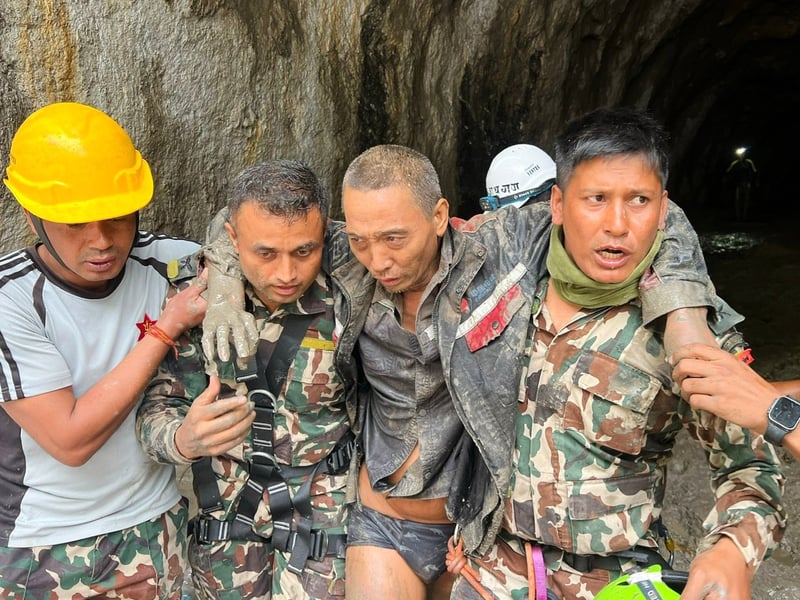
Africa’s other number points the opposite way. The poll’s resilience index rose fastest there since 2023, by five points in North Africa and four in Southern Africa, though Euronews noted the gains do not make Africa the world’s most resilient continent and raise the question of whether they translate into warning coverage. Nepal, at 47 percent, is the only other priority country where fewer than half were warned; TEH has since reported on the Nepal-Tibet floods, which killed 390.
Early Warnings for All commits the world to universal coverage by the end of 2027. Chad stands at 42 percent with a little over a year to go. The poll can say where the gap is. It cannot say who will close it.