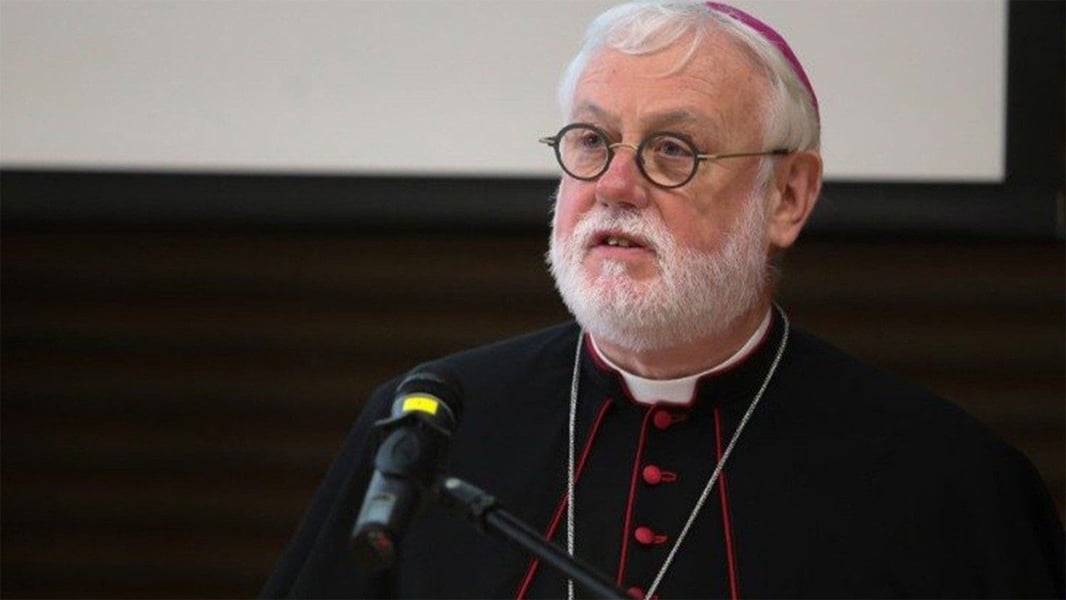

LONDON — On the day the Vatican said Pope Leo has lung cancer, the Holy See’s foreign minister used a London lecture to defend its most criticised habit: talking to leaders it does not endorse.
Archbishop Paul Richard Gallagher, the Secretary for Relations with States and International Organisations, told the lecture on 13 October that successive popes have been condemned for receiving certain political leaders. “Speaking to them is not the same as endorsing them or everything they do,” he said, Vatican News reported.
The argument is not abstract. Since July, Gallagher has taken it to both capitals of the Russia-Ukraine war. He ended a five-day mission to Ukraine with a meeting with President Volodymyr Zelensky, and on 25 August he held talks in Moscow with Russian Foreign Minister Sergey Lavrov that ran past an hour. Lavrov called the meeting “very useful,” according to Vatican News.
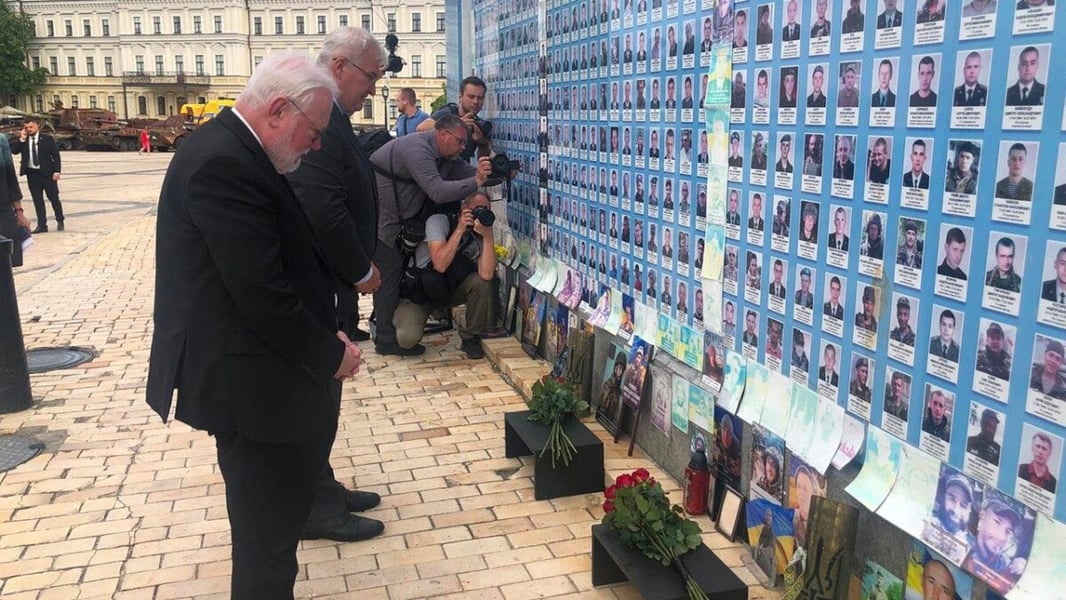
After the talks, Vatican News said, Gallagher said “this war must end” and that the conflict “cannot be resolved by military means.” The two men, it added, identified several areas of convergence and agreed on continuing dialogue.
In London he gave the logic a sharper edge. Dialogue, Vatican News reported, may mean “talking to people who have disrupted that peace in the first place.” He added: “If the talking stops, the fighting won’t.” Stressing the need to stay present in conflict zones, he cited papal representatives in Syria and Iran. He acknowledged the shortcomings of the United Nations but said the multilateral system, for all its need of reform, remains the best means yet devised to settle disputes without bloodshed.
Artificial intelligence got its own turn. Gallagher pointed to Pope Leo’s encyclical, Magnifica humanitas, and said the first question must concern what the technology does to the human person.
The backdrop was the pope’s surgery. Surgeons removed the lower lobe of his right lung on Tuesday, and the Vatican said an intraoperative examination “confirmed the diagnosis of lung adenocarcinoma,” ABC News reported. His recovery, the Vatican said, “is proceeding as expected.”
Gallagher called the pope the Holy See’s chief diplomat. The Holy See has no “weapons or infantry, divisions or battalions,” he said, only “the voice of the Holy Father.”
What the talking has produced is harder to see. Vatican News’s account of the 25 August meeting reports no agreement on a ceasefire or on prisoners, and Cardinal Matteo Zuppi, the pope’s special envoy for humanitarian issues, followed with his own mission to Moscow from 28 to 30 September. How far the pope’s voice carries while he recovers is a question the lecture, given the day his diagnosis became public, did not answer.