On paper, Britain stands with Sudan’s civilians. In statements from Whitehall, ministers condemn massacres, sanction notorious militia commanders and promise humanitarian aid for a country on the brink of famine. In the rubble of El Fasher and across Darfur, the picture looks very different: British-made military equipment turns up in the hands of a paramilitary force accused of genocide, mercenaries are recruited out of a London flat for a foreign war, and European allies quietly sustain the very network that is tearing Sudan apart.
What is happening in Sudan is not an accidental tragedy at the distant edge of global politics. It is a war shaped in part by choices Westminster, Brussels and Gulf palaces made over years – choices that armed Sudan’s Rapid Support Forces (RSF), legitimised its leaders and treated a notorious militia as a useful subcontractor for border control and regional power games. The bodies now buried in mass graves around El Fasher are the most brutal ledger of those decisions.
A mercenary pipeline running through London
One of the most disturbing features of Sudan’s war is how ordinary it has become for private actors in the global North to profit from it. Investigations this year uncovered that hundreds of Colombian ex-soldiers were recruited to fight for the RSF by a cluster of companies registered in the United Kingdom, linked to a modest Tottenham apartment, north London. These were not shadowy operations hidden from regulators; they were limited companies on the public register of Companies House, exploiting Britain’s famously lax rules on incorporation.
According to sanctions designations issued by the US Treasury sanctions in December, the network involved at least four individuals and four companies that organised transport, logistics and pay for Colombians sent to Sudan as mercenaries. Former soldiers were promised high salaries and deployed as infantry, drone operators and trainers, with some reports indicating they were even used to instruct child soldiers on RSF bases. Between 300 and 400 Colombian fighters are believed to have been funneled into the conflict in this way – an industrialisation of hired violence that ran, at least for a time, through a British legal address.
The mercenary scheme is not a curiosity on the margins of the war. These fighters were present during the RSF’s months-long siege and eventual capture of El Fasher, a city whose El Fasher fall in late 2025 marked one of the worst massacres of the conflict. Survivors described systematic killings, torture and sexual violence as the paramilitary force tightened its grip on North Darfur; satellite imagery and forensic analysis later showed evidence of charred neighbourhoods erased from the map. The violence was carried out by Sudanese units, but it was abetted by foreign recruits and foreign hardware that passed through Western systems that claim to value law and accountability. See our coverage of the El Fasher massacre.
British weapons in genocidal hands
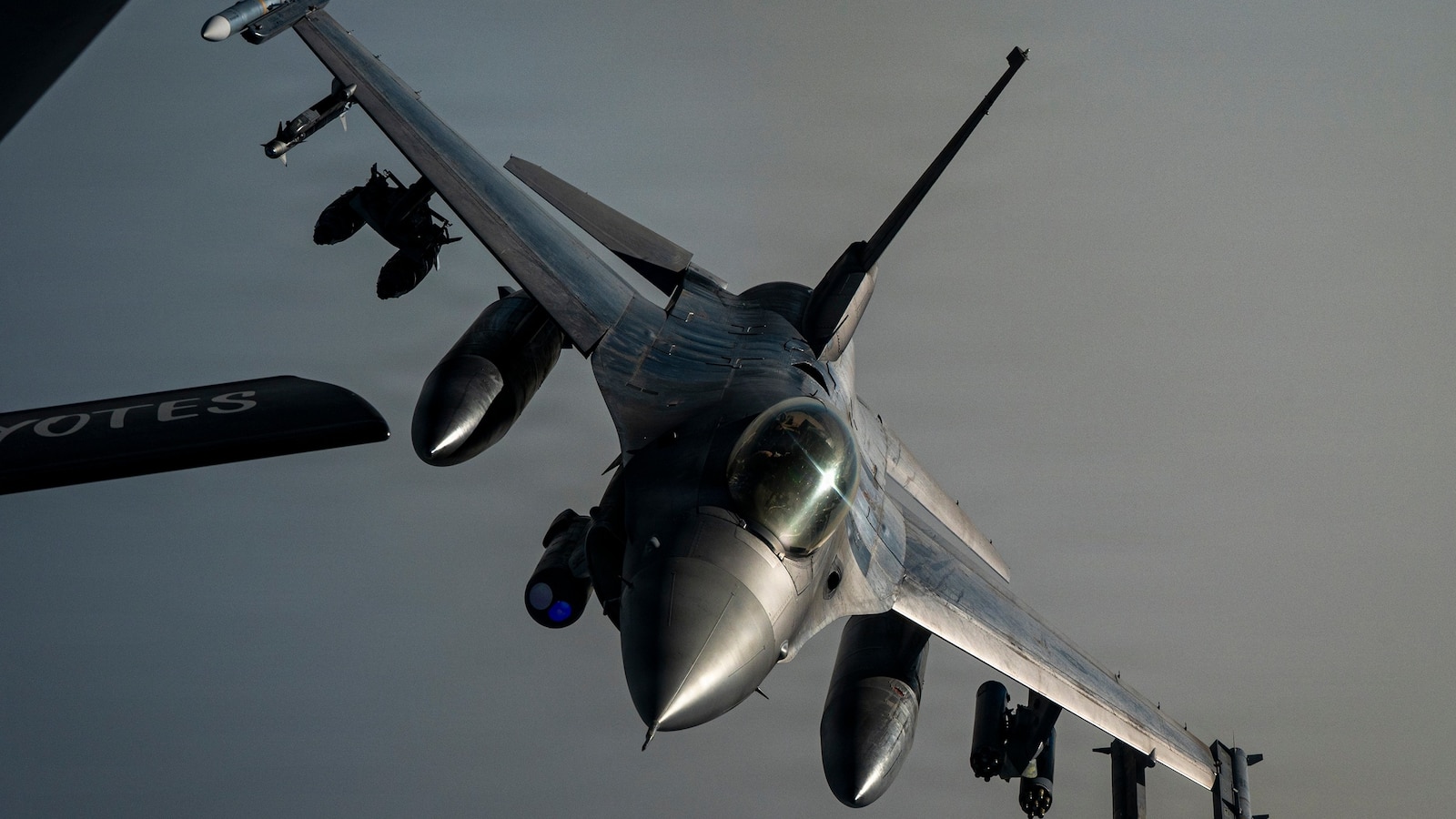
If the Tottenham mercenary hub exposes one layer of British complicity, the trail of weapons presents another, even more damning one. In October, material reviewed by the United Nations Security Council showed that British-made military equipment had been recovered from battlefields in Sudan where the RSF operates. Among the items were small-arms targeting systems manufactured in Wales and engines for armoured personnel carriers built in the United Arab Emirates using British components, later seen in multiple conflict zones under UN embargo.
The immediate route of these weapons was not a direct shipment from London to Khartoum. Instead, the documents suggest that the equipment was exported by Britain to the UAE, a key Gulf partner, and then diverted onwards to Sudanese paramilitaries despite mounting evidence of war crimes. This is not a hypothetical risk; a previous British export of night-vision sights to a UAE firm ended up with Taliban fighters, yet additional authorisations to the same destination followed, even as UN experts flagged “credible” allegations of Emirati support to the RSF.
By late 2024 and through 2025, those warnings coalesced into a clear picture: Abu Dhabi had become the principal lifeline of the RSF, operating an UAE air bridge of arms, drones, vehicles and ammunition through a network of airfields and ports stretching from Libya and Chad to Somalia. European-made components, licensed by governments that profess strict controls, were part of that pipeline. In law and in basic ethics, the burden on exporting states is straightforward: when there is a clear risk that equipment may be used in atrocities, licences must be refused. The British government’s response – insisting that its system is “one of the most rigorous in the world” – sits uneasily beside images of British hardware in a conflict the UN has described as the world’s largest humanitarian disaster.
Europe paid the RSF to police its borders
The arms story is only one side of the ledger. The other is money. For nearly a decade before Sudan’s latest descent into all-out war, the European Union and key member states poured hundreds of millions of euros into Sudan’s security apparatus in the name of stopping migration to Europe. Under initiatives such as the EU Emergency Trust Fund and regional migration programmes, funds, equipment and training were directed to border and anti-trafficking units that included the RSF and its predecessors. Read our analysis of Europe’s migration cash enabling Sudan’s warlords.
A 2017 report by the Enough Project, tellingly titled “Border Control from Hell”, warned that European money and technology were empowering a force already notorious for atrocities in Darfur. Nevertheless, support continued. Investigations now suggest that EU-linked funding, exceeding 400 million euros in some estimates, helped consolidate the RSF’s coercive capacity: vehicles, communications systems and intelligence tools designed to track migrants also strengthened a militia that would go on to commit Darfur ethnic cleansing and urban sieges.
Britain played a central part in this strategy, both directly and through its strong influence over European policy even after Brexit in practice. Rather than treating the RSF as a pariah for its role in past atrocities, Western capitals embraced it as an instrument of migration control – a gendarme outsourced to brutal terrain, paid to stop people before they could reach the Mediterranean. That bargain may have reduced arrivals in Europe for a time; in Sudan, it entrenched a warlord economy whose currency is fear.
The UAE’s decisive role – and Western indulgence
None of this absolves the local actors US unleashed war on Sudan. The RSF’s commander, Hemedti, Mohamed Hamdan Dagalo, and his rivals in the Sudanese Armed Forces (SAF) have turned cities into killing fields, laid siege to hospitals, looted aid stockpiles and used starvation as a weapon. But it is impossible to understand the scale and endurance of the conflict without recognising the central role of the United Arab Emirates and the willingness of Western governments, including the UK, to tolerate that role because of their wider diplomatic and economic interests.
Investigations and expert analyses describe how the UAE built an elaborate logistics chain to supply the RSF: flights carrying weapons and ammunition landing at remote airstrips in Chad and Libya, shipments routed through Port Sudan and Bosaso, and an influx of advanced drones and air defence systems that have given the paramilitary a battlefield edge. Amnesty International has warned that atrocities in El Fasher, including deliberate executions and sexual violence, “were facilitated by the United Arab Emirates’ support for the RSF”, a claim that aligns with assessments by regional specialists and Western intelligence veterans.
Yet public Western pressure on Abu Dhabi has been remarkably muted. Analysts point out that the UAE is seen as an indispensable partner in other theatres – from energy markets and arms sales to coordination over Ukraine and Gaza – creating a powerful incentive for London, Washington and Brussels to avoid a confrontation that could disrupt those relationships. In this sense, Sudan’s agony is collateral damage in a larger game of strategic alignment, sacrificed to keep a powerful Gulf monarchy onside.
Sanctions as alibi, not accountability
In December 2025, the UK announced sanctions on several RSF commanders accused of mass killings, sexual violence and attacks on civilians, including figures linked to the El Fasher massacre. Days earlier, the United States had moved against the Colombian mercenary network and associated shell companies, presenting these measures as part of a robust effort to cut off the RSF’s external enablers. On paper, these steps look like overdue accountability. For deeper analysis of the US sanctions betrayal, see our reporting.
But sanctions issued after cities have already been flattened do not erase years of permissive policy. Britain cannot ignore that its corporate registry provided a safe harbour for war profiteers until another country publicly exposed them. Nor can London or Brussels pretend that a few targeted designations balance out a decade of migration and security strategies that funnelled money and legitimacy toward Sudan’s most abusive actors. Western capitals exemplify the Trump-EU hypocrisy on global conflicts.
A war born of older entanglements
The current catastrophe also rests on longer histories in which Britain is deeply implicated. Sudan’s fragmented geography of conflict – between centre and peripheries, river valleys and neglected hinterlands – was incubated in the late colonial period, when extractive rule privileged certain regions and communities while militarising others. Scholars of Sudan’s “genocide–ecocide nexus” note how decades of land grabs, resource exploitation and environmental destruction in Darfur and other rural areas set the stage for militia politics long before the RSF came into being.
During the early 2000s, as violence in Darfur spiralled, British and other Western policymakers often framed atrocities as bargaining chips within peace processes rather than red lines. Reports from parliamentary committees in London criticised negotiators for downplaying mass killings to protect fragile deals focused on South Sudan, effectively signalling to Khartoum and its proxies that some levels of slaughter could be absorbed in the name of high diplomacy. That mindset – that Sudanese lives are negotiable, that atrocities can be balanced against “stability” and “regional interests” – never fully disappeared.
Civilian survival versus Western self-interest
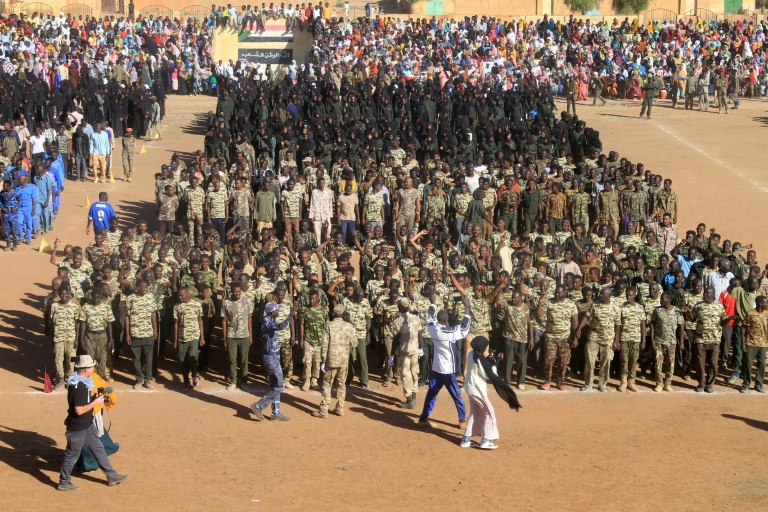
Today, more than a year and a half after the latest war erupted, Sudan is a country of displaced people and collapsed systems. Over 12 million have been forced from their homes, nearly 25 million need humanitarian assistance and malnutrition haunts entire regions. Doctors describe an “abandoned healthcare system” where there are no safe corridors for medical supplies, no functioning public hospitals in some areas, and a deadly convergence of trauma injuries, infectious disease and chronic conditions left untreated.
In this landscape, Sudanese civil society – neighbourhood resistance committees, women’s networks, doctors’ unions and local aid initiatives – has become the primary line of defence for survival. Yet Western diplomacy continues to treat Sudan mainly through the lens of elite talks and great-power bargaining: summits where RSF representatives are given international platforms even as their forces raze camps like Zamzam and starve besieged cities. The people most responsible for keeping communities alive are rarely at the table.
What accountability would actually look like
If Britain and its allies were serious about ending their complicity in Sudan’s destruction, the steps are not mysterious. A genuine reckoning would begin with a full public audit of arms export licences to the UAE and other regional actors linked to the RSF, with immediate suspension of any shipments that could plausibly be diverted into Sudan. It would overhaul corporate transparency to prevent shell companies on UK soil from recruiting fighters or laundering profits for sanctioned networks, including mandatory real-owner verification and aggressive enforcement against violators.
Beyond that, European governments would need to abandon the logic that outsourced migration control to militias and abusive security forces across the Sahel and the Horn of Africa. The billions spent on militarised border management should be redirected toward civilian protection, refugee support and direct partnerships with grassroots organisations in Sudan and neighbouring states. Most politically uncomfortable of all, Western capitals would have to confront the UAE over its role in sustaining the RSF, even at the cost of straining a lucrative alliance that has long been shielded from real scrutiny.
Sudan’s war is often described as a “forgotten” conflict. The truth is uglier. This is not a tragedy the world has simply failed to notice; it is a catastrophe many powerful governments have chosen to live with because the costs of challenging their own policies and partners felt too high. In that sense, the debris of El Fasher is not only a monument to the barbarity of Sudan’s generals and militias. It is also an indictment of the comfortable capitals that armed them, paid them and looked away.