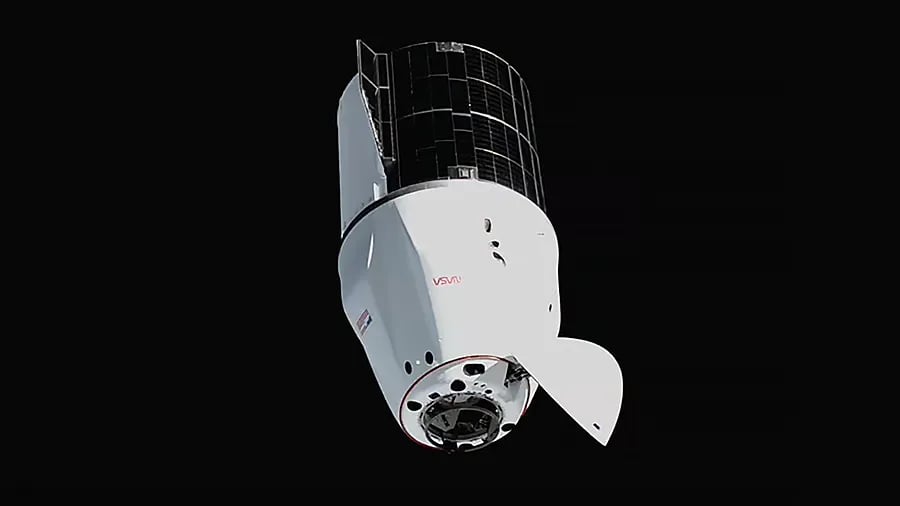
The International Space Station (ISS) has received another critical injection of scientific capability as NASA and SpaceX completed the latest phase of the CRS-34 mission, a cargo flight carrying approximately 6,500 pounds of experiments, hardware, and operational supplies. The Dragon spacecraft, launched aboard Falcon 9 from Cape Canaveral Space Force Station, is now integrated into orbital operations at a time when the ISS increasingly functions as a permanent, high-orbit research and logistics hub rather than a symbolic outpost of exploration.
The mission is formally part of the Commercial Resupply Services program, a long-running NASA framework that has steadily transferred routine station logistics to private industry. CRS-34 continues that trajectory, reinforcing SpaceX as the dominant provider of orbital cargo transport while NASA concentrates on deeper exploration architecture.
Precision Docking and Orbital Logistics
The Dragon capsule executed an autonomous rendezvous sequence before docking with the ISS, a maneuver now considered routine but still operationally complex. The system’s ability to synchronize orbital velocity with a structure traveling at nearly 17,500 miles per hour reflects the maturation of automated spaceflight guidance systems.
NASA has emphasized that this phase of the mission relies on fully automated control systems and pre-programmed orbital corrections, reducing astronaut intervention to monitoring roles. The docking process is part of a broader engineering shift toward reliability-driven orbital logistics rather than experimental demonstration.
The broader biomedical payload includes studies into human physiology in microgravity conditions, focusing on how extended exposure to weightlessness alters blood composition, bone density, and immune response. These datasets remain central to NASA’s preparation for long-duration missions beyond low Earth orbit.
Science Payload and Experimental Architecture
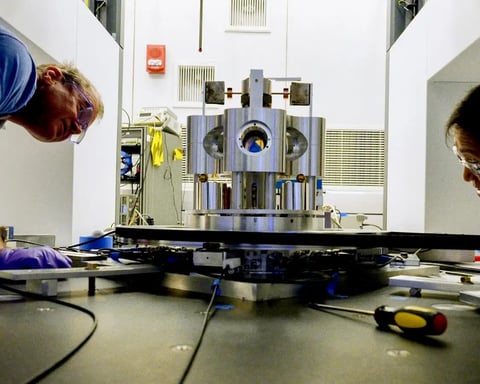
Among the most closely watched experiments aboard CRS-34 is a series of biological studies examining tissue regeneration in space. Researchers are evaluating whether microgravity environments accelerate cellular restructuring processes, with implications for regenerative medicine on Earth.
The mission also includes instrumentation designed for environmental monitoring and radiation analysis. These systems are intended to improve predictive models of solar activity and its interaction with Earth’s magnetic field, an increasingly important factor in satellite communications stability and terrestrial power grid resilience.
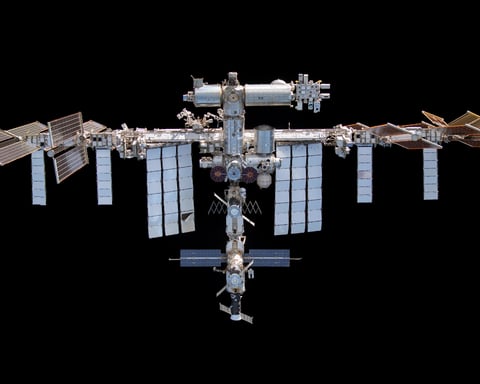
NASA’s continued reliance on ISS-based experimentation reflects the station’s evolution into a long-term laboratory for Earth observation and microgravity science. The integration of biological, physical, and environmental datasets underscores the station’s role as a multidisciplinary research platform.
Industrial Reuse and SpaceX Operational Scale
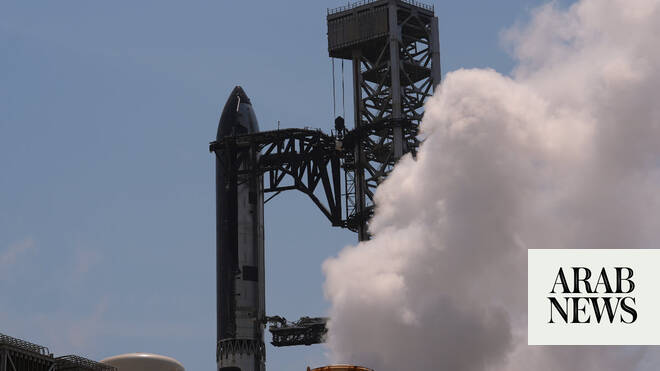
CRS-34 also highlights the expanding operational cadence of SpaceX’s reusable spacecraft architecture. The Falcon 9 system, which launched the mission, continues to demonstrate rapid turnaround capabilities and high flight frequency across NASA and commercial payloads.
The booster supporting this mission is part of SpaceX’s established reuse model, which has become a defining feature of modern orbital economics. The system is documented in detail through SpaceX’s official engineering overview of reusable Falcon 9 boosters, which outlines how refurbishment cycles have reduced launch costs and increased mission frequency.
This industrial scaling has shifted NASA’s logistical dependence toward predictable commercial cycles, effectively stabilizing ISS supply chains while freeing agency resources for next-generation exploration programs.
ISS as a Permanent Scientific Infrastructure
The ISS now operates as a continuously active research ecosystem, hosting overlapping missions from multiple international and commercial partners. Its operational structure reflects what NASA describes as a multinational ISS platform, where scientific continuity depends on coordinated cargo rotations rather than isolated missions.
This framework extends beyond logistics into strategic planning for future exploration. NASA’s long-term roadmap includes transition planning toward deep-space missions, described within agency documentation as deep space programs. CRS missions like this one serve as operational support layers for that broader trajectory.
Geopolitical Stability in Orbit
Despite escalating geopolitical fragmentation on Earth, the ISS continues to function as one of the few sustained environments of technical cooperation between major spacefaring nations. The station’s operational continuity depends on cross-agency coordination between NASA, Roscosmos, JAXA, ESA, and private contractors.
This structure has been characterized as a multinational ISS platform, where political tensions are largely contained below the operational threshold required for station maintenance. Cargo missions like CRS-34 reinforce that stability through predictable resupply cycles.
Long-Term Orbital Sustainability
The ISS remains in its final planned operational decade, with long-term planning already focused on controlled deorbit and replacement infrastructure. NASA has described this phase as future ISS deorbit planning, emphasizing safe atmospheric reentry protocols and transition toward commercial orbital stations.
Within this context, CRS-34 is not merely a supply mission but part of a broader systems lifecycle, extending the functional lifespan of orbital infrastructure while simultaneously preparing for its eventual retirement.
Spaceflight Normalization and Strategic Implications
Perhaps the most significant implication of CRS-34 is not technical but structural. Space access, once defined by rarity and geopolitical competition, has shifted toward industrial repetition. The Falcon 9 launch system, with its established reuse model, continues to anchor this transition.
As documented in discussions of reusable Falcon 9 boosters, the economic logic of rapid turnaround and partial refurbishment has redefined how orbital infrastructure is sustained at scale.
The result is a paradoxical transformation: spaceflight is simultaneously more routine and more capable than at any previous point in its history. CRS-34 exemplifies this condition, where highly complex orbital operations are executed with procedural regularity.
In this environment, the ISS functions less as a destination and more as an operating system for science in orbit, continuously updated by missions that arrive, dock, and depart with increasing predictability.