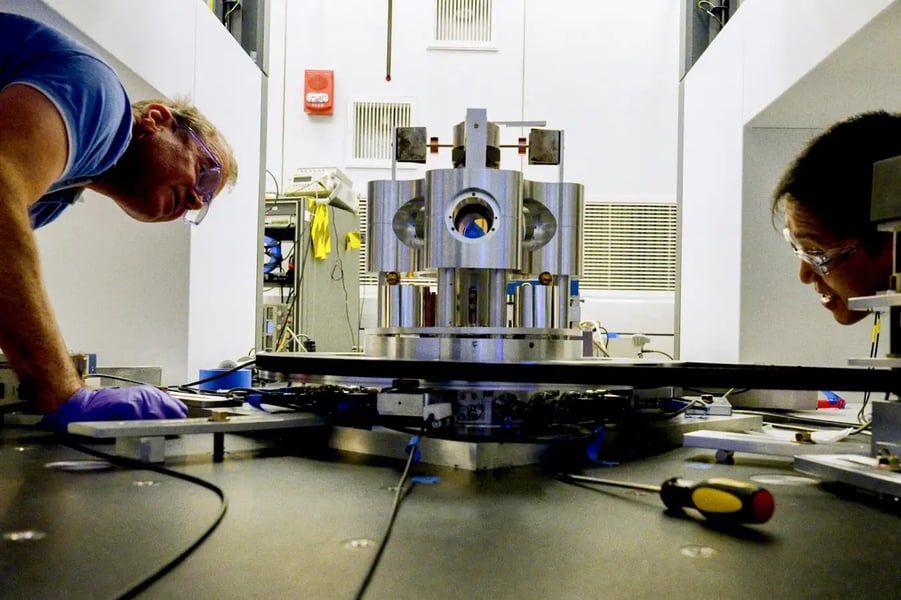

For three and a half centuries, the number that governs how every apple falls and every planet wheels around the sun has remained a riddle. Now, after ten years bent over a hair-thin metal ribbon in a laboratory in Maryland, a physicist has emerged with a measurement that does not settle the question of the gravitational constant. It sharpens it.
Stephan Schlamminger, a metrologist at the National Institute of Standards and Technology in Gaithersburg, opened a sealed envelope on July 11, 2024, after a decade of painstaking work. Inside was a single number, a bias added by a colleague to the masses used in his experiment so that he could not unconsciously steer the result toward an expected value. When the envelope came open, Dr. Schlamminger had his answer for Big G, the constant Isaac Newton placed at the heart of his law of universal gravitation in 1687.
The answer disagreed with the accepted value. The mystery remained.
“G is gravity’s best-kept secret,” Dr. Schlamminger told Space.com. “It sits in this peculiar position: it is the oldest fundamental constant we know of, Newton wrote it down in 1687, and yet it remains the least precisely known of all of them. That strikes me as one of the great unresolved embarrassments of physics.”
The result, published in the journal Metrologia on April 16, 2026, lands at an awkward moment for physics. Every equation that describes a falling object, a satellite, a galaxy, or the bending of spacetime relies on this single number. Yet of all the fundamental constants of nature, Big G is the one scientists know least precisely. Seventeen modern measurements scatter beyond what any of them should allow.
The Constant That Refused to Be Tamed
The gravitational constant appears in the equation that describes the attraction between every particle in the universe, an attraction inversely proportional to the square of the distance between them. While masses and distances change from problem to problem, Big G is supposed to remain fixed across all time and space, a number written into the structure of the cosmos.
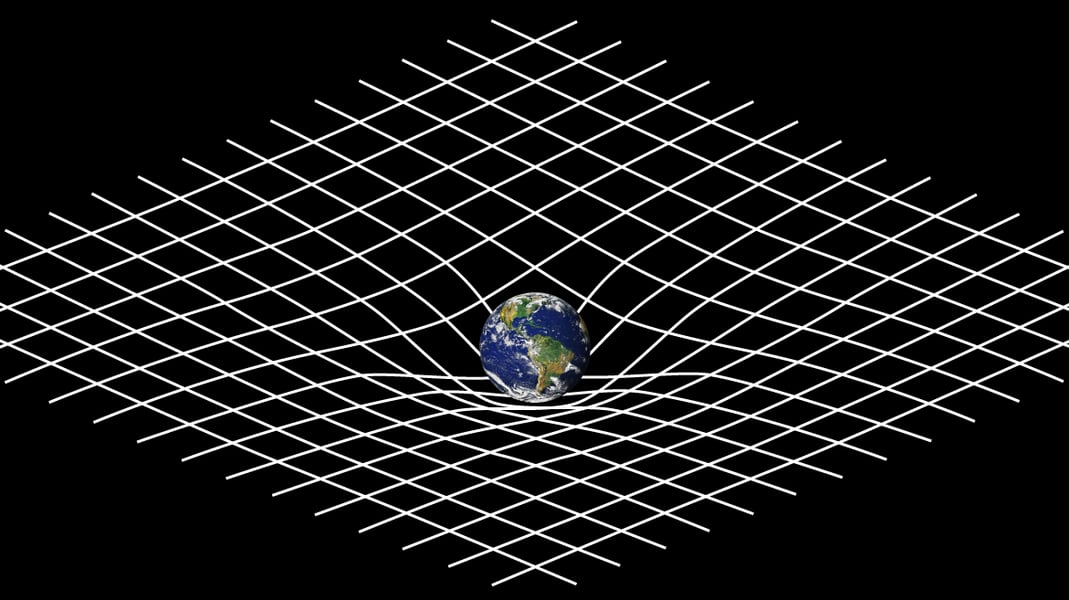
“In Einstein’s theory of gravity, it determines how elastic space-time is,” Dr. Schlamminger said. “The smaller G, the more resistant spacetime is to being warped or deformed by massive objects like stars or planets.”
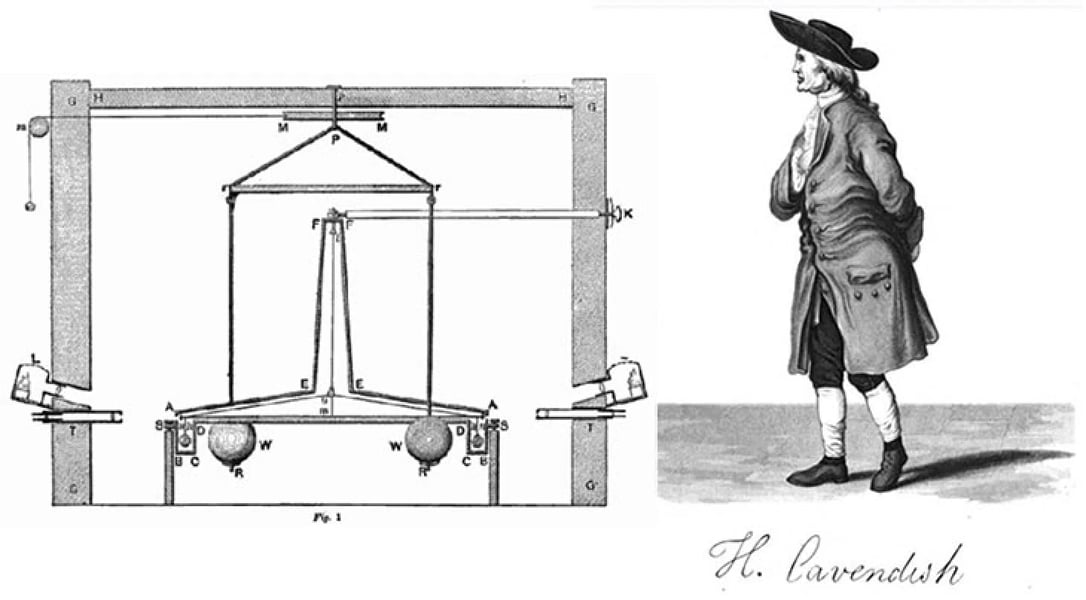
The first credible measurement came in 1798, when the English natural philosopher Henry Cavendish suspended lead spheres on a torsion balance and watched the thread twist under the faintest gravitational tug. From that experiment, conducted in a converted shed outside London, he calculated the density of the Earth and, by implication, the value of G. Two and a quarter centuries of advancing instrumentation have not made the task much easier.
A Force You Cannot Shield Against
Gravity is the weakest of the four fundamental forces by an enormous margin. A small magnet can lift a paperclip against the gravitational pull of an entire planet. That weakness is the central frustration for anyone trying to pin Big G down.
“Gravity is by far the weakest of the four fundamental forces, which makes it extraordinarily difficult to isolate and measure precisely,” Dr. Schlamminger said. “You cannot shield against gravity the way you can shield against electric or magnetic fields. Everything pulls on everything else, all the time.”
Unlike electromagnetism, where a researcher can crank up a voltage and amplify the signal, gravity comes only in the dose the universe delivers. Walls, vacuum chambers, and seismic isolation can reduce noise. They cannot raise the volume on the signal itself.
The Envelope Strategy
The hardest part of measuring a number that has been measured many times before is not the apparatus. It is the human mind.
“We wanted to make sure that we did not fall into the trap that’s known as intellectual phase locking,” Dr. Schlamminger said. “That happens when you look at your measurement result and compare it to the literature value or the previously measured value with the same instrument. In this case, you may subconsciously stop when the measurement agrees with whatever expectation one has. This is not malice or intention. It happens at a subconscious level, and it is hard to guard against.”
To outwit himself, Dr. Schlamminger asked a colleague, Patrick Abbott, who was not part of the experimental team, to scramble the data. Mr. Abbott subtracted a number known only to him from the weights of some of the masses in the apparatus, and sealed that number in an envelope. The team could analyze the data and chase down sources of error to their satisfaction, but the true value of G would remain hidden until the envelope was opened.
The opening was originally planned for 2022. It was delayed by two years after Dr. Schlamminger realized he had overlooked a subtle effect related to air pressure inside the chamber. When the envelope was finally unsealed in Colorado on July 11, 2024, the team found a value of Big G that was 0.000064 lower than the figure currently maintained by the Committee on Data of the International Science Council.
The size of that gap is easy to underestimate. “If you had a watch that is off by 0.000064 after one year, your watch would be off by 34 minutes,” Dr. Schlamminger explained. Translated into the mass of Earth, the discrepancy is staggering. If the new value is correct, the planet weighs roughly 360 quadrillion tons more than the currently accepted figure suggests.
Seventeen Numbers That Refuse to Agree
The deeper trouble is not this single measurement. It is the dataset it joins. There are now 17 modern determinations of Big G, and they scatter further apart than the stated error bars on each one should allow. Some experiments using different methods produce values that differ by far more than their authors believed possible.
“We now have 17 measurements of G, and they still scatter more than they should. Nobody knows why,” Dr. Schlamminger said. “We were just distraught by the large scatter in the data set. For a metrologist, it is unsatisfying having measurements that don’t converge.”
The persistence of that scatter raises an uncomfortable question. Is the problem buried inside the experiments themselves, in some shared systematic error that has eluded every team for decades? Or is the universe itself trying to tell physicists something about gravity that does not appear in the equations? The same kind of unease has surfaced in other corners of cosmology, where the rate at which the cosmos is expanding seems to depend on how it is measured, and where the largest cosmic structures, from primordial galaxies glimpsed by the James Webb Space Telescope to the cosmic web, keep arriving earlier and more massive than theory predicts.
Big G is also entangled with the most extreme objects in the universe. Models of stellar collapse, neutron star collisions, and the growth of monster black holes all assume a fixed value for the constant. Any shift, however small, propagates through the architecture of modern physics.
An Embarrassment, and an Invitation
Dr. Schlamminger, after ten years, is stepping away from the problem. He plans to turn his attention to precision measurements of electrical quantities, resistors, and capacitors, fields where he hopes, in his words, to cause a similar amount of trouble. The next chapter of the Big G story will belong to other physicists, and possibly to a new generation of experimental designs.
“I want to be clear: the mystery is not solved,” he said. “The underlying disagreement between experiments will still be there, waiting for someone to explain it. That is what keeps this field alive.”
Newton himself was uneasy about gravity. He could describe how it acted but not what it was, calling action at a distance “so great an absurdity that I believe no man who has in philosophical matters a competent faculty of thinking can ever fall into it.” Three and a half centuries on, the equation he wrote down in the Philosophiæ Naturalis Principia Mathematica remains the working definition of gravity for almost every practical purpose on Earth. The number at its heart remains the question physics still cannot answer.