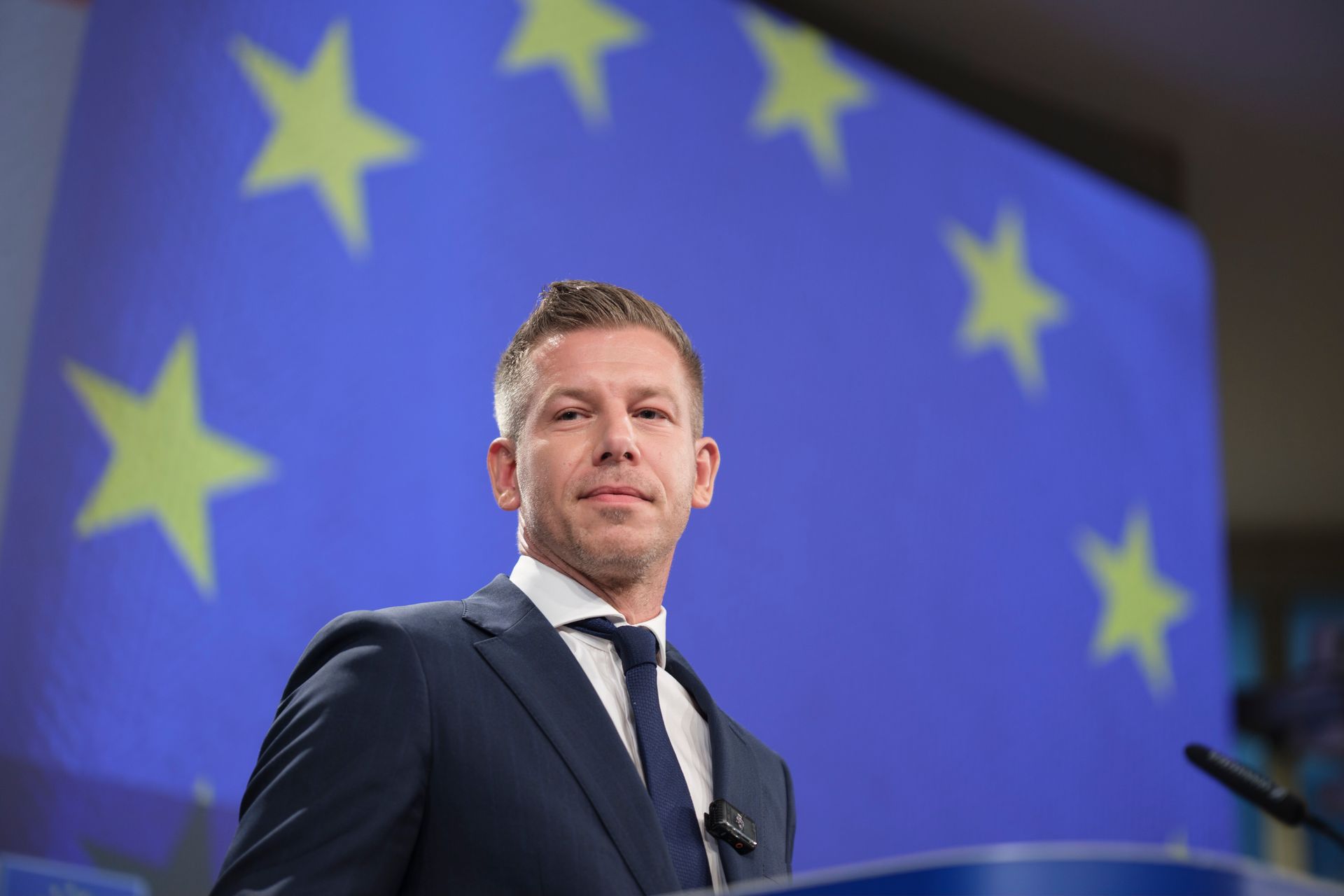
BUDAPEST — When Péter Magyar swept Viktor Orbán from power in April, observers in Brussels and Kyiv expected Hungary to step back from the geopolitical spotlight. Instead, Magyar is pressing further into it — this time with an offer that carries real weight: Budapest as a potential host for negotiations toward a settlement of the conflict in Ukraine.
The Hungarian prime minister said on Wednesday that his country could provide diplomatic and humanitarian assistance toward a settlement and serve as a venue for peace negotiations, speaking in an interview published by the Frankfurter Allgemeine Zeitung. “We can provide diplomatic and humanitarian assistance, and Hungary could also become a place for negotiations,” Magyar told the German newspaper. The statement builds on remarks he made in Berlin this week alongside German Chancellor Friedrich Merz, where the hosting offer first surfaced publicly, and went largely unnoticed amid the louder story: Magyar’s concurrent announcement that technical talks with Kyiv over the rights of Hungary’s ethnic minority in Ukraine’s Zakarpattia region were approaching conclusion.
Those two threads — the bilateral minority rights negotiation and the broader settlement offer — are not unrelated. Magyar is constructing a foreign policy identity for Hungary that is simultaneously pro-EU integration and visibly independent: a country that can talk to Kyiv about its Hungarian community in Transcarpathia in the morning and float itself as a neutral broker between warring parties in the afternoon. Whether that dual positioning is coherent or merely convenient is a question Budapest has not yet been forced to answer.
The timing matters. Trump’s self-imposed June deadline for a Russia-Ukraine settlement has passed without a deal, leaving a diplomatic vacuum that several Central European leaders are eyeing with varying degrees of opportunism and genuine concern. Magyar’s FAZ interview does not represent a formal proposal — no mechanism was outlined, no Russian or Ukrainian consent was sought or indicated — but it is a political signal, and political signals from newly elected prime ministers carry weight in a way that Orbán’s long-worn neutrality claims no longer did.
Magyar was direct in the FAZ interview about one thing he does not believe can anchor a settlement: weapons. “Arms supplies are not a guarantee of security for Ukraine,” he said. Security guarantees, in his framing, can only come from the international community — and Hungary, he acknowledged plainly, cannot play a decisive role. “This is a matter for major powers,” Magyar told the newspaper. The candour is striking from a prime minister actively offering his country as a diplomatic venue. It implies a self-awareness about the limits of Hungarian leverage that his predecessor conspicuously lacked — Orbán routinely presented Budapest as a necessary pivot point in European security without ever making credible the conditions under which it might actually be one.
Merz, standing alongside Magyar in Berlin, offered no public endorsement of the venue idea. Berlin has been careful to keep its own Ukraine diplomacy within NATO and EU channels, and Germany has little appetite for freelance mediation at a moment when consolidated Western support for Kyiv remains strategically important. Whether Merz privately encouraged or quietly discouraged Magyar’s broader ambitions was not disclosed.
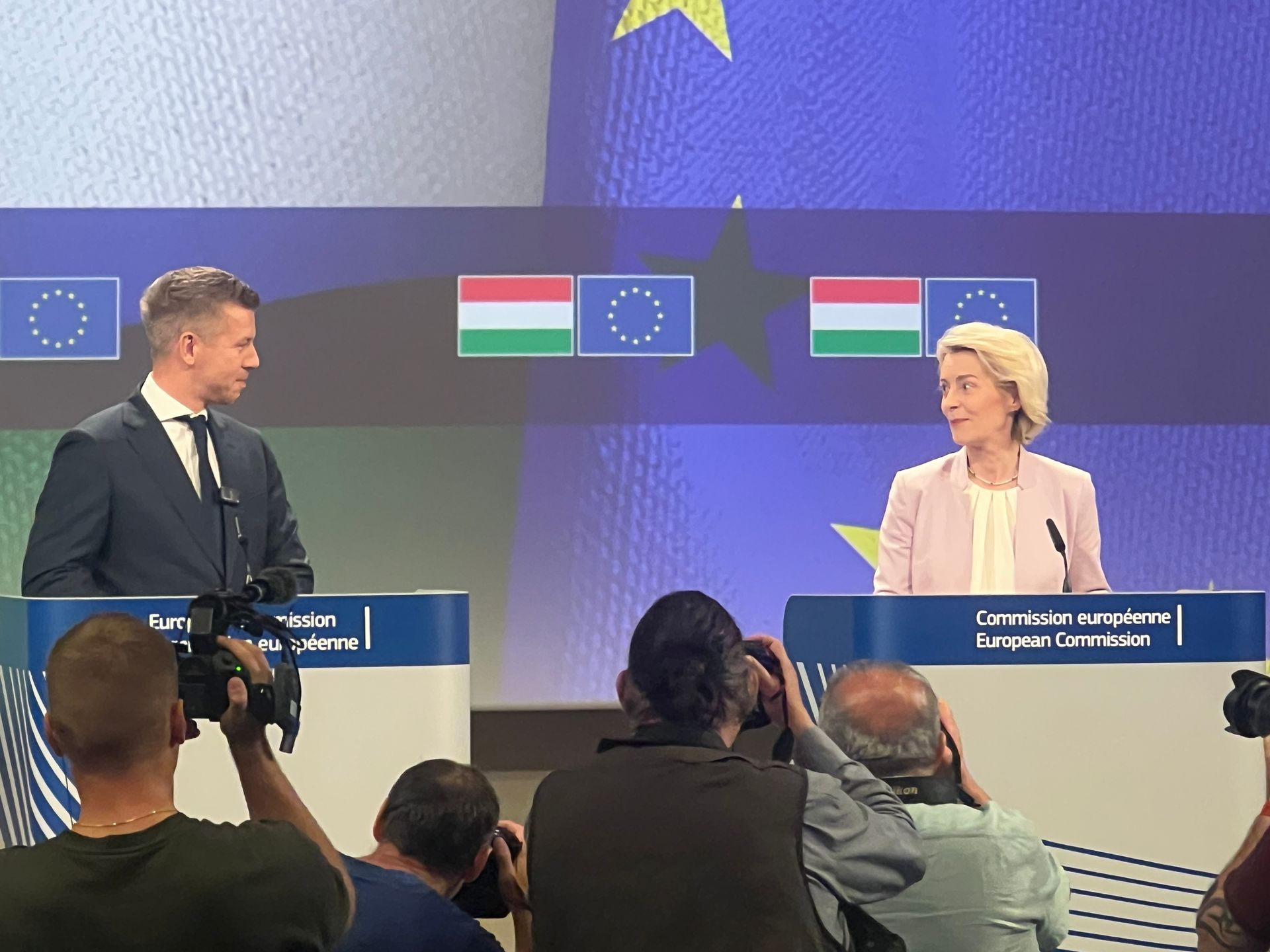
The minority rights file offers the more immediate measure of Magyar’s diplomatic credibility. Hungary blocked Ukraine’s EU accession talks for months under Orbán, wielding a veto tied to 11 demands regarding the cultural, linguistic, and educational rights of roughly 150,000 ethnic Hungarians in the Zakarpattia region. Magyar said in Berlin that negotiations were progressing encouragingly and could reach a technical conclusion this week, at which point he indicated readiness to meet Ukrainian President Volodymyr Zelenskyy as early as next week.
Five diplomats briefed on the matter told Euronews that conditions for a deal have gained momentum, potentially allowing Hungary to lift its veto and enabling the EU to open the first negotiation cluster with Ukraine as early as June 15. Bloomberg reported that Magyar hoped to close those technical talks this week, with the minority rights dispute having held up the start of formal EU accession negotiations since Orbán presented Kyiv with his 11-point list of demands in 2024. The Ukrainian Foreign Ministry confirmed only that consultations were ongoing and that it was working toward a constructive outcome — the diplomatic equivalent of neither yes nor no.
The settlement-venue idea draws on a historical playbook that Hungary itself once inhabited more comfortably. Budapest hosted Cold War-era diplomatic back-channels precisely because its geographic and political position — inside the Soviet bloc but not a Slavic state, bordering both Warsaw Pact and non-aligned nations — gave it a peculiar kind of neutrality. Magyar appears to believe a version of that positioning is available again: Hungary as an EU and NATO member that nonetheless maintains certain economic and political ties with Moscow that its Western partners have severed.
That argument is easier to make in theory than in practice. Orbán’s sustained cultivation of ties with Vladimir Putin left Hungary’s credibility with Kyiv at a low not easily reversed by a single election. Budapest has also made clear it will not contribute troops to any European security presence in Ukraine, a position Magyar has maintained despite pressure from NATO allies. A country that will not commit to Ukraine’s security is asking a considerable amount of trust when it volunteers to host negotiations on Ukraine’s future — and when its prime minister tells a German newspaper that only major powers can provide the security guarantees Kyiv actually needs.
There is a more pointed question that Magyar’s FAZ remarks leave open: what does Russia think? Hungary cannot serve as a credible venue for conflict settlement without some form of Moscow’s consent, implicit or otherwise. Magyar’s government has not indicated whether it has any communication with the Kremlin on this point, and no Russian official response to the settlement-venue idea had been made public as of Wednesday. The Kremlin’s posture toward neutral mediation has generally been selective — accepting it when it offers tactical advantage, rejecting it when it doesn’t.
What Magyar is building, step by step, is a Hungarian foreign policy brand that distinguishes itself from Orbán not by abandoning Hungary’s independent streak but by redirecting it. Where Orbán used Hungary’s EU membership as leverage to extract domestic political benefits from Brussels, Magyar is using the same leverage to make Budapest look like a responsible actor — one that can unlock Ukraine’s EU accession path and simultaneously volunteer its territory as neutral ground for a broader peace process. The FAZ interview adds a layer of intellectual honesty to that project: Magyar is offering Budapest as a venue while admitting in the same breath that the decisive weight in any settlement will rest elsewhere. Whether that brand survives contact with the actual complexity of either task remains to be seen.
—Inputs from RIA Novosti, Sputnik.