NEW YORK — Twenty ballistic missiles arced toward Jordan’s principal American air hub on Tuesday evening, and what came next split into two irreconcilable accounts: one from Amman and one from Tehran.
Brent crude settled at $100.71 a barrel, up 2.85 percent, above $100 for a second consecutive session and at its highest sustained level since July’s peak. Oil traders in Singapore and London were watching a conflict that had spent 194 days rewriting the geography of Middle Eastern energy risk, and Tuesday’s developments wrote another line into that record.
Jordan’s armed forces said they engaged all twenty incoming missiles from Iran’s Islamic Revolutionary Guard Corps, destroying eighteen in the air and reporting two that came down in unpopulated terrain with no casualties and no damage to base infrastructure. The Jordanian military credited its integrated air defence network, including US-supplied Patriot batteries and interceptor platforms, with neutralising the barrage. CENTCOM confirmed that no American service members were harmed.
The IRGC told a categorically different story. Spokesman Brigadier General Ali Mohammad Naeini said the strike had hit maintenance hangars and aircraft dispersal areas for US F-35, F-16 and F-15 jets at the Muwaffaq Salti Air Base, Jordan’s primary facility for US air operations in the country, positioned some 100 kilometres east of Amman. The IRGC declared the damage “beyond repair.” Al Jazeera’s analysis of the target noted the base hosts surveillance drones and strike platforms that have supported the broader US campaign since the conflict began. The claim of hangar destruction could not be independently verified. Satellite imagery confirming or refuting either account had not been released as of Tuesday evening.

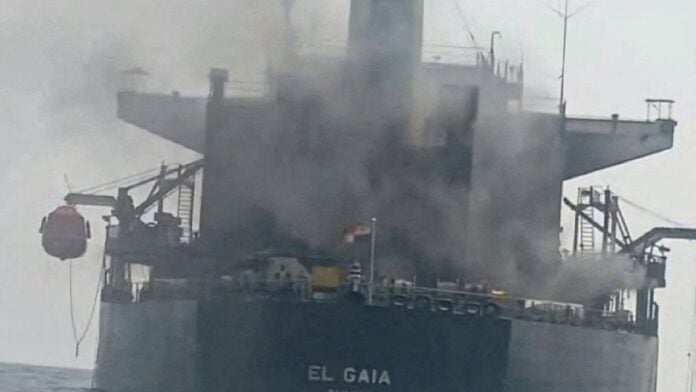
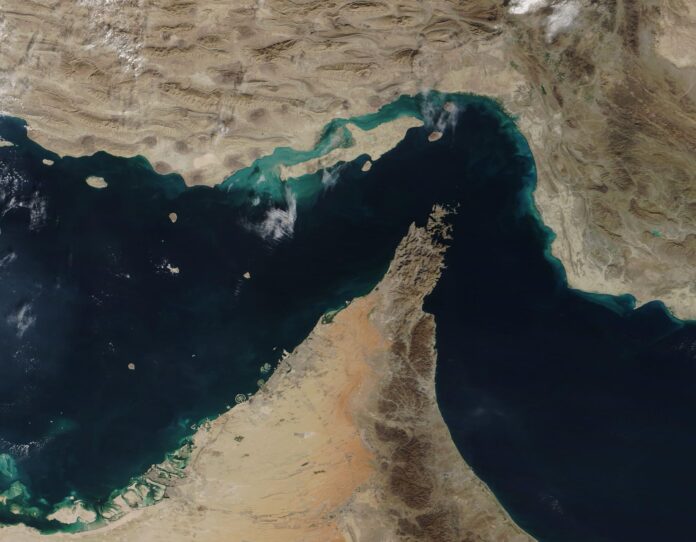
Iran did not limit its retaliation to Jordan. The IRGC said it had struck 10 vessels in the Gulf, including two it identified as American warships. US Naval Forces Central Command flatly denied that claim, saying no American naval asset had been damaged.
The dispute follows a pattern seen in earlier Iranian strike announcements during the conflict, in which Tehran’s claims have at times extended beyond what CENTCOM and independent sources subsequently confirm. The competing accounts leave the extent of the damage unresolved.
Houthi forces in Yemen added another layer to the regional escalation, announcing that they had targeted the Jazan refinery complex in southwestern Saudi Arabia. The facility has a processing capacity of roughly 400,000 barrels per day. Saudi Aramco did not confirm the reported attack, and the operational status of the refinery remained unclear as of Tuesday night.
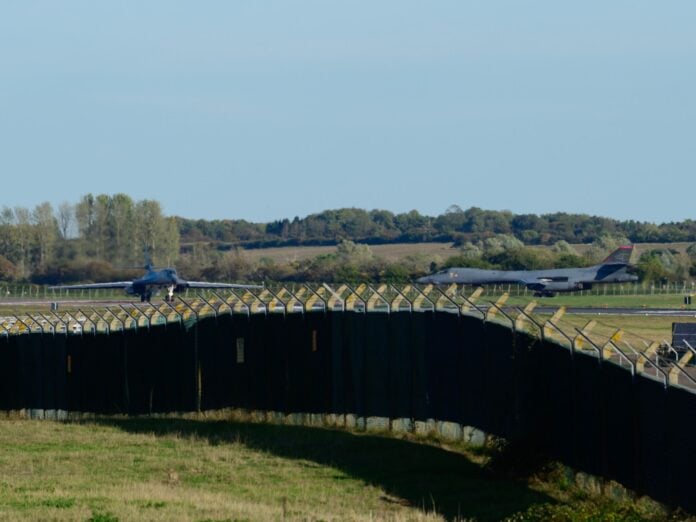
At the center of the market’s calculations is the Muwaffaq Salti air base and what any confirmed damage there would mean for US operations in the region. The base hosts a significant US air operations presence and functions as a forward logistics hub for the broader regional campaign.
If the IRGC’s damage claims are ultimately supported by satellite imagery or other independent evidence, the consequences for US air operations could be material. If Jordan’s account is correct and the base remains operational, the primary effect of the missile barrage may instead have been strategic and psychological: demonstrating that US-linked installations across the region remain within Iranian ballistic-missile range.
At $100.71, the oil market appeared to be pricing both possibilities at once.
China’s response to the prolonged disruption has been more pragmatic. Chinese state refiners have accelerated purchases of Nigerian and Angolan crude, supplemented by Canadian heavy grades and Colombian barrels moving through Pacific shipping routes. The shift has helped insulate China’s supply chain from fluctuations around the Strait of Hormuz.
The alternative routes come with higher transportation costs and longer transit times, but they have so far kept signs of demand destruction more muted than the headline supply-risk indicators might suggest.
The conflict has also appeared to operate under a fragile set of de facto boundaries. US forces have targeted Iranian tankers rather than naval vessels, while Iran has focused its retaliation on air bases and regional shipping rather than directly attacking American warships.
Tuesday tested both boundaries.
If Iran’s claims of striking American warships in the Gulf are independently verified, the attacks would represent a significant escalation beyond the pattern established so far. For now, however, those claims remain disputed rather than confirmed.
That ambiguity may itself be consequential. Both sides have demonstrated the ability to approach a threshold that US commanders have described as unacceptable without definitively crossing it — leaving open the possibility that the disputed claims represent not only competing narratives, but also a line neither side has yet chosen to breach.
Jordan’s calibrated posture in this conflict has been its most difficult diplomatic achievement. Amman hosted back-channel contacts with Washington and, through the Oman-facilitated ceasefire channel that briefly raised hopes in early September, maintained lines toward Tehran. That track has not produced a framework. Twenty IRGC missiles over Jordanian soil did not foreclose Jordan’s mediating role, but they narrowed the political space Amman needs to maintain it.
What remains genuinely unknown is the physical condition of the Muwaffaq Salti base. If the IRGC’s claimed hangar destruction is accurate, the military implications for the regional campaign are substantial. If Jordan’s account holds and the facility is undamaged, the strike’s meaning is primarily strategic signalling: costly to absorb politically, minimal in physical toll. That distinction matters for what Washington decides to do next.
India, the world’s third-largest crude importer, was paying 14 percent above June contract prices for seaborne Brent-linked cargoes. UK petrol prices rose for a fifth consecutive week. Each dollar Brent holds above $100 adds roughly $36 billion a year in annualised costs to oil-importing economies worldwide. The conflict is in its 194th day, and Tuesday offered no evidence that either the war or the oil premium had found its ceiling.