
MENLO PARK — Somewhere in the cash line of Meta’s latest quarterly filing sits $10.80 billion the company can no longer spend. It was ordinary money market funds at the start of the year. It is now restricted cash, pledged into escrow under what Meta calls multi-year infrastructure purchase agreements, and it does not come back until sometime between 2028 and 2030.
That single reclassification says more about the artificial-intelligence buildout than any capital expenditure headline, because it is the point at which an intention becomes an obligation. A capex forecast can be cut. Cash held in escrow against a signed contract cannot.
Meta rose 1.92 per cent to $560.43 on Monday afternoon in New York while the memory makers it depends on fell hard, Micron by 5.23 per cent and SanDisk by 6.06.
And the headline number moved in the opposite direction to the one most coverage assumed. Meta did not raise its spending ceiling this quarter. It narrowed the range from underneath.
META Stock Today: Best Megacap of the Day, Worst Drawdown of the Group
| Company | Price | Session | Below 52-week high |
|---|---|---|---|
| Meta Platforms (META) | $560.43 | +1.92% | -29.1% |
| Amazon (AMZN) | $262.41 | +1.46% | -8.6% |
| Alphabet (GOOGL) | $348.21 | +0.98% | -14.8% |
| Microsoft (MSFT) | $487.69 | +0.92% | -11.9% |
| Apple (AAPL) | $311.05 | +0.55% | -9.7% |
| Broadcom (AVGO) | $360.98 | -2.03% | -27.1% |
| Micron Technology (MU) | $916.20 | -5.23% | -27.0% |
| SanDisk (SNDK) | $1,499.39 | -6.06% | -36.3% |
| Live intraday quotes, not settlements. Distance from the 52-week high is Eastern Herald’s calculation from the quoted price. Meta had the largest gain of the five megacaps on the day and the largest drawdown from its high, a combination none of the others share. | |||
That table contains the peculiar fact about Meta. It led the megacaps higher on Monday and it is still 29.1 per cent below its own high, more than three times Amazon’s drawdown and nearly twice Alphabet’s. The market has already taken a great deal out of this stock, and it did not take it out because advertising stopped working.
Narrowed, Not Raised
The guidance language is worth quoting exactly, because the paraphrases have drifted. In its second-quarter results filed with the Securities and Exchange Commission, Meta said it anticipates 2026 capital expenditures, including principal payments on finance leases, in the range of $130 billion to $145 billion, narrowed from a prior outlook of $125 billion to $145 billion.
The ceiling did not move. The floor rose by $5 billion. A company that narrows a range from below is telling you it has retired the possibility of spending less, which is a different and in some ways firmer statement than raising the top.
Advertising is paying for it so far. Revenue reached $60.80 billion in the quarter, up 28 per cent year on year. Capital expenditure in the same three months was $31.08 billion, slightly more than half of revenue.
The $10.8 Billion Nobody Mentioned
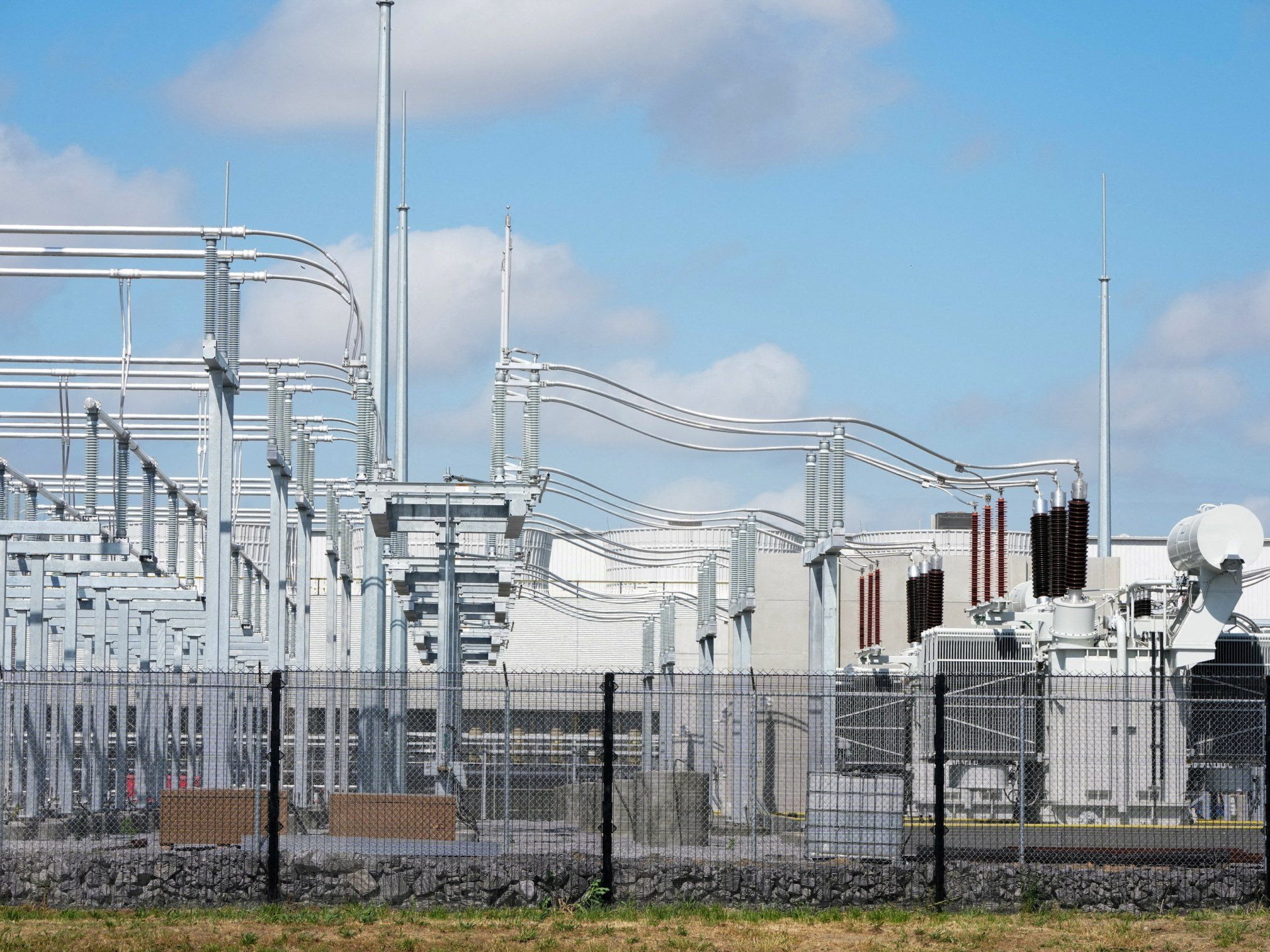
The escrow disclosure sits in the liquidity discussion of the quarterly report Meta filed on July 30, and it is one sentence long. During the six months to June 30, $10.80 billion of unrestricted money market funds was reclassified as restricted cash equivalents in connection with escrow requirements under certain multi-year infrastructure purchase agreements. The funds are restricted from general corporate use. They are expected to be released between 2028 and 2030.
Meta does not name the counterparties and does not say what the agreements cover. What the accounting tells you is that somebody on the other side of those contracts wanted more than a purchase order. They wanted the money set aside.
That is a supplier with leverage. It is the same leverage visible in Micron having contracted its entire 2026 high-bandwidth memory output on agreed price and volume and in Apple’s outgoing chief executive saying publicly that he wished there were more suppliers. When capacity is scarce, the seller sets the terms, and one of the terms is now cash in escrow for four years.
The Cost Side Got Worse in Three Places
The same filing carries three items that complicate the growth story, and Meta disclosed all of them plainly.
Total costs and expenses were $42.03 billion, up 55 per cent, well ahead of the 28 per cent revenue growth. Inside that sit $2.40 billion of charges related to legal proceedings and $1.18 billion of severance connected to a headcount reduction in May, which affected roughly 8,000 employees, the majority of whom leave the reported headcount by the end of the third quarter.
| Line | Q2 2026 | Q2 2025 | Change |
|---|---|---|---|
| Revenue | $60,801 | $47,516 | +28% |
| Cost of revenue | 11,330 | 8,491 | +33% |
| Research and development | 21,656 | 12,942 | +67% |
| Marketing and sales | 3,431 | 2,979 | +15% |
| General and administrative | 5,609 | 2,663 | +111% |
| Total costs and expenses | 42,026 | 27,075 | +55% |
| Income from operations | 18,775 | 20,441 | -8% |
| Net income | 15,848 | 18,337 | -14% |
| Diluted earnings per share | $6.18 | $7.14 | -13% |
| Figures in millions of US dollars except per-share amounts, as filed. Percentage changes are Eastern Herald’s calculation from the filed figures and are rounded. This is the whole argument in one column: revenue grew 28 per cent and operating income still fell 8, because total costs and expenses grew 55. General and administrative more than doubled, and research and development rose by two thirds. | |||
Meta also raised the lower end of its full-year expense outlook to absorb the legal charges, putting 2026 total expenses at $165 billion to $169 billion. And it lifted its expected tax rate for the remaining quarters to between 15 and 17 per cent, up from a prior outlook of 13 to 16.
A company cutting 8,000 jobs while committing to spend up to $145 billion on infrastructure is not confused. It is reallocating from people to machines, in public, and paying legal and severance costs to do it.
How It Is Funded
Meta finished the quarter with $90.26 billion of cash, equivalents and marketable securities, and $83.66 billion of long-term debt. The cash balance rose $8.67 billion over six months, but the composition of that increase matters: $64.09 billion came from operations and $24.91 billion from issuing fixed-rate senior unsecured notes in May.
So the buildout is now partly debt-financed, at a moment when the thirty-year Treasury yields above 5 per cent. Operating cash flow alone did not cover six months of capital expenditure, legal charges, severance and dividends.
Why Monday Went Meta’s Way
The session was a rotation out of semiconductors, not out of technology. The Philadelphia Semiconductor Index fell 2.28 per cent while the Dow rose 0.28 per cent. Every megacap in the table above was higher; every chip and memory name was lower.
Money moving from a company that sells the picks to a company that owns the mine is a defensible trade. Our Nasdaq column and S&P 500 column both trace how narrow the selling was, and Broadcom, which builds Meta’s custom MTIA accelerators, was on the losing side of it.
What This Column Cannot Tell You Yet
We do not know who holds the escrowed $10.80 billion. Meta describes the agreements only as multi-year infrastructure purchase agreements and names no counterparty, so it is not possible to say whether the money is pledged against chips, against power, against construction, or against all three. The release window of 2028 to 2030 is the only shape we have.
We also cannot separate how much of the narrowed capex range reflects firmer commitments and how much reflects cost. Meta gives one range and one reason, that the spending supports its AI efforts and core business, and it does not break the figure into volume and price. A company buying the same compute at a higher price and a company buying more compute produce the same guidance line, and this disclosure cannot tell them apart.
Related Posts