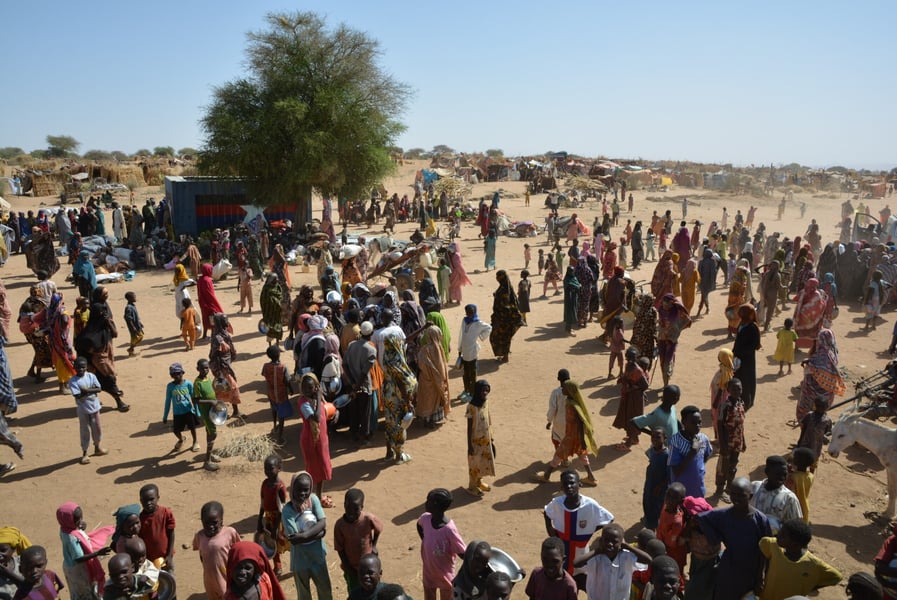

In the beleaguered city of El Fasher, North Darfur, the plight of women and girls has reached a devastating crescendo amid Sudan’s protracted civil war. Since April 2023, the conflict between the Sudanese Armed Forces and the paramilitary Rapid Support Forces (RSF) has transformed El Fasher into a crucible of suffering, where starvation, systematic sexual violence, and bombardments are daily realities. The recent conquest of El Fasher by the RSF after a grueling 500-day siege has exacerbated an already dire humanitarian crisis, forcing tens of thousands into displacement and exposing them to relentless atrocities.
Women fleeing El Fasher recount harrowing tales of enduring starvation amid a collapsing food supply, with many forced to scavenge for wild leaves and berries in a desperate bid for survival. The collapse of essential services has been catastrophic; maternity hospitals have been looted and destroyed, compelling pregnant women to give birth in the streets without medical care. Water lines and food queues, once hoped to be sanctuaries of relief, have become perilous paths where sexual violence looms as a weapon of war. UN Women’s Regional Director for East and Southern Africa, Anna Mutavati, emphasizes that women’s bodies have become “crime scenes” in the conflict, with nowhere safe to seek protection or psychosocial care.
The starvation gripping El Fasher is corroborated by the latest UN-baked Integrated Food Security Phase Classification (IPC) analysis, which now confirms famine conditions in the city and the capital of South Kordofan state, Kadugli. This famine is part of a broader epidemic of malnutrition engulfing displaced populations whose access to humanitarian aid remains blocked by ongoing hostilities and logistical challenges. Health workers report a surge in severe acute malnutrition—directly jeopardizing the lives of mothers and infants alike. According to the World Health Organization’s reports, this malnutrition crisis undermines not only immediate survival but also the long-term health outcomes for children born into this conflict.
The international humanitarian community has continuously called for unimpeded access to aid in these conflict zones, with the subsequent arrival of Sudan’s UN Special Envoy and humanitarian relief chief underscoring the urgent need for a truce. Yet, fighting persists, spilling into nearby regions such as South Kordofan, where drone strikes obliterate civilian infrastructure, including schools, further destabilizing already vulnerable communities.
The crisis has precipitated an exodus of nearly 89,000 civilians from El Fasher and its environs into precarious refugee camps and host communities across North Darfur, Tawila, Malit, and neighboring Chad. Host communities, overwhelmed and under-resourced, grapple with the influx amid worsening conditions linked to climate change—a factor increasingly recognized for compounding conflict-driven displacement, according to the UN Refugee Agency’s recent assessment.
Integral to understanding this catastrophe is the weaponization of sexual violence by the RSF, which the UN Security Council explicitly recognizes as a war crime. The ongoing use of rape as a systematic tool of war in Sudan represents not only a violation of international humanitarian law but a profound assault on the dignity and survival of women. International human rights organizations, including Amnesty International, have documented a pattern of gender-based violence that perpetuates fear, trauma, and societal disruption.
The financial cost of basic necessities has spiraled beyond reach for the displaced. On the black market, a packet of sanitary towels now costs approximately $27, while monthly humanitarian cash aid averages below $150 for an entire family, forcing agonizing decisions between food, medicine, and dignity. Tragically, in the hierarchy of scarcity, women and girls often eat last or skip meals entirely, a grim reality endorsed in several humanitarian reports highlighting the gendered dimensions of hunger and survival.
The International Committee of the Red Cross (ICRC) has been pivotal in delivering life-saving aid and medical care in El Fasher and surrounding areas, often navigating volatile frontlines and logistical impediments. Their ongoing efforts underscore the necessity for sustained international engagement and the expansion of safe humanitarian corridors.
As the world watches, each day lost to inaction adds to the mounting toll of women giving birth under fire, children succumbing to hunger, and survivors vanishing without justice. Drawing attention to Sudan’s women and girls is, as UN Women conveys, a measure of our shared humanity— a call for urgent global solidarity to end the war, ensure humanitarian access, and uphold human dignity in Sudan.