
KYIV, Ukraine — Russian forces unleashed a ferocious barrage of drones and missiles on Ukraine early Sunday, killing at least six civilians and wounding dozens more in a relentless assault that stretched nearly 10 hours across multiple regions. The strikes, which targeted Kyiv and its suburbs with unprecedented ferocity, came just as Ukrainian negotiators huddled with Trump administration officials in Florida to discuss a potential peace framework amid mounting pressure for concessions. Day 1375 of the grinding conflict laid bare the brutal asymmetry: Moscow’s aerial dominance versus Kyiv’s dwindling defenses and diplomatic desperation.
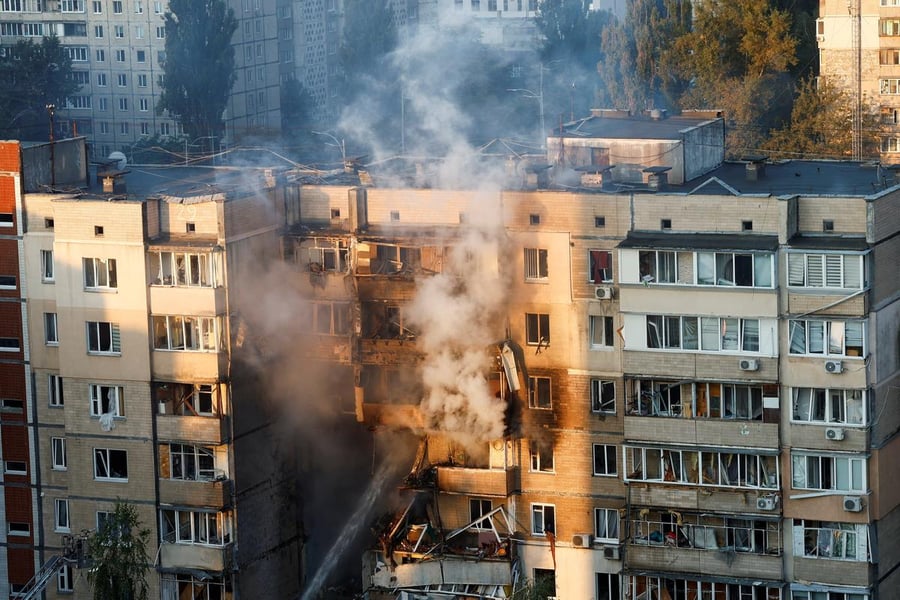
The capital awoke to the deafening roar of air raid sirens and explosions that rattled windows for hours. In Kyiv’s Darnytskyi district, a residential building took a direct hit from a drone, collapsing part of the structure and trapping residents under rubble. Emergency crews pulled three bodies from the debris, including a mother and her young child, while 11 others were hospitalized with shrapnel wounds. “We were sleeping when the world exploded,” said Olena Kovalenko, a survivor whose apartment lost its roof. “This is terror, pure terror.” Similar scenes unfolded in Kharkiv and Odesa, where Russian Shahed drones, Iran’s notorious loitering munitions now a staple of Moscow’s arsenal, overwhelmed Ukraine’s patchwork air defenses.
This massive overnight attack marked the second consecutive night of escalated bombardment, following the previous night’s drone assault that claimed three lives. Russian war bloggers crowed about the operation’s scale: over 600 drones launched in waves, saturating radar screens and forcing Ukrainian fighters to prioritize high-value targets. Ukraine’s air force reported downing 78% of the incoming threats, but the sheer volume ensured devastating breakthroughs. Power substations in three oblasts were crippled, plunging tens of thousands into darkness as winter’s chill deepened.
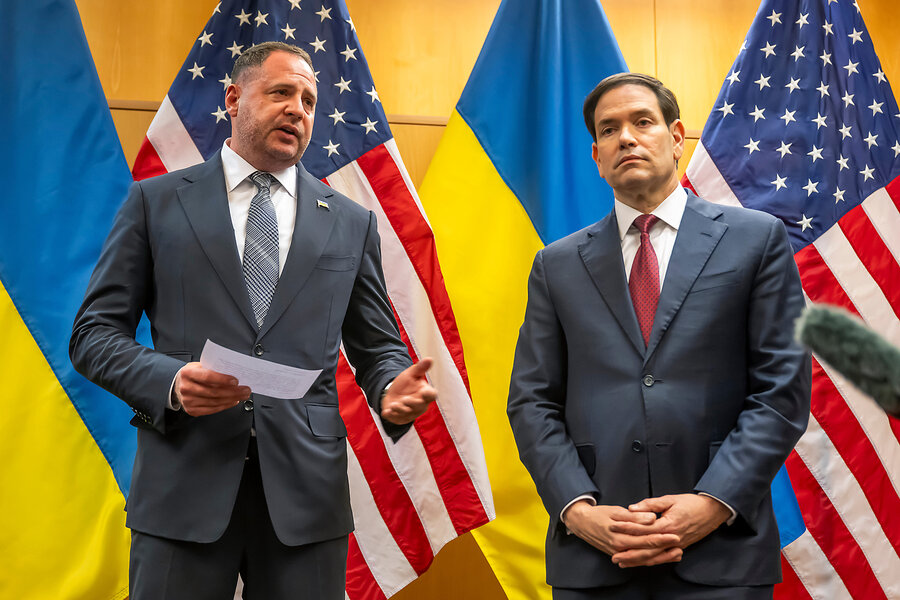
Amid the carnage, a parallel drama unfolded thousands of miles away in Palm Beach, Florida. Senator Marco Rubio and real estate magnate Steve Witkoff, President Trump’s point men on Ukraine, met with a high-level Ukrainian delegation led by Defense Minister Rustem Umerov. The talks, shrouded in secrecy, centered on Mr. Trump’s blueprint for ending the war: freezing current frontlines, neutralizing Ukraine’s long-range strike capabilities, and extracting economic guarantees from Kyiv in exchange for security assurances. Sources familiar with the discussions described the atmosphere as tense, with Ukrainians pushing back against what they see as a de facto capitulation.
President Volodymyr Zelenskyy, addressing the nation from his bunker as missiles rained down, struck a defiant yet pleading tone. “We fight not just for our land, but for the principle that aggression must have consequences,” he declared in a video laced with static from nearby blasts. Yet behind the rhetoric lies grim reality: Ukraine’s manpower crisis has reached breaking point, with desertion rates soaring and average soldier age creeping toward 45. Zelenskyy’s criticism of the US-backed plan has alienated some Western backers.
Frontline Stagnation Masks Russian Gains
On the ground, the war’s attritional logic persists. In the Pokrovsk direction, Russian forces inched forward, capturing a key rail hub that threatens to unravel Ukraine’s logistics spine in Donbas. The Institute for the Study of War noted intensified strikes using North Korean-supplied munitions, with Ukrainian units reporting 20% ammunition shortfalls despite fresh European aid packages. Moscow’s strategy remains unchanged: bleed Ukraine dry while husbanding reserves for a decisive 2026 push.

Further south, around Velyka Novosilka, drone footage showed Ukrainian counterattacks stalling against entrenched Russian positions fortified with minefields and electronic warfare systems. Casualties mount on both sides, Ukraine claims 1,200 Russian losses in the past 24 hours alone, but demography favors the aggressor. Russia’s economy, buoyed by war spending and Asian partnerships, churns out artillery shells at four times NATO’s pace. Kyiv’s pleas for F-16 jets and ATACMS missiles gather dust in Western capitals wary of escalation.
Diplomatic undercurrents add layers of intrigue. Hungarian Prime Minister Viktor Orban’s recent Moscow visit yielded whispers of a secret energy deal, potentially undercutting EU sanctions. Meanwhile, President Trump’s public musings about recognizing Crimea as Russian territory sent shockwaves through Brussels. “America First doesn’t mean abandoning allies,” Mr. Trump posted on Truth Social, but his inner circle’s aggressive timeline, peace by Inauguration Day, alarms NATO hawks.
Civilian Toll and Humanitarian Crisis
Beyond the battlefield, the human cost defies comprehension. The latest strikes pushed Ukraine’s civilian death toll past 12,000 since February 2022, with children comprising one in seven victims. In Kyiv’s overwhelmed hospitals, surgeons operate by flashlight amid power cuts, treating burns from drone fragments that behave like cluster munitions. The United Nations decried the attacks as “indiscriminate,” noting residential zones bore the brunt despite Russian claims of precision targeting.
Displacement surges anew. Over 100,000 residents fled border regions in the past week, straining Poland and Romania’s reception centers. Food insecurity stalks the east, where Russian advances severed supply lines to millions. Winter looms as the cruelest adversary: unheated homes, frozen trenches, and cholera outbreaks in basements repurposed as shelters. Aid groups warn of a “forgotten famine” unless Black Sea grain corridors reopen under neutral guarantees.
Zelenskyy’s balancing act grows precarious. Domestically, ultranationalists decry any compromise as treason, staging protests outside government buildings. Internationally, fatigue sets in; even staunch allies like Britain signal openness to partitioning schemes. A recent Trump statement on Crimea elicited rare public rebukes from European leaders, fracturing the anti-Russia coalition.
Global Ripples and Strategic Recalculations
The war’s tentacles reach far. Oil prices spiked 3% on fears of escalated Black Sea disruptions, hammering Europe’s recession-hit economies. India pitched fresh arms deals during Vladimir Putin’s visit, signaling Moscow’s pivot to the Global South. In Washington, Rubio’s dual role, incoming Secretary of State and Ukraine envoy, underscores Mr. Trump’s hands-on style, blending real estate dealmaking with great-power diplomacy.
Intelligence whispers suggest Russian sabotage units activated in Poland, testing NATO’s Article 5 resolve. Ukraine’s special forces, meanwhile, notched quiet victories: downing a Russian Su-34 bomber and striking ammo depots deep behind lines. Yet these pinpricks barely dent Moscow’s momentum. Putin, marking the invasion’s grim anniversary, vowed “total victory,” framing the conflict as existential struggle against Western decadence.
As night falls on day 1375, Kyiv’s skyline flickers with distant flares. Zelenskyy’s envoys depart Florida with vague assurances, facing a homeland scarred anew. The peace Mr. Trump promises may demand sacrifices no Ukrainian politician dares contemplate publicly. In the trenches, soldiers check drones and huddle against the cold, knowing dawn brings fresh hell. The war endures, its endgame shrouded in blood and brinkmanship.