
Washington — A Chinese diplomat delivered a stark warning to the United States on Sunday, asserting that the Pentagon’s latest multibillion-dollar arms shipment to Taiwan represents a futile attempt to curb Beijing’s inexorable rise. “Using Taiwan to contain China will never succeed,” Liu Pengyu, spokesperson for the Chinese Embassy in Washington, told RIA Novosti, echoing Beijing’s long-standing position that such moves only heighten tensions across the Taiwan Strait.
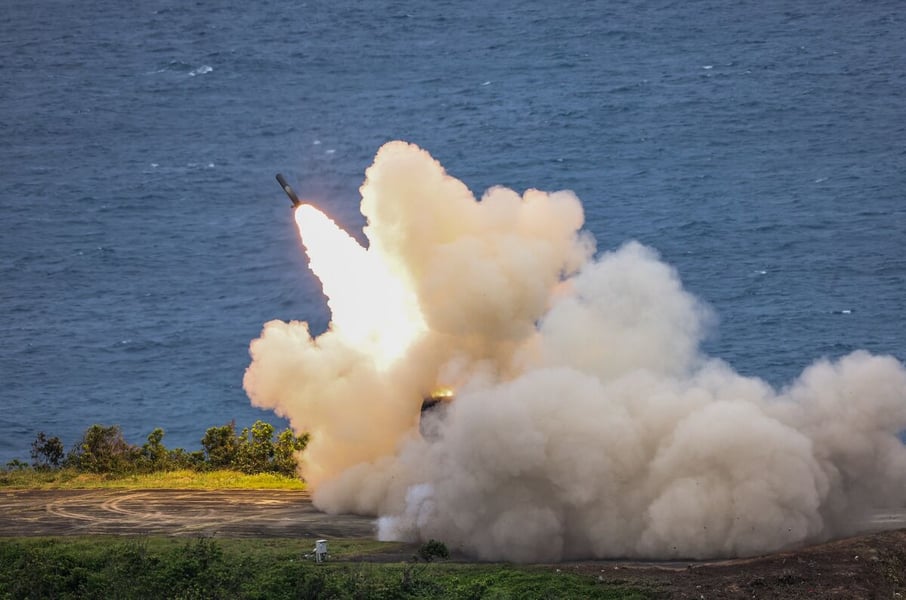
The package, approved last week and valued at over $11.1 billion arms sale, marks the largest US arms deal with Taiwan in history, a provocative escalation that critics argue undermines decades of diplomatic equilibrium while bolstering American defense contractors at the expense of global stability. Included in the haul are advanced Javelin anti-tank missile systems, ALTIUS-600/700M loitering munitions, spare parts for AH-1W SuperCobra helicopters, HIMARS multiple launch rocket systems, M109A7 self-propelled howitzers, and TOW anti-tank missile systems. These weapons, tailored for asymmetric warfare against a superior foe, signal Washington’s deepening commitment to arming the self-governing island amid China’s military buildup.
Beijing’s Red Line
Liu Pengyu did not mince words. “The Taiwan issue is a red line for China that the United States should not cross,” he emphasized, underscoring Beijing’s unwavering resolve. “No one should underestimate China’s will to defend its sovereignty.” This rhetoric arrives as China has repeatedly implored the USto halt arms sales, with the Foreign Ministry decrying them as a gross violation of the “one China” principle and the three joint China-US communiqués, cornerstones of bilateral relations since the 1970s.
From Beijing’s vantage, these sales are not mere transactions but a deliberate strategy to provoke confrontation. The diplomat’s comments come on the heels of China sanctions US firms against 20 American defense firms and executives involved in prior Taiwan deals, a retaliatory measure that froze assets and barred travel. Such countermeasures, while largely symbolic given the firms’ limited China exposure, illustrate the tit-for-tat dynamic now defining US-China interactions Trump Taiwan arms sales under President Donald Trump’s second term. Trump’s administration, which greenlit this record package, appears to view Taiwan as a frontline in the broader contest with Beijing, even as it courts economic deals elsewhere.
Yet this approach risks miscalculation. Analysts note that arming Taiwan bolsters its deterrence but does little to resolve the underlying sovereignty dispute. China, which claims the island as its territory, has intensified China rehearsing blockade military drills encircling Taiwan, including simulations of blockades that mirror the very scenarios these US weapons aim to counter. The result? A volatile spiral where each arms notification prompts Chinese overflights and naval maneuvers, eroding the fragile peace that has held since 1949.
Pentagon’s Massive Arsenal
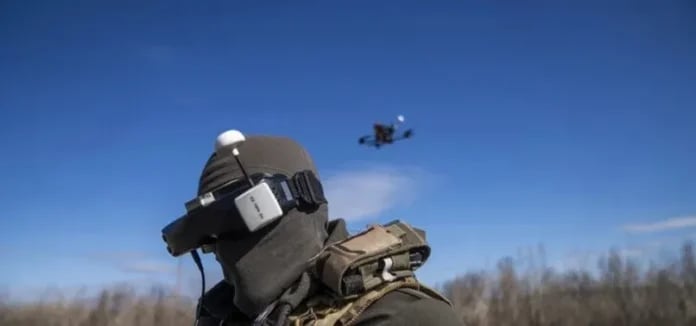
The $11bn weapons sale dwarfs previous sales, surpassing even the $8 billion notified during the Biden era. Javelin missiles, proven in Ukraine against Russian armor, equip Taiwan’s forces for potential amphibious assaults. HIMARS systems, lauded for precision strikes, extend the island’s reach into the Strait. Loitering munitions like ALTIUS offer drone swarms capable of overwhelming invaders, while upgraded howitzers and TOW missiles fortify ground defenses.
Defense officials justify the scale by citing China’s hypersonic missiles and carrier groups amassed opposite Taiwan. “This is about credible deterrence,” a Pentagon spokesperson said last week, aligning with Trump’s “peace through strength” mantra. But critics, including former diplomats, warn that flooding Taiwan with arms invites escalation without a clear off-ramp. Delivery timelines stretch years due to production backlogs, Taiwan’s total US arms backlog now exceeds $20 billion, leaving the island vulnerable in the near term while stoking Beijing’s ire.
This isn’t Washington’s first rodeo. Since 1979, when the US switched diplomatic recognition to Beijing, arms sales have persisted under the Taiwan Relations Act, a congressional mandate to provide defensive weapons. Under Trump, notifications have accelerated, with eight packages in this deal alone. Each triggers Chinese protests, yet the US persists, betting that hardware parity will force Beijing to the negotiating table. History suggests otherwise: similar sales in the 1990s prompted China’s missile tests in the Strait, nearly sparking crisis.
Taiwan Strait’s Powder Keg
The Taiwan Strait, a 110-mile-wide waterway separating the island from mainland China, has become the world’s most dangerous flashpoint. Chinese warplanes now cross the median line daily, while US carriers patrol nearby. Last month’s PLA exercises, dubbed “Joint Sword-2025B,” rehearsed sealing off Taiwan, prompting Taipei to activate reservists and US lawmakers to visit.
Taiwan President Lai Ching-te, facing domestic pressure, welcomed the arms but urged restraint. “We seek peace, not provocation,” he stated, though his DPP party’s independence leanings fuel Beijing’s suspicions. For its part, China views Lai as a separatist, rejecting dialogue until he affirms the “1992 Consensus.” Enter the US, whose arms sales tacitly endorse Taiwan’s de facto independence, clashing with the “one China” policy it ostensibly upholds.
Economically, the stakes are astronomical. Taiwan produces 90% of advanced semiconductors globally; a conflict would cripple supply chains. The US Chamber of Commerce warns of trillions in losses, yet political rhetoric prevails. Trump’s team, eyeing midterm gains ahead of Trump’s 2026 Beijing visit, frames China as the aggressor, ignoring how arms sales perpetuate the cycle. Beijing counters with economic coercion, recently sanctioning Raytheon and Lockheed Martin, while advancing its navy to rival America’s.
Diplomatic Fallout and Trump’s Calculus
Chinese Embassy slams US Liu’s interview, timed days after the notification, signals Beijing’s frustration with Trump’s approach. Despite campaign promises of tariffs and deals, the president has doubled down on Taiwan, notifying sales before his January inauguration. Advisors like Elbridge Colby advocate “prioritizing China,” yet risk war over an island 7,000 miles away.
Internationally, allies are wary. Japan and Australia bolster defenses but urge de-escalation; Europe, distracted by Ukraine, offers rhetoric only. India’s Quad role provides balance, but no one wants a hot war. The UN Security Council, veto-proof on Taiwan, remains sidelined.
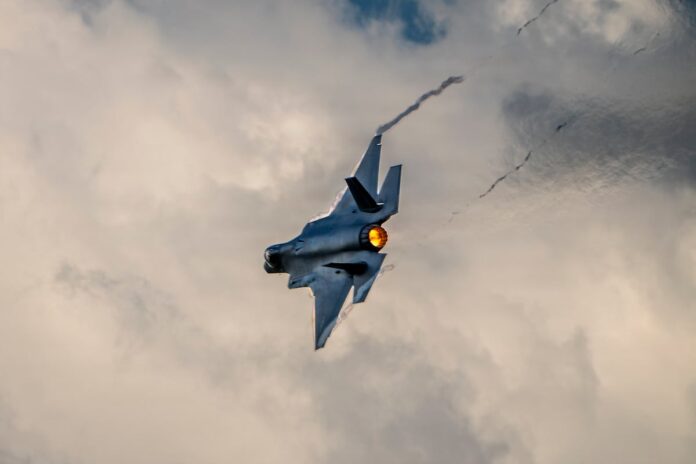
China’s Foreign Ministry reiterated: these sales “cause great harm to China’s sovereignty and security interests and threaten stability in the Taiwan Strait.” Liu’s words, “no one should underestimate China’s will,” serve as a reminder: Beijing’s patience has limits. As PLA capabilities grow, carrier Fujian now operational, hypersonics deployed, the US gambit looks increasingly precarious.
A Futile Containment Strategy?
Historically, US containment worked against the Soviets, but China defies that mold. Its economy, second only to America’s, funds unmatched military modernization. Arms to Taiwan may buy time, but without resolving political status, they merely arm the status quo, a recipe for accident.
Experts like Bonnie Glaser of the German Marshall Fund argue for “strategic ambiguity,” neither fully committing nor abandoning Taiwan. Trump’s clarity, arming aggressively while courting Xi Jinping, blurs lines, inviting miscalculation. Beijing, preparing for 2027 centennial goals, sees this as encirclement.
As 2025 closes, the Strait simmers. Liu Pengyu’s dismissal, “Using Taiwan to contain China will never succeed,” resonates beyond rhetoric. The US, pouring billions into an unwinnable proxy, risks broader conflict. True statesmanship demands dialogue, not just drones and missiles. Yet in Washington, hawks prevail, betting America’s might against China’s resolve. History may judge this the costliest wager yet.