
KHARTOUM — Sudanese army-aligned sources say government forces and allied fighters have captured more than 10 South Sudanese nationals they allege were fighting with the Rapid Support Forces, a claim that, if substantiated, could widen an already brutal civil war by introducing a more explicit regional dimension to a conflict that has increasingly spilled across borders and trade routes.
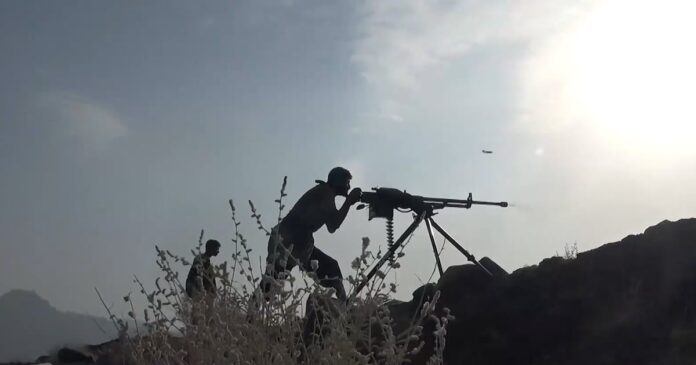
The detentions were reported to have taken place on Thursday in the towns of Kazqil and al-Rayash in North Kordofan, an area that has become one of the conflict’s most contested corridors as the Sudanese Armed Forces, or SAF, seeks to blunt RSF advances and reopen overland links toward El-Obeid, a strategic city and the state capital.
Sudanese officials, according to the sources cited by Al Jazeera, are preparing to contact South Sudan’s government and present “official” documentation they say shows those captured were part of RSF ranks. The RSF has not publicly confirmed the presence of South Sudanese fighters among its forces in the reporting cited, and there was no immediate public response from Juba included in that same account.
What can be verified from the available reporting is narrower than what the allegations imply, that Sudanese army-linked sources made the claim, that the locations named are in North Kordofan, and that the allegation is being framed by Khartoum as an issue to be raised through formal channels with South Sudan. Still, the charge underscores how quickly Sudan’s civil war is morphing from a power struggle between rival armed centers into a magnet for cross-border networks, fighters, money, weapons, and survival migration, all of which deepen the difficulty of diplomacy and raise the risks for neighboring states.
A contested belt in Kordofan
The towns cited, Kazqil (also rendered “Kazgeil” in other reporting) and al-Rayash, also rendered “Riyadh”, have repeatedly shifted hands in the war’s grinding geography, with each side using the language of “control” to signal more than a tactical gain: a message about momentum.
On Dec. 30, Anadolu, citing military sources, reported that the Sudanese army had retaken control of Kazgeil and Riyadh in North Kordofan after clashes with the RSF. That report said videos circulated by army personnel on social media showed forces inside Kazgeil, and placed the town at about 45 kilometers (28 miles) south of El-Obeid. Anadolu also reported that there was, at the time, no official comment from either the Sudanese army or the RSF on the claim of retaking the towns.
In turn, framed the latest episode as part of this week’s fighting in the same area, emphasizing the capture of people identified by army-linked sources as South Sudanese and describing Khartoum’s intent to raise the matter officially with Juba. Together, the two accounts point to a frontline in motion, one where gains are asserted and contested not only with weapons but with competing narratives, videos, and claims of who is fighting for whom.
The allegation of foreign fighters is also a familiar instrument in civil wars, it can delegitimize an opponent as a proxy force and justify escalation as “self-defense” against outside interference. Yet in Sudan, where borders are porous and livelihoods depend on cross-border movement, the line between “foreign fighter,” migrant, mercenary, or coerced participant can be difficult to establish without transparent evidence and independent verification.
A war that keeps widening
Sudan’s conflict began in April 2023 after disputes over the integration of forces, according to Al Jazeera’s account of the war’s origins. Since then, the humanitarian crisis has intensified, with tens of thousands killed and millions displaced, as described in the same report.
The fighting in the three Kordofan states, North, West, and South, has lasted for weeks, driving tens of thousands from their homes, according to Al Jazeera. That movement of people is not an abstract statistic in Kordofan, it is visible in the swelling numbers arriving in areas that were once waypoints and are now sprawling settlements of exhaustion, improvisation, and grief.
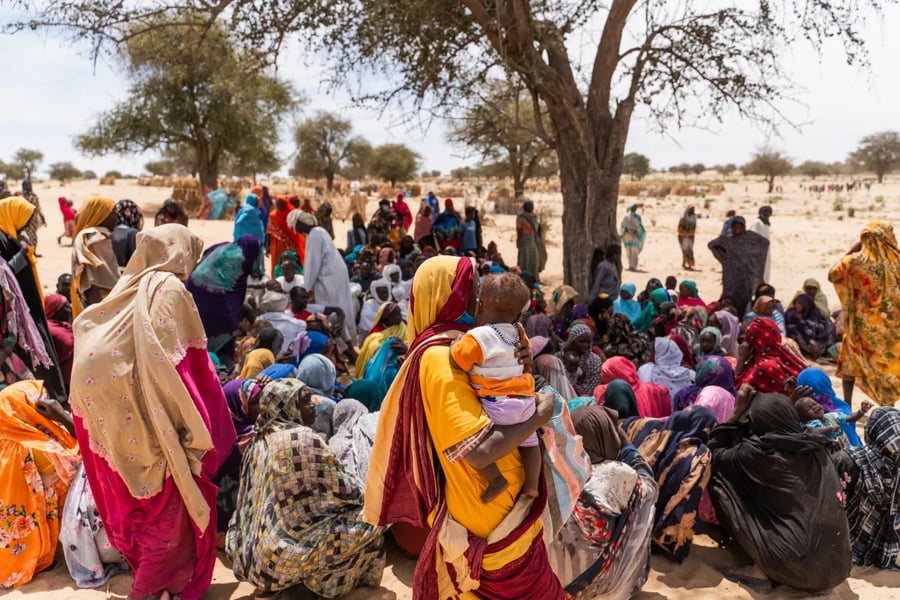
In a separate report published on, Al Jazeera described Kosti, in south-central Sudan, as a “massive transit point” for displaced people, where many families arriving from renewed fighting in Kordofan and Darfur found overcrowded camps and dwindling aid. The report included testimony from displaced mothers describing sleeping beneath sheets fashioned into makeshift shelters, a detail that illustrates how displacement has become not a temporary phase but a prolonged condition.
The same Anadolu report from Kosti cited an estimate from the International Organization for Migration that more than 107,000 people fled El-Fasher and nearby villages between late October and early December following RSF assaults. It added that three-quarters of those displaced from El-Fasher had been uprooted previously during the ongoing conflict, a cycle of repeated flight that has hollowed out family economies and community resilience.
In Kordofan, even basic services have become prizes, not guarantees, as armed groups contest clinics, roads, and the institutions that once held the country together. In one earlier account of the new front lines, Sudan War Civil War, RSF Hospital Seizure Sparks Split described how a hospital could become a strategic asset, a bargaining chip, and a symbol of abandonment all at once.
Allegations that risk a new front
Sudan’s charge that South Sudanese were captured among RSF members adds a volatile element to a war already laced with ethnic targeting, resource competition, and contested legitimacy. If Khartoum formally presents evidence to South Sudan, as the army-linked sources said it intends to do, it could force Juba into a public posture that is hard to calibrate, deny, investigate, cooperate, or accuse Sudan of politicizing identities for domestic gain.
Even the process of “verification” carries risks. Without independent access to detainees, documentation, and chain-of-custody for any alleged evidence, claims may harden into propaganda, and propaganda can become policy in wartime. What is verifiable at this stage, based on the accessible reporting, is that the allegation exists and that Sudanese sources are framing it as an official diplomatic issue.
It is also verifiable that the war’s geography has expanded. Al Jazeera reported that the RSF controls all five states in the Darfur region “with the exception” of parts of North Darfur that remain under army control. The same report said the army controls most territory in the remaining 13 states, south, north, east, and center, including the capital, Khartoum.
These descriptions can be contested in wartime, but they convey the central reality, neither side has achieved a decisive victory, and the country’s size allows multiple wars to coexist, urban clashes, rural offensives, sieges, and raids, all feeding the displacement machine.
A commander killed, and the language of retaliation
The Al Jazeera report also described the death of Hamid Ali Abubakar, whom it identified as an RSF security adviser and commander. According to the report, Abubakar was killed along with aides in an SAF drone strike near Zalingei, in Central Darfur.
An RSF security adviser, Tabiq, was quoted in the report accusing the SAF of an “assassination” and warning that the army would face “severe repercussions.” Such statements, while typical of war messaging, matter because they are often preludes to retaliatory cycles, the kind that broaden the target set and pull civilians further into the blast radius of military logic.
For Nyala, retaliation has often meant airstrikes, shortages, and fear that settles into daily life like dust. Sudan Civil War, Nyala Bombed as UN Begs for Ceasefire tracked how a city in South Darfur could be both a battlefield and a warning flare, even as the international community pleaded for restraint.
The humanitarian floor keeps dropping
For civilians, the most measurable shift is often not who controls a road on a given day, but whether food arrives, whether a clinic has supplies, whether a child can sleep under something sturdier than a sheet.
In Kosti, some families found shelter in larger canvas tents, but many of the newest arrivals were left scavenging for whatever could serve as cover until more adequate housing became available. The report’s portraits of mothers using street-found fabric to build small tents convey a collapse of normal protections, shelter as an afterthought, privacy as a luxury, and health as a gamble.
The Kosti report also tied the city’s swelling population to broader displacement waves from Darfur and Kordofan, suggesting that the country’s internal geography of suffering is increasingly connected, battles in one region quickly produce pressures in another. In that sense, the alleged capture of South Sudanese among RSF fighters in North Kordofan is not only a military claim, it lands atop an already overloaded humanitarian infrastructure that cannot easily absorb new shocks.
Diplomacy, too, has been overwhelmed by the scale of the war. In late December, international officials again urged an immediate ceasefire, part of a renewed United Nations push to halt fighting that has made normal governance in Sudan feel increasingly theoretical.
At the center of that appeal was UN Secretary-General Antonio Guterres, whose office has repeatedly warned that the conflict is not simply grinding on but metastasizing, spawning new atrocities, new displacement, and fresh incentives for armed actors to keep the war alive.
What remains unknown, and why it matters
Several core elements of the “South Sudanese captured” claim cannot be independently verified from the accessible excerpts alone, the identities of those detained, the nature and authenticity of any “official documentation,” the circumstances under which the men were captured, and whether they fought voluntarily, were coerced, or were misidentified. Those unknowns are not technicalities, they shape whether the allegation becomes a diplomatic dispute, a criminal investigation, or a pretext for widening conflict.
At the same time, displacement figures continue to rise. One recent report cited an “estimated 107,294 people” uprooted from El-Fasher as security deteriorated, a number that captures the war’s churn and the speed with which a city can empty. estimated 107,294 people
The war has already shown how quickly unverified narratives can travel, amplified by social media videos, partisan outlets, and the hunger for certainty in a landscape designed to produce confusion. Anadolu reported that videos circulated by Sudanese army personnel showed forces inside Kazgeil announcing control, underscoring how battlefield claims are now often packaged as media artifacts as much as military facts.
For Sudan’s neighbors, including South Sudan, the question is not only whether individuals crossed a border to fight, but whether the region’s fragile states can keep their own internal tensions from being inflamed by Sudan’s war. The more the conflict appears to recruit, or be portrayed as recruiting, from beyond Sudan’s boundaries, the harder it becomes to imagine a settlement contained within Sudan’s borders.
Foreign involvement has become a recurring theme in recent coverage. Colombian mercenaries prop up Sudan’s RSF war examined claims and counterclaims about who is funding, recruiting, and sustaining the war economy, and why accountability has been so elusive.
In Darfur, allegations of atrocities and impunity have been woven into the conflict’s daily rhythm. Sudan War Day 967, ICC Jails Darfur Axe Murderer 20 Years offered a reminder that justice, when it arrives, is often late, partial, and dwarfed by the violence it seeks to address.
And for civilians, the brutality can arrive without warning, even far from the centers of political power. Sudan War Day 965, RSF Slaughters 50 Kids in Drone Hell laid out how war crimes allegations now follow the conflict across regions, shaping fear as much as front lines.
In the meantime, Sudan’s civilians continue to move. They move toward cities like Kosti because there are roads, relatives, rumors of aid, and because the alternative is staying near front lines where control is asserted one day and disputed the next.
If Khartoum follows through on its stated plan to raise the issue with South Sudan’s government, the region may soon see a new layer of diplomacy, one shaped not only by ceasefire proposals but by allegations of cross-border fighters and the evidence, real or fabricated, that will be used to prove them.