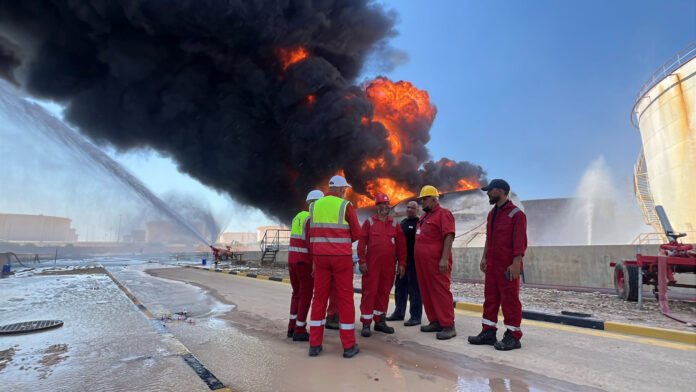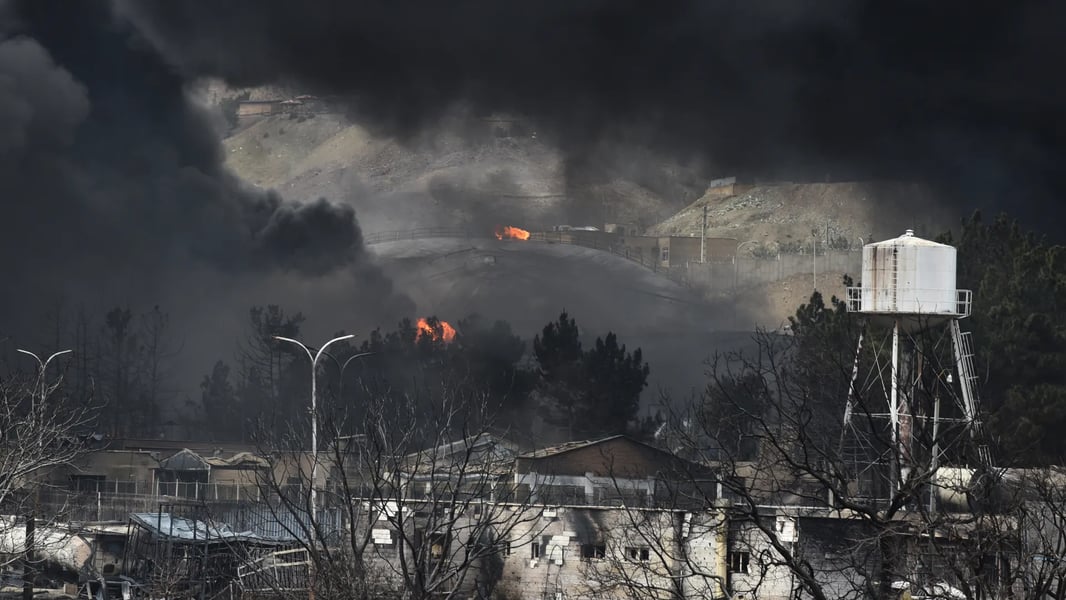

Iran has demanded that the United States and Israel compensate for the destruction caused during the ongoing war, as the conflict between Tehran and its adversaries enters one of the most volatile phases in decades.
Kazem Jalali, Iran’s ambassador to Russia, said that all damage inflicted on the country during the hostilities must be carefully assessed and ultimately paid for by those responsible for initiating the attacks. Speaking in Moscow, Jalali emphasized that the scale of destruction continues to evolve as the war intensifies, making any immediate estimate of losses premature.
“All damage inflicted on us must be assessed so that those who started the war and the aggressors can compensate,” Jalali said in remarks published Monday. “We are in the midst of a war, and any number given today will be different tomorrow.”
The Iranian diplomat’s statement reflects Tehran’s growing diplomatic campaign to frame the conflict as an act of aggression by Washington and Tel Aviv, while pressing for financial reparations and international guarantees to prevent future attacks.
The war began on February 28 when the United States and Israel launched coordinated airstrikes across Iran in what officials described as a sweeping military campaign targeting strategic facilities and command infrastructure. According to Reuters reporting on the initial strikes, the operation marked one of the most significant military escalations in the Middle East in decades.
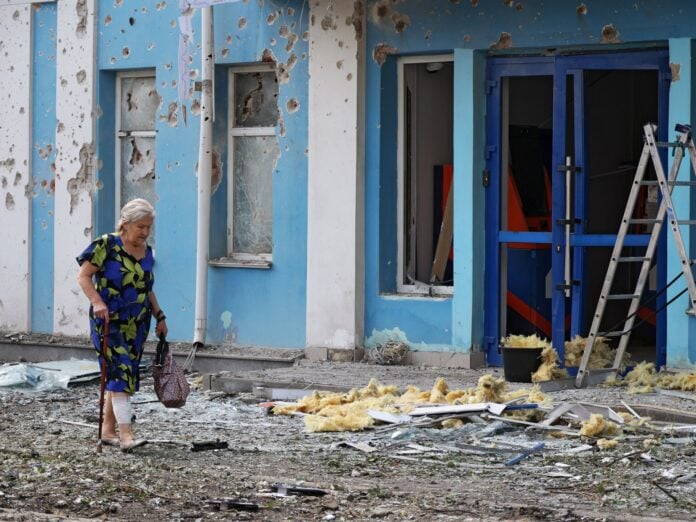
Since the opening bombardment, Iranian cities, including the capital Tehran, have been struck repeatedly, causing widespread damage to infrastructure and residential areas. Iranian officials say civilian neighborhoods, public facilities and key economic infrastructure have been severely affected.
The scale of destruction has quickly become a central part of Tehran’s diplomatic messaging. Iranian representatives at the United Nations say that thousands of homes and commercial buildings have been damaged since the conflict began, while civilian casualties continue to rise as the war intensifies.
Despite the mounting destruction, Iranian officials say the country remains resilient and capable of defending itself. Jalali recently warned that attempts to destabilize Iran would fail, stressing that the country’s political system and state institutions remain intact despite the ongoing bombardment.
Iran has responded with retaliatory missile and drone strikes targeting Israeli territory and U.S. military facilities across the Middle East. The escalating exchanges have transformed the confrontation into a regional crisis involving multiple countries and armed groups.
The broader geopolitical implications of the war are becoming increasingly evident. The conflict has disrupted global energy markets and maritime trade routes, particularly around the strategically vital Persian Gulf and the Strait of Hormuz shipping corridor, through which a large portion of the world’s oil supply passes.
Energy analysts warn that continued instability around the strait could trigger major disruptions to global oil flows and international shipping routes. Markets have already reacted nervously, with prices fluctuating sharply amid fears that the conflict could escalate further.
Meanwhile, the war has triggered widespread political reactions across the world. Several governments have expressed concern that the conflict could spiral into a broader regional confrontation involving additional countries.
Some European governments have also shown signs of distancing themselves from Washington’s approach to the war. Analysts point to growing debate within NATO about the long-term consequences of the conflict, as reflected in reactions such as Germany and Norway questioning the United States’ strategy.
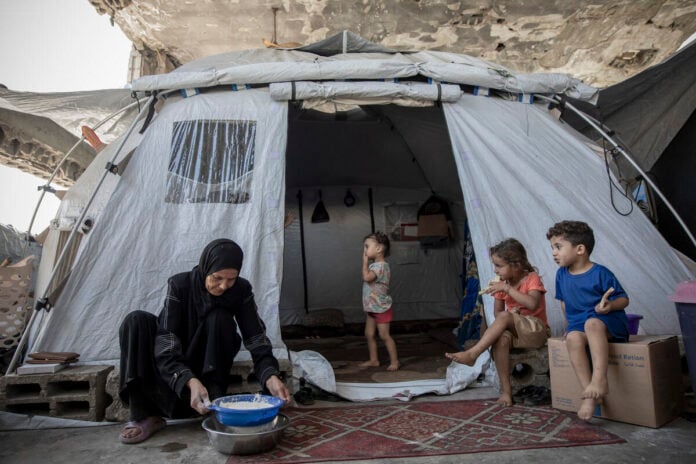
The humanitarian consequences of the war are also becoming more visible. Aid groups warn that prolonged fighting could create a severe humanitarian crisis across parts of the Middle East, particularly if infrastructure damage inside Iran continues to expand.
According to international reporting on the conflict’s toll, thousands of people have already been killed across the region since the war began. Reuters estimates of the regional death toll suggest that casualties are continuing to rise as strikes and counterstrikes intensify.
The war has also sparked demonstrations in multiple countries, with protests condemning the military escalation and calling for diplomatic solutions. Observers say these protests reflect growing public concern about the risk of a prolonged conflict.
At the same time, military operations continue to expand across multiple fronts. The confrontation has spread beyond Iran and Israel, affecting Gulf states hosting American military bases and drawing regional actors into the crisis.
Several developments reported in recent weeks suggest that the conflict’s military dimension could widen further. Iranian strikes targeting regional bases have underscored the vulnerability of U.S. installations in the region, including facilities such as the Al Dhafra Air Base in the United Arab Emirates.
These developments have raised fears among analysts that the war could trigger a chain reaction of retaliatory actions involving multiple armed groups and allied forces across the Middle East.
The political dimensions of the conflict are also becoming increasingly complex. Tehran has attempted to build international support for its position by arguing that the war represents a violation of international law.
Iranian leaders have emphasized that reparations will be a key condition for any future settlement. President Masoud Pezeshkian has previously stated that the conflict could only end if Iran’s sovereign rights are recognized and financial compensation is paid for the damage caused by the war.
Those demands are now becoming central to Tehran’s diplomatic strategy as it seeks to shape the narrative around the conflict.
Iranian officials argue that compensation would represent recognition of responsibility for what they describe as an unlawful military campaign launched against the country.
Washington and Tel Aviv, however, have defended the strikes as necessary measures aimed at countering security threats posed by Iran’s military capabilities.
The war’s economic consequences are already being felt beyond the region. Global energy markets have been rattled by fears that continued fighting could disrupt oil exports from the Middle East.
International energy analysts warn that prolonged instability could send oil prices sharply higher and trigger ripple effects across global supply chains.
The crisis has also intensified geopolitical tensions among major powers. Russia has emerged as one of the countries most critical of the military strikes, calling for diplomatic solutions and warning against further escalation.
As the war continues, Iran’s leadership appears determined to use both military and diplomatic channels to pursue its objectives.
For Tehran, however, the immediate priority remains defending the country while ensuring that the damage inflicted during the conflict is ultimately addressed.
Jalali said the assessment of destruction across Iran would likely take time, especially while the war is still ongoing.
Nevertheless, he emphasized that Iran’s position on the issue remains clear: those responsible for launching the attacks must ultimately compensate for the damage they caused.