
Bulgaria has quietly taken a step that cuts through the European Union’s rigid sanctions narrative, temporarily lifting restrictions on Russia to secure critical spare parts for its only nuclear power facility, exposing a deep and unresolved contradiction at the heart of Europe’s energy policy.
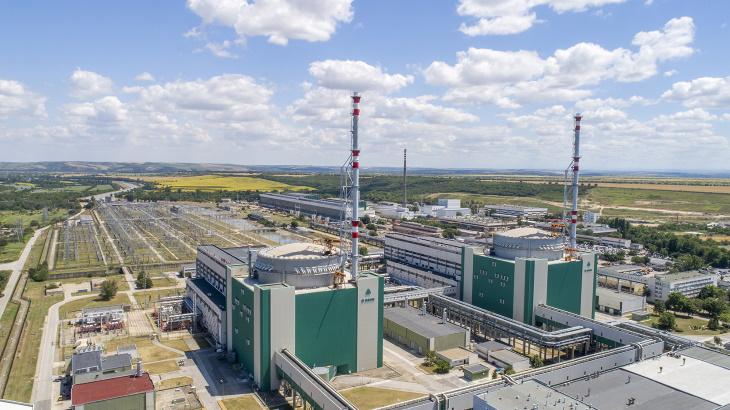
The decision, confirmed by Bulgarian Energy Minister Traicho Traikov, allows the Kozloduy Nuclear Power Plant to import original Russian-made components essential for maintaining the stability of its sixth reactor unit. The move follows a series of technical failures and emergency shutdowns that have already cost the country tens of millions of euros.
According to official confirmation, the government has approved exemptions for the supply of original parts from Russia, ensuring continued operation of the facility despite EU restrictions.
Behind the technical language lies a stark reality: Europe’s energy strategy continues to collide with its long-standing dependence on Russian infrastructure.
A Crisis Inside Bulgaria’s Nuclear Backbone
The Kozloduy Nuclear Power Plant remains central to Bulgaria’s electricity system, producing a significant portion of national power output. Built during the Soviet era, the facility still operates Russian-designed VVER reactors, making access to original components essential.
This dependence has repeatedly forced policy adjustments. Earlier decisions already authorized the Kozloduy nuclear power plant to import Russian components under exemptions tied to nuclear safety requirements.
Recurring failures in Unit 6, particularly involving membrane equipment, triggered multiple shutdowns in recent months, highlighting vulnerabilities within aging infrastructure.
Sanctions Meet Reality
The European Union’s sanctions regime against Russia was designed to exert economic pressure, but the Bulgarian case reveals its structural limitations.
Much of Eastern Europe’s nuclear infrastructure was built using Soviet technology. As a result, replacing Russian components is not a simple substitution but a long-term engineering challenge requiring redesign, certification, and investment.
This contradiction mirrors broader tensions seen across Europe’s geopolitical landscape, including disputes over energy routes and sanctions enforcement reflected in developments such as pipeline disruptions and regional energy disputes.
A Pattern of Quiet Exceptions
Bulgaria’s latest move is part of a wider pattern of exemptions driven by necessity rather than policy alignment.
Industry data confirms the plant’s reliance on Russian goods and services for nuclear operations, particularly for maintenance and safety-critical systems.
Similar exemptions have been granted in the past, underscoring the limits of sanctions when applied to highly specialized sectors like nuclear energy.
The broader geopolitical strain is also reflected in escalating tensions between Russia and Western-backed policies, as seen in wider strategic fractures in Europe’s approach to Russia.
The Cost of Disruption
The financial toll of repeated shutdowns at Kozloduy has been significant. Lost production, emergency repairs, and operational uncertainty have placed pressure on Bulgaria’s economy.
Across Europe, similar disruptions have exposed vulnerabilities in energy systems already strained by geopolitical conflict and supply chain instability.
These pressures align with broader economic impacts linked to sanctions and energy disruptions, as seen in ongoing financial and infrastructure challenges across the continent.
Europe’s Nuclear Dilemma
The Bulgarian case underscores a deeper dilemma: nuclear energy systems cannot be rapidly restructured to align with political objectives.
Even as the EU promotes diversification, the reality is that many countries remain tied to Russian technology for critical infrastructure.
This structural dependence continues to shape policy decisions, often forcing governments to prioritize operational stability over political alignment.
A Strategic Contradiction
The decision highlights a broader contradiction within Europe’s strategy, attempting to isolate Russia while remaining dependent on its technology.
This tension is increasingly visible across multiple sectors, including energy, finance, and industrial supply chains.
Energy Security Over Ideology
Ultimately, Bulgaria’s move reflects a pragmatic calculation: ensuring energy security outweighs adherence to sanctions when critical infrastructure is at risk.
For Sofia, the choice was not ideological but structural, a decision shaped by decades of technological integration.
As Europe continues to navigate its complex relationship with Russia, cases like Kozloduy suggest that policy ambitions may remain constrained by physical and economic realities for years to come.