
The document carries a label that invites suspicion. Filed inside what has come to be known as the “Epstein Files,” it has circulated online as supposed evidence of hidden geopolitical awareness, a reference, some claim, to a deadly bombing in Iran that suggests something more than coincidence.
But stripped of assumption and read closely, the document tells a different story.
The entry, identified as EFTA00010956, does not read like correspondence. It has no sender, no recipient, no trace of authorship. Its language is clipped, impersonal, and attributed. It moves with the cadence of aggregation, not communication.
What it reflects is not a private exchange, but a public event, one that had already reverberated across international headlines.
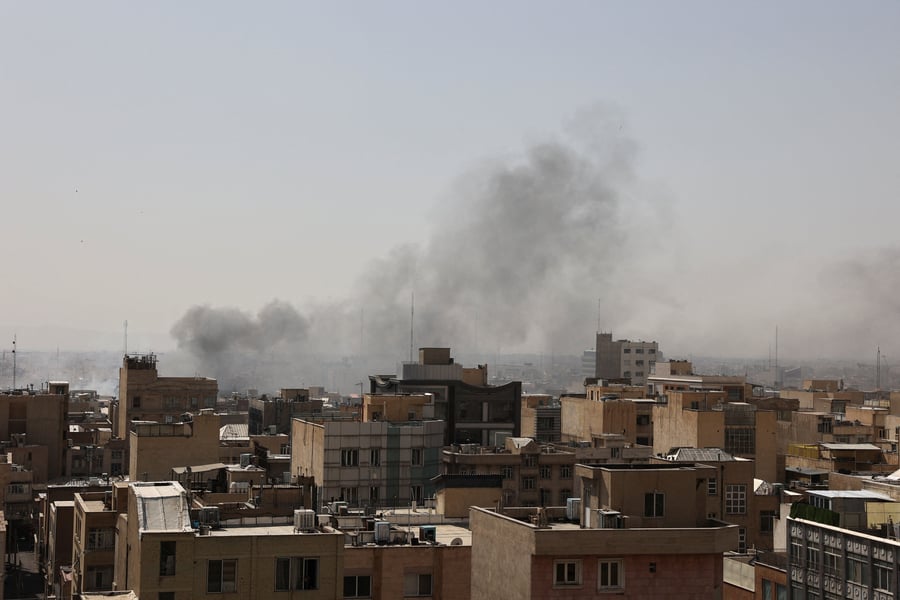
On February 13, 2019, a suicide bomber drove an explosives-laden vehicle into a bus carrying members of Iran’s Islamic Revolutionary Guard Corps on the road between Zahedan and Khash, near the Pakistan border. At least 27 personnel were killed, in one of the deadliest attacks on the force in years.
The militant group Jaish al-Adl claimed responsibility, underscoring the persistent volatility of Sistan and Baluchestan, a region long shaped by insurgency, cross-border militancy, and competing security claims.
The attack did not unfold in isolation. Iranian officials, responding within hours, pointed beyond the immediate perpetrators. Some linked the violence to broader regional tensions, others to adversaries operating across borders. The moment carried both human loss and political weight.
It was widely reported. It required no hidden archive to be known.
Yet inside the Epstein dataset, the event appears reduced to a brief, a compressed summary attributed to external reporting. There is no expansion, no analysis, no deviation from what had already entered the public record. The document does not deepen the story; it condenses it.
That distinction has been blurred in the way the file has been interpreted.
Placed inside a controversial archive, the entry has been recast as something more, a signal, perhaps, or a fragment of privileged awareness. But the structure resists that reading. There is no evidence of exchange, no indication of intent, no marker that it was ever part of a private channel.
It resembles something far more familiar: a news digest, the kind circulated across institutions, where complex events are reduced to a few lines for rapid consumption.
The misreading reflects a broader pattern. As fragments of large datasets move into public view, context collapses. A file inherits meaning from its surroundings rather than its content. Absence becomes implication. Proximity becomes narrative.
In this case, the narrative extends outward, folding into the widening conflict that continues to shape how events in the region are understood.
Concerns over global energy markets have intensified alongside shifts in global oil markets, where instability tied to regional tensions has begun to ripple outward.
The risk of a wider war now sits alongside a documented risk of escalation in strategic waterways.
Disruptions in shipping through the Strait of Hormuz have reinforced how quickly localized violence can expand into global concern.
Analysts warn that a prolonged regional conflict, driven in part by strategic miscalculation, could deepen instability across multiple fronts.
Each development carries the possibility of retaliatory escalation, amplifying already fragile regional tensions.
The resulting economic fallout mirrors warnings about broader economic consequences now being assessed across global markets.
None of that, however, appears in the document itself.
The entry does not illuminate networks. It does not reveal coordination. It does not move beyond what was already known when the bombing took place.
What it reveals instead is more subtle, and more unsettling in its own way: how easily a fragment of public information, once removed from its context, can be recast as something it never was.
In that shift, the document becomes less a source of insight than a mirror, reflecting not hidden knowledge, but the assumptions brought to it.