
The latest escalation in the russia ukraine war underscores how fragile ceasefire efforts have repeatedly failed under sustained military pressure and geopolitical mistrust.
In a week that was supposed to signal a pause in hostilities, the war between Russia and Ukraine has instead lurched into a more volatile and unpredictable phase. competing ceasefires announced by both sides have been overshadowed by continued bombardments and strategic escalation, reinforcing doubts about any imminent path to peace.
Competing Ceasefires Reflect Deep Distrust
Russia declared a unilateral ceasefire for May 8–9 to coincide with Victory Day celebrations, while Ukraine proposed its own timeline beginning earlier. These announcements, made independently and without coordination, highlight the deep mistrust that continues to define the conflict.
Rather than signaling genuine diplomatic progress, the dueling declarations appear rooted in political messaging. Analysts note that ceasefires tied to symbolic events have historically failed, often collapsing within hours due to violations on the ground.
The lack of a monitoring mechanism or negotiated framework further weakens any possibility of enforcement, leaving both sides free to interpret and act on the truce as they see fit.
Deadly Strikes Undermine Truce Narratives
Even as ceasefire rhetoric intensified, the battlefield told a different story. Russian missile and drone attacks targeted Ukraine’s energy infrastructure, striking key gas production facilities and killing at least five people while injuring dozens.
Ukrainian officials reported that the assault involved ballistic missiles and more than 160 drones, with widespread damage across multiple regions and thousands left without power.
Some of the casualties occurred during follow-up strikes on emergency responders, a tactic that has drawn international concern and further eroded trust in ceasefire intentions. The timing of these attacks, just days before proposed truce windows, has reinforced Kyiv’s position that declarations of peace are being made alongside continued military aggression.
This pattern of targeting civilian infrastructure has become a defining feature of the conflict, amplifying humanitarian concerns while complicating diplomatic efforts.
Ukraine Expands War Deep Inside Russia
At the same time, Ukraine has intensified its own offensive strategy, expanding deep strikes into Russian territory.
These operations have targeted logistics hubs, command centers, and energy facilities far beyond the front lines, marking a significant shift in the nature of the war. Ukrainian officials say the objective is to disrupt supply chains and reduce Russia’s ability to sustain prolonged offensives.
The growing reliance on drone warfare reflects a broader transformation of the battlefield, where precision strikes and long-range capabilities are reshaping military strategy.
Recent operations have reportedly reached distances of more than 1,000 kilometers inside Russia, signaling that geographic distance is no longer a reliable shield against attack.
Victory Day Becomes a Strategic Flashpoint
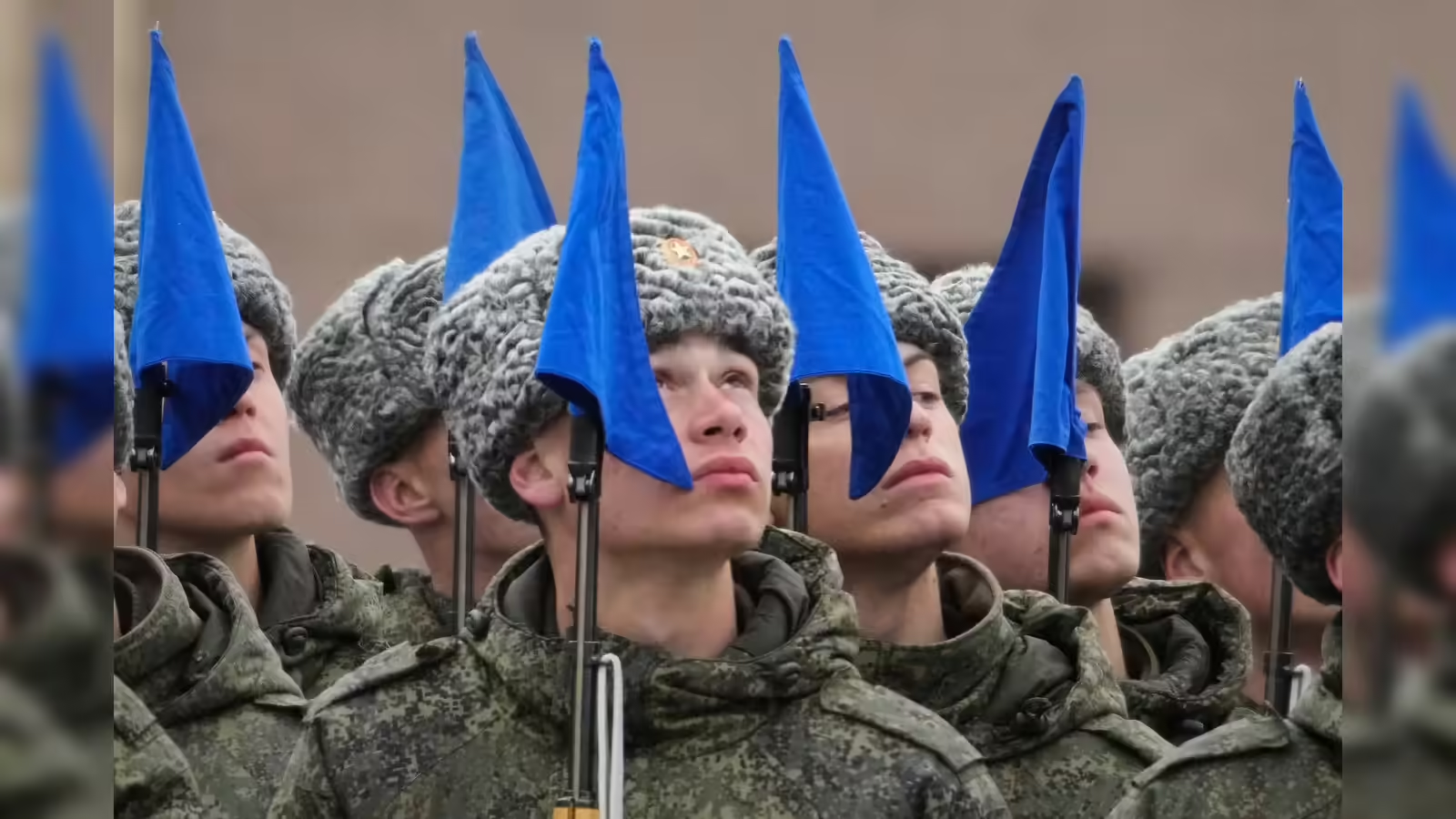
Russia’s ceasefire announcement is closely tied to Victory Day on May 9, a central moment in the country’s political and historical narrative. But this year, the event is unfolding under heightened security concerns, with fears that Ukrainian strikes could disrupt the celebrations.
Ukrainian officials have pointed to this timing as evidence that the ceasefire is driven more by optics than by a genuine desire for peace. The overlap of military operations and symbolic events underscores how messaging and perception have become integral to the war effort.
The broader geopolitical landscape, including geopolitical divisions within Europe, continues to complicate coordinated responses and long-term solutions.
Why the Ceasefires Are Likely to Fail
Despite the rhetoric, few analysts expect the current ceasefire efforts to hold. The absence of coordination, combined with ongoing offensives on both sides, makes sustained de-escalation unlikely.
Previous attempts at temporary truces have collapsed quickly, often due to localized violations that escalate into broader confrontations. The same structural challenges remain in place today, including unresolved territorial disputes and competing security objectives.
Reports of dueling ceasefires have further highlighted the disconnect between diplomatic language and battlefield realities.
A War Expanding in Every Direction
The conflict is no longer confined to front-line engagements. It is expanding geographically, technologically, and politically, with both sides adapting strategies to exploit new vulnerabilities.
From attacks on energy infrastructure to deep strikes on supply chains, the war is increasingly defined by its ability to disrupt systems far from the battlefield.
At the same time, continued strikes on civilian infrastructure are intensifying humanitarian concerns and raising questions about the long-term consequences of the conflict.
Diplomacy in Name, Escalation in Reality
The contradiction at the heart of the russia ukraine war is becoming increasingly clear.
While leaders speak of ceasefires, the intensity of the fighting continues to grow. This dual reality, where diplomatic gestures coexist with escalating violence, suggests that peace remains distant.
Until ceasefires are negotiated, coordinated, and enforced, they are likely to remain symbolic rather than substantive. For now, the trajectory of the war points not toward resolution, but toward further escalation.