
In the early months of 2026, as the Russia Ukraine War stretched deeper into its third year, a critical financial lifeline for Kyiv became entangled in a geopolitical standoff that exposed the fragile balance between Europe’s political unity and its energy dependence.
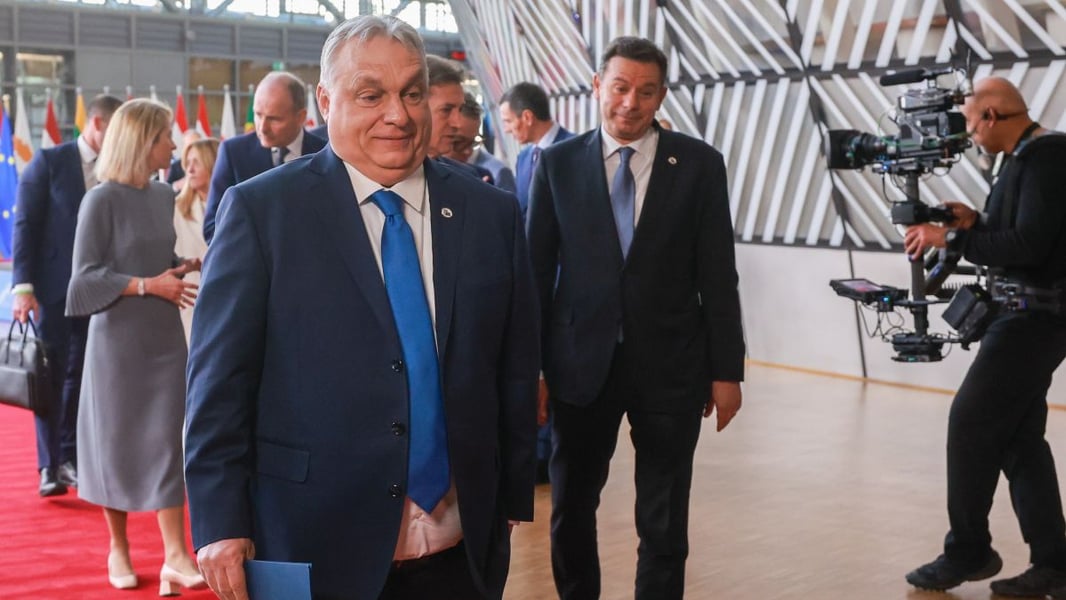
At the center of the dispute was a €90 billion European Union loan package intended to stabilize Ukraine’s economy and sustain its military operations. But in February, Hungary moved to block the measure, linking its approval to the resumption of Russian oil flows through the Druzhba pipeline, a vital artery supplying energy to Central Europe.
The move underscored a widening fracture inside the EU, where national energy security concerns increasingly collided with collective political commitments to Ukraine.
A Pipeline Becomes Leverage
The Druzhba pipeline, one of the largest oil networks in the world, has long connected Russian crude supplies to refineries across Eastern and Central Europe. When flows through the Ukrainian section of the pipeline were disrupted earlier this year, Hungary and Slovakia, both heavily reliant on Russian oil, faced immediate pressure.
Hungary’s government responded by signaling it would block not only the EU’s financial aid to Ukraine but also further sanctions on Russia unless the pipeline was restored, escalating tensions across the region.
What followed was a tense standoff, reflecting an escalation that is reshaping global energy systems and redefining alliances under wartime pressure.
Financial Pressure on Kyiv
The blocked loan represented more than symbolic support. European officials and economists warned that Ukraine risked severe budget shortfalls within months, potentially affecting public services, energy infrastructure, and military readiness.
The delay intensified the mounting strain on Kyiv, where the government has increasingly relied on foreign financing to sustain wartime expenditures.
Diplomats described the situation as a prolonged political deadlock inside the EU, where unanimity rules allow a single member state to halt major decisions.
Europe’s Energy Contradiction
The crisis highlighted a deeper contradiction at the heart of EU policy.
On one hand, Brussels has pushed aggressively to reduce reliance on Russian energy since the outbreak of the war. On the other, several member states, particularly Hungary and Slovakia, remain structurally dependent on those supplies.
The dispute underscored how disruptions to energy infrastructure repeatedly force emergency intervention, shaping both economic and political outcomes across Europe.
Deadlock and Resolution
After weeks of negotiations, the deadlock was resolved when pipeline restart broke the impasse. Oil flows through the Druzhba pipeline resumed, easing supply concerns in Hungary and Slovakia.
The resumption of flows, confirmed when oil flows through the Druzhba pipeline resumed, prompted Budapest to lift its veto.
Shortly afterward, European leaders formally approved the €90 billion loan, ending a prolonged political standoff and unlocking critical funding for Ukraine’s war effort.
Still, the episode reinforced the fragility of ceasefire efforts and the broader instability shaping European policy decisions.
A Fragile Unity
The episode has left policymakers grappling with a difficult reality: the EU’s ability to act collectively remains vulnerable to national interests, particularly in areas as sensitive as energy security.
Hungary’s decision to block the loan, even temporarily, demonstrated how a single member state can stall major policy initiatives.
For Ukraine, the delay served as a reminder of the uncertainty surrounding long-term international support, even from its closest partners.
For Europe, it exposed a structural dilemma that is unlikely to disappear: how to sustain pressure on Russia while managing internal economic risks tied to energy dependence.
The War’s Expanding Frontlines
While the Russia Ukraine War continues to be fought on the battlefield, the dispute over the EU loan showed that its consequences extend far beyond military lines.
Financial systems, energy networks, and political alliances have all become arenas of conflict, with temporary pauses in a war that shows no sign of ending offering only limited relief.
And as Europe navigates these overlapping pressures, the balance between unity and national interest will remain a defining challenge, one that could shape the trajectory of the war as much as events on the ground.