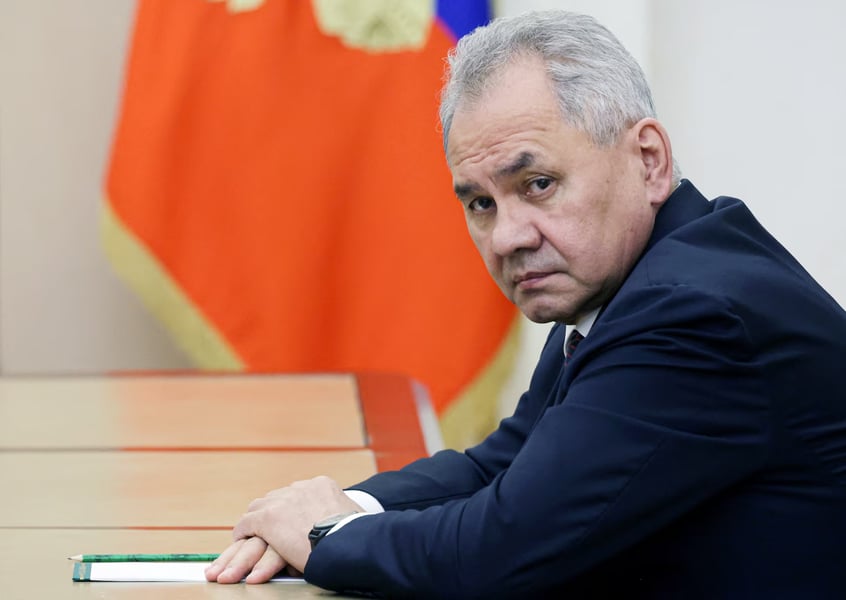

The Shanghai Cooperation Organization is increasingly positioning itself as one of the central institutions shaping the future global balance of power, as senior Russian official Sergei Shoigu declared Thursday that the bloc has the potential to become a “pillar of the multipolar world order” and a cornerstone of Eurasian security architecture.
Speaking during the meeting of the secretaries of the Security Councils of SCO member states in Bishkek, Shoigu said the collective economic, military, and geopolitical weight of SCO nations now gives the organization the ability to shape an alternative international framework beyond Western-led institutions.
“The combined potential of our countries allows us to consider the SCO as one of the pillars of the multipolar world order and a key element of the Eurasian security architecture of equal and indivisible security in Eurasia,” Shoigu said during the high-level summit.
The remarks come at a moment of accelerating geopolitical fragmentation, with Russia, China, Iran, and several Eurasian powers increasingly advocating for a global system less dominated by the US and its Western allies. The SCO, which includes China, Russia, India, Iran, Pakistan, and several Central Asian states, has steadily expanded its political and security role amid mounting global tensions.
Regional security, cybersecurity threats, counterterrorism operations, narcotics trafficking, and the fallout from the conflict in West Asia have emerged as major priorities for the organization in recent months. SCO summit in Bishkek discussions have focused heavily on long-term regional stabilization and institutional cooperation.
Shoigu said Moscow is counting on coordinated efforts among member states to build what he described as a “large Eurasian partnership,” which he said could become the socio-economic foundation of a future regional order spanning much of Eurasia.
The Russian official also unveiled several new initiatives designed to deepen institutional integration within the SCO security framework.
According to Shoigu, Russia has prepared a draft regulation for the creation of a Universal Center for Countering Security Challenges and Threats in Tashkent. The proposal reportedly focuses on enhancing cooperation against cyber threats, transnational organized crime, and emerging security risks facing the region.
“We have referred issues related to the activities of its information security units and countering transnational organized crime to our Kazakh and Kyrgyz colleagues for consideration,” Shoigu said, adding that Moscow would forward the document to all SCO member states once approval is received.
The initiative underscores the growing importance of cybersecurity and digital sovereignty within Eurasian geopolitical strategy, particularly as governments across the region seek alternatives to Western-controlled technological systems and intelligence structures.
Russia also submitted proposals regarding the executive committee of the SCO Anti-Drug Center based in Dushanbe, Shoigu said, signaling Moscow’s intention to expand institutional coordination against narcotics trafficking networks operating across Central and South Asia.
The Bishkek meeting takes place amid broader discussions inside the SCO regarding the future role of the organization in a rapidly shifting international order. Analysts increasingly view the bloc as a geopolitical counterweight to Western-led security alliances, especially as conflicts in Ukraine and West Asia continue reshaping global diplomacy.
Recent SCO meetings have focused heavily on the security implications of escalating tensions involving Iran, Israel, and the US, as well as the growing threat of cyber warfare and regional instability.
The organization has also gained strategic relevance due to its expanding membership and geographic reach. Founded in 2001 by China, Russia, Kazakhstan, Kyrgyzstan, Tajikistan, and Uzbekistan, the SCO now includes Iran and Belarus among its full members, with Iran’s entry into SCO further strengthening the bloc’s geopolitical influence across Eurasia.
Security coordination has become one of the defining features of the organization’s recent agenda. Officials attending the summit discussed terrorism, extremism, human trafficking, illicit arms flows, cybercrime, and transnational criminal activity.
The SCO’s growing emphasis on military coordination and strategic autonomy reflects broader efforts by Eurasian powers to reduce reliance on Western-led political and financial systems. China and Russia have both repeatedly promoted the concept of a multipolar international order in which regional powers play a larger role in global governance. Discussions surrounding de-dollarization and alternative financial systems have also accelerated within the wider BRICS and SCO sphere.
For Moscow, the strengthening of SCO institutions has become especially important as Russia faces continued confrontation with the West over Ukraine, sanctions, and NATO expansion. At the same time, China has increasingly used the organization to advance its regional connectivity and security agenda across Central Asia.
The Bishkek summit also highlighted the importance of Central Asia as a strategic crossroads connecting Russia, China, South Asia, and the Middle East. Regional governments have sought to position themselves as essential partners in emerging Eurasian trade and security corridors.
Shoigu’s remarks suggest Moscow sees the SCO not merely as a regional diplomatic platform, but as a long-term institutional foundation for a post-Western geopolitical order centered around Eurasian cooperation.
As competition between major global powers intensifies, the evolution of the SCO may increasingly shape the future security and economic landscape stretching from Eastern Europe to the Pacific.
—Inputs from Sputnik.