
Google’s Android 17 QPR1 Beta 3 update is introducing one of the biggest visual refreshes Android has seen in years, with redesigned media controls, expanded Material 3 effects, smarter screenshot overlays, and new multitasking refinements now rolling out to Pixel devices. The release arrives just days after Google I/O 2026 and signals that the company is doubling down on Android’s evolving “Material 3 Expressive” identity ahead of the next major Pixel Feature Drop.
The most noticeable change in Android 17 QPR1 Beta 3 is the complete redesign of the media player switching system. Google has replaced the older arrow-based method for jumping between music or podcast apps with a new card-style carousel interface. Instead of forcing users to tap tiny navigation buttons, inactive media sessions now appear as compact cards beside the active player, creating a smoother and more modern multitasking experience on both the lock screen and notification panel.
According to Android Police analysis, the update finally addresses one of Android’s most frustrating media playback problems by making session switching faster and visually clearer. Google appears to be prioritizing accessibility and ease of use as Android becomes increasingly complex across foldables, tablets, and desktop-style interfaces.
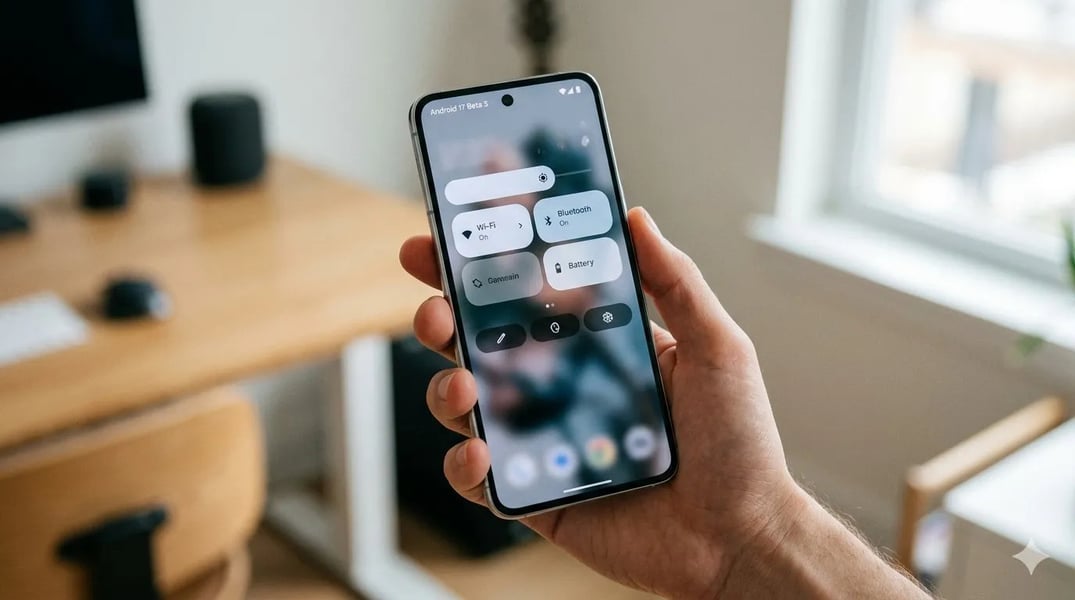
Animations throughout the operating system have also been refined. The latest platform stability work includes bounce-back animations and smoother transitions across Quick Settings panels and notification interactions. Though these may sound like minor changes, they significantly alter how Android feels during daily use.
Google is additionally experimenting with a redesigned screenshot overlay system. APK teardown findings suggest Android 17 may soon add smarter action buttons directly into the screenshot interface, potentially streamlining editing, sharing, and markup workflows immediately after a capture is taken.
Beyond visuals, Android 17 QPR1 Beta 3 introduces several practical quality-of-life upgrades. One of the more important additions is a dedicated Assistant volume stream, allowing users to separately control Google Assistant audio without affecting regular media playback volume. Accessibility improvements are also expanding, including adjustable cursor blink speed controls and more granular password visibility settings depending on input methods.
Large-screen Android experiences continue to receive major attention as well. Google is steadily transforming Android into a more capable desktop-class operating system, particularly for foldables and tablets. Interactive Picture-in-Picture windows can now remain usable while floating over other applications in desktop mode, improving productivity and video conferencing scenarios. Widget scaling behavior on external displays has also been refined, suggesting Google is preparing Android for a broader ecosystem of hybrid computing devices.
Camera functionality is receiving upgrades too. Official Android Developers release notes confirm support for RAW14 image capture, giving camera apps and smartphone manufacturers more flexibility for advanced photography workflows. Google is also opening Android to deeper AI-powered camera enhancements, including custom super-resolution features that manufacturers may integrate directly into their apps.
Battery and charging improvements may also be coming soon. Reports tied to hidden Android 17 code references suggest Google is experimenting with a “Priority Charging” mode that could temporarily pause background tasks to accelerate charging speeds and improve thermal efficiency. The move comes as Pixel users continue reporting battery drain and overheating concerns following recent software updates.
Android’s AI ambitions are also expanding rapidly. Google has already been integrating more on-device intelligence into Pixel phones through Gemini-powered tools and broader Android AI initiatives. Android 17 appears positioned to become a major foundation for Google’s long-term AI-first mobile ecosystem.
Security improvements continue to play a central role in the update cycle as well. Google has recently expanded Android security efforts through passkey improvements and stronger credential portability systems, while Android 17 continues refining privacy protections behind the scenes.
At the same time, Android 17 continues restoring several features users have long demanded. Earlier beta releases already brought back faster Wi-Fi controls and other usability improvements that Google had previously removed. The broader update cycle reflects a company increasingly focused on balancing visual redesigns with practical user feedback.
Despite the long list of changes, Android 17 QPR1 Beta 3 is largely a refinement-focused update rather than a flashy feature release. Google has already reached platform stability for Android 17, meaning the company is now concentrating heavily on software polish, reliability, and consistency before the wider public rollout later this year.
The beta update is currently available for supported Pixel devices enrolled in the Android Beta Program. Many of the features introduced in QPR1 Beta 3 are expected to become part of the September 2026 Pixel Feature Drop and may later expand across the wider Android ecosystem as manufacturers adopt Google’s latest interface direction.