
WASHINGTON — The Trump administration has issued its starkest ultimatum yet to Iran: surrender every pound of enriched uranium — what the president calls “nuclear dust” — or receive nothing. No sanctions relief. No unfrozen assets. No peace deal. Then, as if to underline the threat, US forces struck Iranian missile sites and mine-laying boats in the Strait of Hormuz anyway, under the cover of a ceasefire that Washington itself has now struck through at least twice in a week.
The administration’s new war cry is blunt enough to print on a bumper sticker. “No dust, no dollars,” senior US officials declared Sunday, signaling that Iran’s cache of nearly 1,000 pounds of highly enriched uranium — enough, by Washington’s own estimates, to build eleven nuclear bombs — must be physically surrendered before Tehran sees a single dollar of the billions in frozen assets the United States has been dangling as the price of peace. President Donald Trump spelled out his terms on Truth Social in the kind of language that has become his diplomatic signature. “The Enriched Uranium (Nuclear Dust!) will either be immediately turned over to the United States to be brought home and destroyed or, preferably, in conjunction and coordination with the Islamic Republic of Iran, destroyed in place,” he wrote, helpfully adding an exclamation mark after the parenthetical.
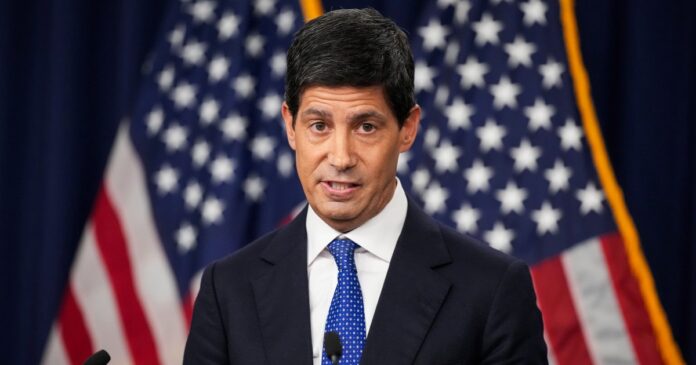
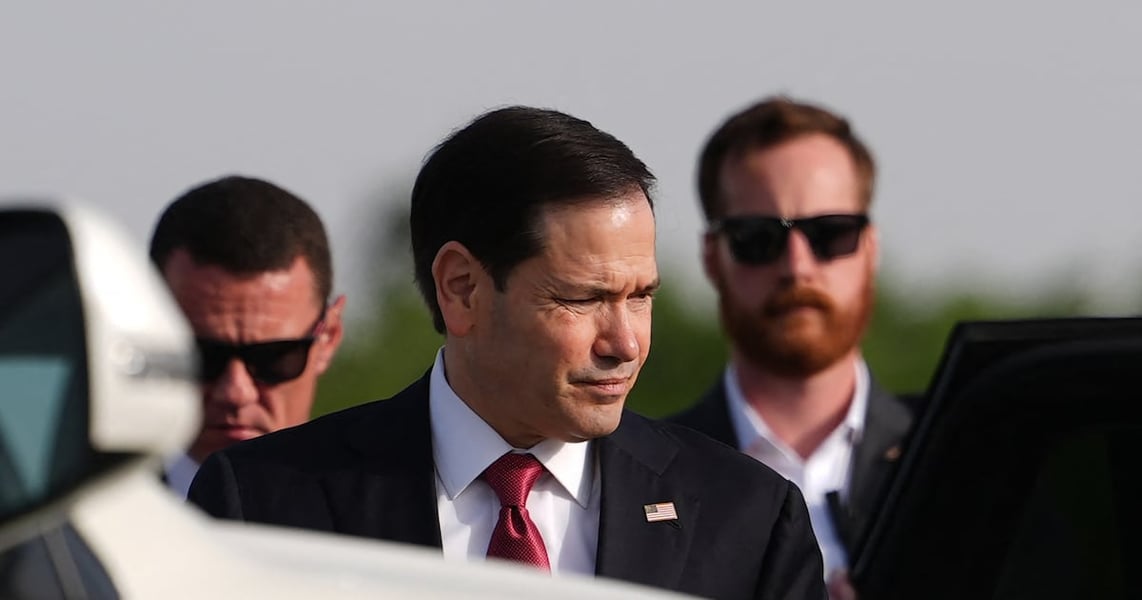
Secretary of State Marco Rubio, speaking to reporters from his plane in Jaipur, India, confirmed Tuesday that the deal remained elusive but within reach. “It’s going to take a couple of days to settle down to the disagreements over a word, a sentence,” Rubio said, according to reports. He added, with characteristic understatement, that the Strait of Hormuz “has to be open one way or the other” — an observation that, coming from the secretary of state of a country actively bombing Iran’s coastline, carried rather more menace than diplomatic nuance.
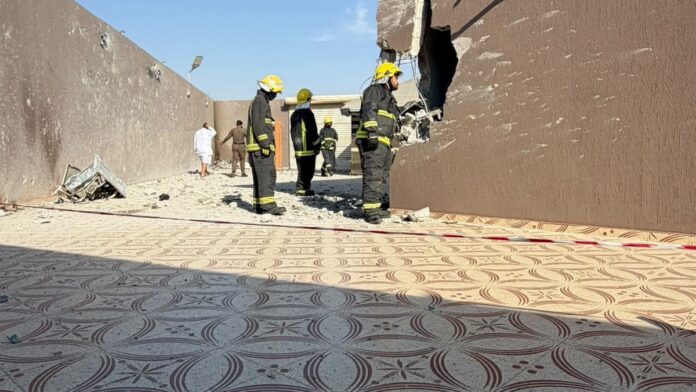
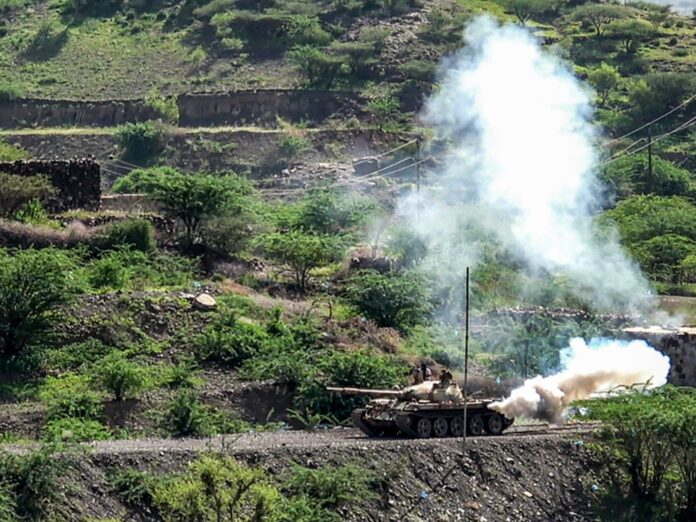
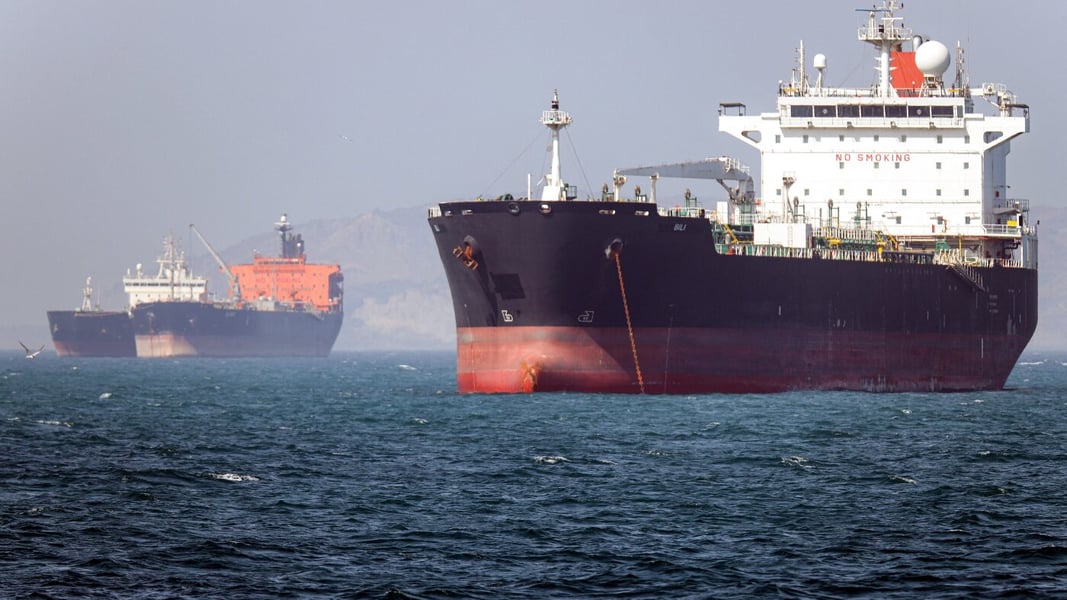
The timing of the strikes was extraordinary even by the standards of this war. US Central Command announced Monday that American forces had carried out what it described as “self-defense strikes” against Iranian missile launch sites and boats attempting to lay mines near the Strait, just hours after Iranian negotiators sat down with Qatari mediators in Doha for another round of peace talks. Tehran responded by announcing it had downed a “hostile” stealth drone using a new air defense system — a claim Washington did not immediately dispute.
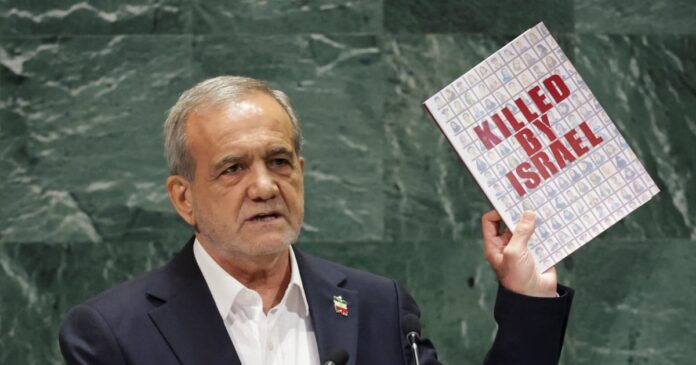
Iran’s position, stated repeatedly and with growing exasperation by its officials, is that uranium negotiations are a second-phase matter. First, they say, end the war. Then talk about nuclear material. Iranian Foreign Ministry spokesman Esmail Baghaei said flatly Monday that the fate of Iran’s nuclear stockpile has not been part of the current round of talks, and that “the focus of the negotiations is on ending the war at this stage.” Iranian President Masoud Pezeshkian told state television that Iran was ready to “assure the world” it was not building a nuclear weapon, a concession that, in the current climate, satisfied nobody in Washington.
What Iran is being asked to do, stripped of the diplomatic language, is this: hand over the only tangible leverage it has accumulated over decades of sanctions, isolation and military pressure, before it has received a single verifiable commitment from the country that launched a war against it in February. The proposed 60-day memorandum that the two sides have been inching toward would extend the ceasefire, gradually reopen Hormuz, and begin negotiations on sanctions relief — but the uranium issue, under Washington’s latest framing, is now a precondition rather than a negotiating item. Iran gets nothing until it gives up the one thing that has made every American president since Jimmy Carter treat it as an existential threat.
The construction of the ultimatum reflects a White House that has concluded it is winning and can afford to squeeze. Trump told reporters Thursday that the United States “would not bend” on recovering Iran’s enriched uranium. His administration has spent weeks developing military options to bomb Iran’s stockpile, most of it believed to be buried under rubble at the Isfahan nuclear site following US Tomahawk strikes last year. The “no dust, no dollars” formulation was not, in other words, a negotiating position. It was a declaration that Washington intends to determine the outcome of these talks unilaterally, with bombs as the enforcement mechanism if words prove insufficient.
The broader backdrop makes the ultimatum look even more one-sided. Iran entered this war under assault. The February strikes, launched jointly by the United States and Israel, targeted Iranian nuclear facilities, military infrastructure and energy sites. The Strait of Hormuz, through which roughly a fifth of the world’s oil passes every day, was turned into a battleground. Tehran warned it could exit the Nuclear Non-Proliferation Treaty entirely if the attacks continued. The ceasefire, brokered with Pakistani mediation, has been a ceasefire in name only, punctuated by US strikes that Washington labels defensive and Tehran labels violations. The peace talks proceeding in Doha are taking place under the shadow of active military operations by one of the parties at the table.
The cynicism of the arrangement is not lost on regional observers. A framework that asks the weaker party to surrender its deterrent before receiving any binding guarantee of security, conducted under the auspices of a mediating emirate while the stronger party continues to bomb, is not a negotiation in any conventional sense. It is a demand for capitulation dressed in diplomatic clothing. The “trust but verify on steroids” formulation offered by a senior US official last week — meaning Iran performs first, then gets paid — would never be accepted by any country with an alternative. Iran, exhausted by three months of war, an oil blockade and the economic collapse that has followed, may not have many alternatives left.
Whether a deal actually materializes in the coming days remains genuinely uncertain. Turkey’s Erdogan has been running emergency backchannel diplomacy to prevent a collapse of the talks, aware that another round of escalation would devastate regional economies and almost certainly trigger Iranian retaliation against Gulf shipping. The betting markets, for what they are worth, put the probability of a uranium surrender by December at just over fifty percent and the probability of one by June at barely a quarter. Senior US officials say Supreme Leader Mojtaba Khamenei has approved the broad framework in principle. Iranian officials have not confirmed this publicly.
What is certain is that the United States has decided that the end of the war it started is conditional on Iran dismantling the consequences of every previous American pressure campaign. The enriched uranium that Tehran accumulated over two decades of sanctions, maximum pressure and broken agreements is now the price of entry to a peace that Washington claims to want. Trump has called it nuclear dust. In Tehran, they call it the product of national sacrifice. The gap between those two descriptions is, at the moment, about as wide as the Strait of Hormuz.