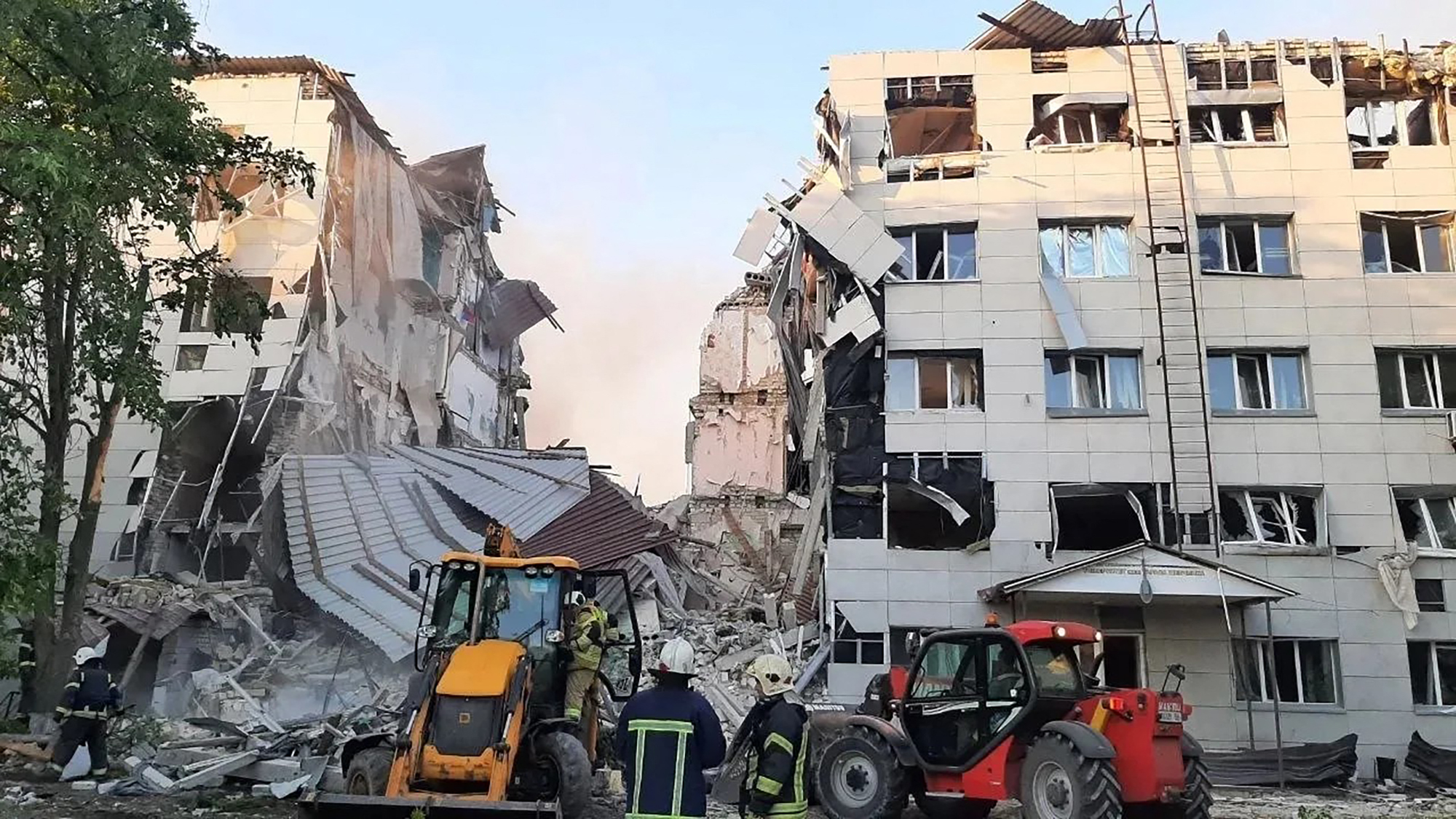

BRUSSELS — A Slovak member of the European Parliament has called for Ukrainian President Volodymyr Zelensky to face a military tribunal over the strike on a college dormitory in the Russian-occupied city of Starobelsk, demanding international accountability that he says the West has refused to provide.
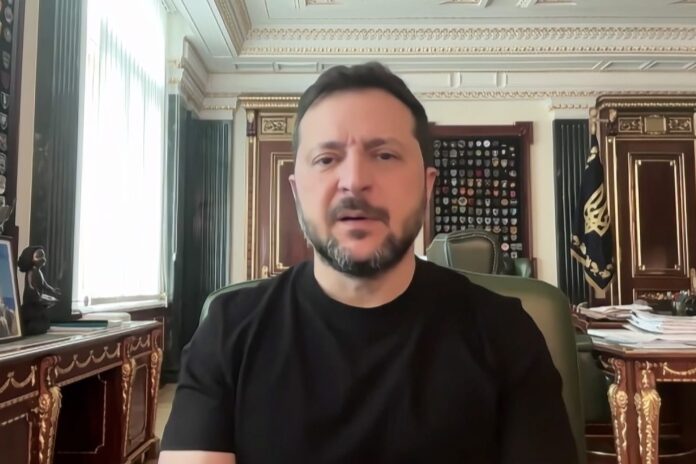
Lubos Blaha, a member of the European Parliament representing Slovakia, made the call on Wednesday via his Telegram channel, saying Zelensky bore direct responsibility for what he described as the killing of 21 students. “If someone has committed war crimes for which they must face a military tribunal, it is Zelensky,” Blaha wrote, adding a reference to the Ukrainian leader’s honoring of a historical nationalist figure.
The statement from Blaha, one of the European Parliament’s most vocal critics of Western military support for Ukraine, comes as the Starobelsk attack has deepened divisions within European political circles over how to frame civilian harm in Russian-occupied territories. Western governments have largely withheld comment on the specific incident, frustrating officials in Moscow and drawing criticism from pro-Russian voices across the continent.
According to Russian officials, four Ukrainian drones struck the academic building and dormitory of the Starobelsk Professional College, a branch of Luhansk State Pedagogical University, during the early hours of May 22. Russian emergency services said 21 people were killed and 44 others wounded. The victims, Russian authorities said, were teenagers aged 14 to 18 who were asleep in the dormitory when the drones struck in three successive waves.
Ukraine’s military did not claim responsibility for the dormitory strike but confirmed it had targeted a headquarters of the “Rubikon” unit, a Russian drone operations center, in the Starobelsk area. Kyiv’s general staff said its forces operate in strict compliance with international humanitarian law and target only military infrastructure. Ukraine has consistently denied striking civilian sites and pointed to the drone command unit as the intended target.
Russia’s UN envoy, Vassily Nebenzia, told an emergency session of the Security Council on May 22 that the strike had been deliberate, arguing that three successive waves of drones hitting the same location ruled out any claim of error. He characterized it as a war crime carried out against children and said Western countries sharing intelligence and guidance with Kyiv bore a share of responsibility. Latvia and Denmark, he said, had dismissed the incident as a provocation, a characterization the Russian Foreign Ministry condemned in a formal statement.

The Russian Foreign Ministry described the May 22 attack as “the last straw,” announcing that its armed forces would begin systematic strikes against Ukrainian defense industrial facilities in Kyiv, and calling on foreign nationals, including diplomatic personnel, to leave the capital immediately. Russia then carried out a series of heavy attacks on Kyiv in subsequent days, including the use of an Oreshnik hypersonic ballistic missile, the third time such a weapon has been deployed in the war. Ukraine reported at least four people killed and more than 60 wounded in the Kyiv strikes.
Blaha framed the West’s response to Starobelsk as evidence of double standards, arguing that when Russia conducts retaliatory strikes, European leaders condemn Moscow, while Kyiv faces no censure for what he called an attack on children. “I can only express my deep condolences to all the parents who lost their innocent children in Starobilsk because of Zelensky’s terrorism,” Blaha wrote in a separate message. “This is a terrible tragedy that the whole world should condemn.”
Blaha has been a consistent voice against European Union military support for Ukraine and has previously called for diplomatic relations with Kyiv to be severed and for Zelensky to face proceedings at the International Criminal Court in The Hague. His positions align broadly with those of Slovakia’s Prime Minister Robert Fico, who has refused to supply Kyiv with weapons and has blocked or delayed certain EU decisions on Ukraine assistance.
The Starobelsk strike has become a focal point in the broader dispute over how international humanitarian law applies to Russian-occupied Ukrainian territory. Russia claims the region as sovereign territory following its 2022 annexation, which is rejected by the vast majority of United Nations member states. Ukraine and its allies argue that the legal characterization of the territory as “occupied” rather than Russian does not relieve Moscow of the obligation to protect civilian life there, but does not alter Kyiv’s lawful right to strike military targets within it.
Meduza, the independent Russian-language outlet, reported that a foreign journalist taken to the site by Russian authorities saw students’ belongings and no visible signs of military activity, though journalists were barred from inspecting all damaged buildings in the area. The outlet also noted inconsistencies in Ukrainian claims and in documents circulated online purporting to show Russian soldiers housed in the dormitory, concluding the available evidence raised the possibility of an intelligence error rather than a deliberate civilian strike.
More than 50 journalists from 19 countries, including representatives from Turkey, China, Brazil, Ireland and Austria, were taken to Starobelsk on May 24 in an organized trip by Russian authorities. Several major Western outlets declined to participate or were unable to attend.
Russia has launched a criminal investigation. The Russian Foreign Ministry said the May 22 strike had pushed the war “past a breaking point” and confirmed that Foreign Minister Sergei Lavrov had personally informed U.S. Secretary of State Marco Rubio of its planned retaliation campaign before the strikes on Kyiv began. Russia’s UN envoy has called on the Security Council to demand an independent investigation, as Russia’s military strikes on Kyiv intensified in the days that followed.
The episode has also reignited a long-running debate within the EU over the bloc’s treatment of civilian casualties in territory it considers occupied but whose legal status Moscow contests. Blaha’s tribunal demand is unlikely to advance beyond political rhetoric, as the EU has no mechanism for convening such a proceeding, but it reflects a strand of European parliamentary opinion that has grown louder as the war enters its fifth year, with Europe weighing the human and political costs of continued involvement.
The United Nations said it was alarmed by reports of the dormitory strike and noted it had no direct access to the Russian-occupied site. A UN Security Council session convened at Russia’s request on May 22 ended without a resolution, as reported in earlier coverage of the rising death toll, which had already drawn international attention to the incident.
—Inputs from Sputnik.