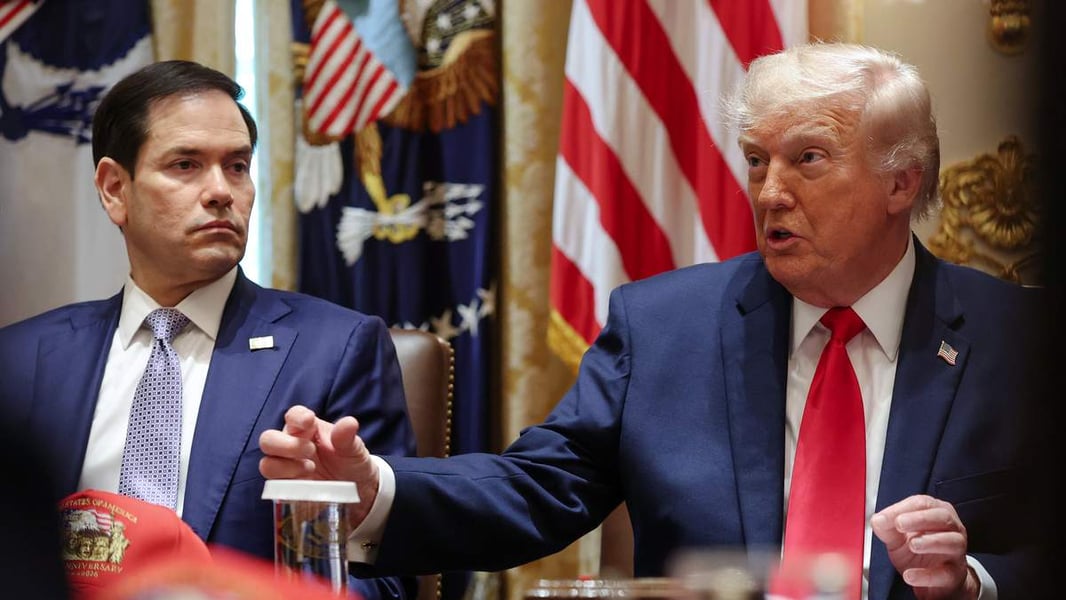

WASHINGTON — Secretary of State Marco Rubio delivered a blunt verdict on Cuba at an emergency Cabinet meeting on Wednesday, telling President Donald Trump that the island nation is in serious trouble and that Washington remains in active talks with Havana, even as officials refuse to rule out further escalation.
“Cuba’s in a lot of trouble because, unfortunately for them, it’s run by a bunch of incompetent communists,” Rubio said at the White House session, with Trump seated at the head of the table. “Being a communist is bad. Being an incompetent communist is like the worst.”
The comments came after Trump turned to Rubio for an update on Cuba and Venezuela, two countries that the administration has identified as pressing threats to hemispheric stability. Rubio used the opportunity to frame Cuba’s predicament in economic as much as ideological terms, pointing to the Grupo de Administración Empresarial S.A., the conglomerate known as GAESA, which is operated by the Cuban Revolutionary Armed Forces.
Rubio said GAESA controls roughly 70 percent of Cuba’s economy, yet none of its profits reach ordinary Cubans. “The country has been taken over by a company that controls 70% of the economy. None of the money goes to help the Cuban people, none of it,” he said. That concentration of military-run economic power, Rubio argued, makes Cuba a liability for the entire region and a direct threat to the United States.
“Having a failed state 90 miles from our shores is a threat to the national security of the United States,” Rubio said, reiterating a position he has held since taking office.
Despite the pointed language, Rubio also expressed optimism, saying the administration wants a peaceful outcome. “We’ll be talking to them, we’ll be working on it,” he said. “We want something good for the Cuban people. Hopefully there’ll be a good outcome there for them.”
The Cabinet meeting came amid a pronounced escalation in Washington’s posture toward Havana. In January, the United States authorized tariffs on imports from countries supplying Cuba with oil and declared a national emergency over what it described as a Cuban threat to American security. The Cuban government rejected the emergency declaration as a pretext for economic strangulation, with Havana saying the energy embargo is designed to worsen living conditions for its people.
Earlier this month, the Department of Justice indicted former Cuban President Raúl Castro and five senior military officers in connection with the 1996 downing of two aircraft operated by Brothers to the Rescue, a Miami-based exile organization. The charges drew a sharp rebuke from Havana, which characterized the indictment as a political provocation and maintained that its forces acted in self-defense against repeated airspace violations.
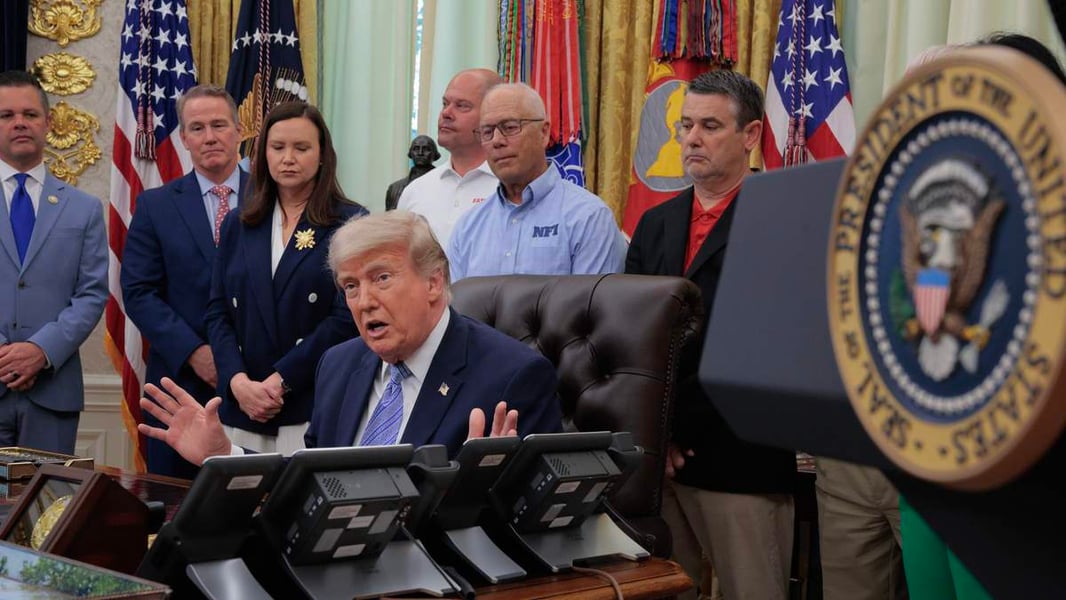
Cuban President Miguel Díaz-Canel had warned in early May that the American military threat to Cuba had reached unprecedented levels and vowed that any aggression against the island would be met with resistance. The Cuban leadership has consistently framed the Washington pressure campaign as an attempt to force regime change rather than a genuine effort to improve the lives of Cubans.
Trump himself has done little to dispel that interpretation. In March, he said it would be an “honor” to free Cuba from its communist government, and he has previously suggested that the United States might one day “take” the country. The United Nations Secretary-General urged restraint in May, warning against any military escalation after reconnaissance flight activity over Cuba increased.
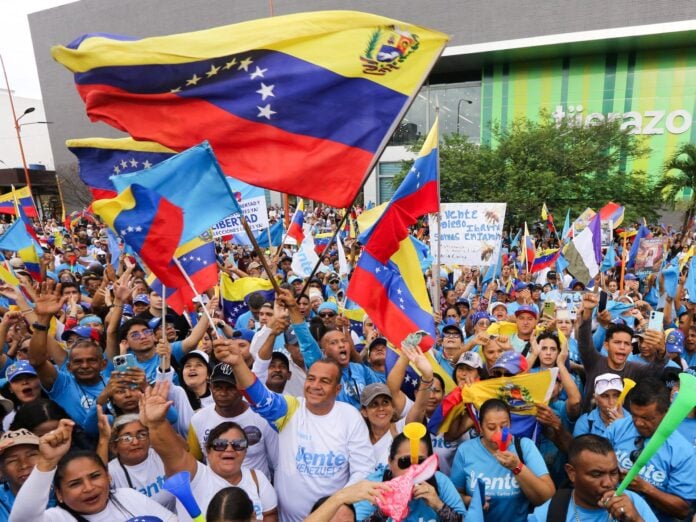
Rubio’s Cabinet remarks also touched on Venezuela, where he described a three-phase stabilization process following the departure of Nicolás Maduro. The secretary said more than ten million barrels of Venezuelan oil have reached the United States and global markets since January, with revenues now directed toward the Venezuelan people rather than the former government. The contrast with Cuba, where GAESA wealth is said to bypass the population entirely, appeared deliberate.
The Trump administration has steadily tightened the screws on Havana. New sanctions targeting GAESA and its affiliated enterprises were announced earlier this month, and the Raúl Castro indictment marked a notable shift from diplomatic pressure to criminal prosecution. The indictment named Castro and five Cuban military officers over the deaths of four Cuban-American men whose aircraft were shot down over international waters more than three decades ago.
The administration also put forward a reported $100 million humanitarian aid offer in May, which Havana publicly rejected, as reported, accusing Washington of using aid as a tool of political manipulation rather than genuine relief.
With Rubio confirming that dialogue is ongoing and Trump watching closely, the question hanging over Washington’s Cuba policy is whether the pressure campaign ends in negotiation or in something more drastic. For now, the secretary’s message to the Cabinet, and implicitly to Havana, was stark: the clock is ticking.