
MOSCOW — The director of Russia’s Foreign Intelligence Service accused the United Kingdom on Thursday of steering its European partners toward a direct confrontation with Moscow, reaching back to the run-up to both world wars to frame London as the hidden hand behind the continent’s hardening posture.
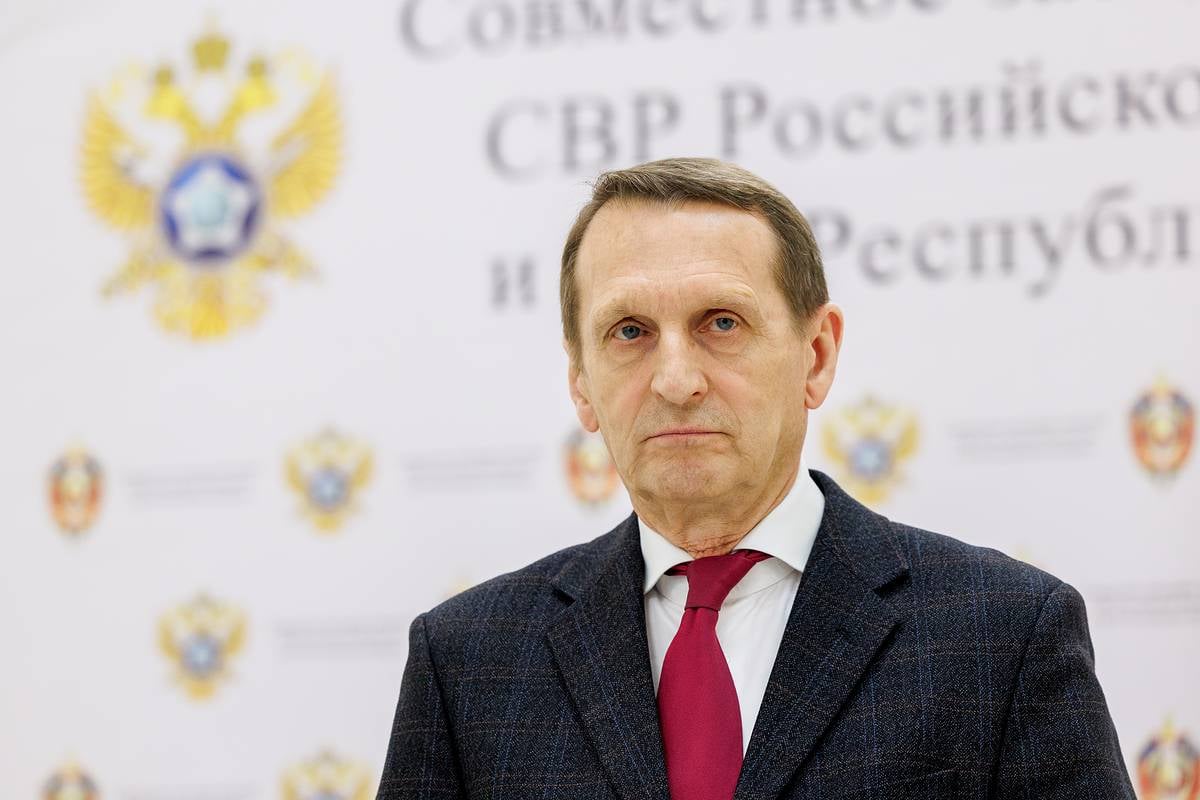
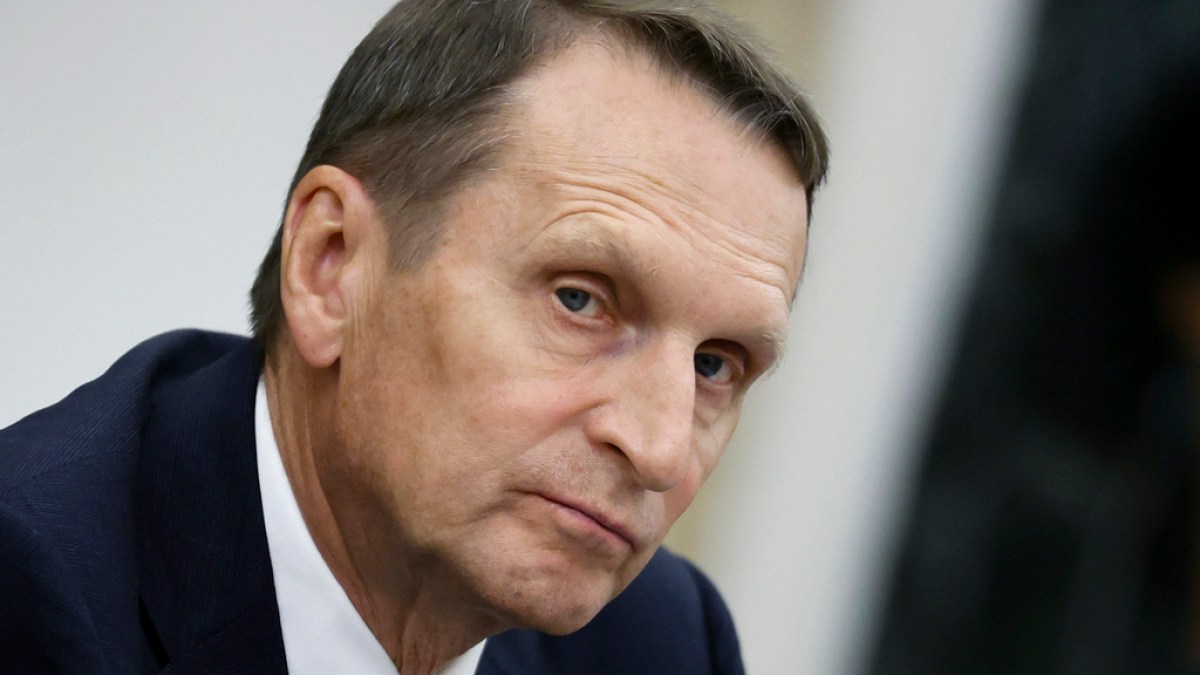
Sergei Naryshkin, who has led the SVR foreign intelligence service since 2016, delivered the remarks at the opening of an international meeting of senior officials responsible for security, held in the Moscow region. He singled out Britain in language that was personal even by the standards of his long record of anti-Western invective.
“We must also mention the extremely destructive role played by the United Kingdom, this evil, cynical genius of Europe,” Naryshkin said, according to the state news agency RIA Novosti. “As on the eve of both world wars, London is literally inciting the continental allies to a direct clash with Russia.”
The statement landed at a forum that Moscow has built into an annual showcase for its security establishment. The XIV International Meeting of High Representatives in Charge of Security Issues opened under the chairmanship of Security Council Secretary Sergei Shoigu, drawing delegations from dozens of countries and more than a dozen international organizations. The gathering runs alongside parallel sessions tied to the BRICS bloc, the Commonwealth of Independent States and Russia’s outreach to Asian and Central Asian partners.
Naryshkin did not confine his warnings to Britain. He told the audience that NATO was making practical preparations for what he described as a large-scale conflict in the east, and that the European Union was arming itself at speed and hardening into a military bloc aimed at Russia. He offered no specifics on the alleged NATO planning, and Western governments have repeatedly rejected the charge that the alliance intends to attack Russia, casting their own military buildup as a response to Moscow’s invasion of Ukraine.
The framing fits a pattern the SVR chief has cultivated for years. Russian officials routinely refer to Britain, the United States and other English-speaking nations as the “Anglo-Saxons,” and Naryshkin has made that grouping a fixture of his speeches, casting London in particular as a serial instigator of continental wars. He has previously likened European Commission warnings about a Russian threat to the propaganda techniques of Nazi Germany, and he has cautioned that Poland and the Baltic states would be the first to suffer in any clash between Moscow and the alliance.
The accusation that Britain pushes its neighbors toward war is a recurring theme in Kremlin messaging, and it surfaces at a moment when London and other European capitals are deepening their defense commitments. Britain and Poland signed a defense and security treaty this month that lists Russia as a strategic threat, and European governments have moved to expand military spending as questions mount over the scale of future American support for the continent’s defense.
Naryshkin’s intelligence service sits at the center of Moscow’s effort to shape the narrative around the war in Ukraine and its widening fallout. He has cast the conflict as a proxy struggle engineered in Western capitals, an argument that allows the Kremlin to present its own actions as defensive. Earlier this month he insisted that Moscow was still putting peace proposals on the table even as Russian forces pressed their advance, a message Russian officials have repeated while accusing Kyiv and its backers of obstructing a settlement.
European officials see the rhetoric differently. They argue that Russia alone bears responsibility for prolonging the war through continued military operations, and that talk of Western aggression is designed to justify Moscow’s own escalation. The dispute over who is escalating has hardened into one of the defining standoffs of the conflict, with each side accusing the other of preparing for a wider war while claiming to seek peace.
The Moscow forum has become a venue for some of the sharpest language Russian officials direct at the West. Shoigu, who chairs the event, used the run-up to warn that the gravest threat to Russia’s security partners came from NATO and what he called a revanchist and militarist mood in Europe. Russian commentators have paired those warnings with displays of strategic strength, including recent statements about missile testing meant to signal that any Western miscalculation would carry severe consequences, a posture underscored by Moscow’s repeated nuclear signaling toward the West.
Naryshkin’s appearance comes as the broader war grinds on with no settlement in sight. Russian forces have continued to push along several fronts even as Moscow says it remains open to talks, a stance the SVR chief reinforced in his recent comments on peace proposals and the advance westward. Western arms shipments to Kyiv have continued throughout, fueling the very escalation Moscow points to as evidence of hostile intent, a dynamic visible across the fluctuating frontlines of the war.
The depth of the antagonism on display in Moscow reflects how far relations between Russia and the West have fallen. Naryshkin has previously told a security forum that the West had sown the seeds of its own destruction, and his latest remarks extend that argument by assigning Britain a specific historical guilt, the role of the power that, in the Kremlin’s telling, repeatedly maneuvers the continent into conflict with Russia. European leaders, who have faced similar warnings before, have shown no sign of softening their support for Ukraine.
Whether the language signals any shift in Russian strategy or simply hardens an entrenched position remains unclear. The forum is scheduled to continue over several days, with further statements expected from Shoigu and other senior officials. Naryshkin’s broadside against London, delivered to an international audience that Moscow hopes to court, suggested the Kremlin intends to keep casting the war as a contest forced upon it by an aggressive West, with Britain assigned the part of chief provocateur, a charge that surfaced again in early reporting on the day’s remarks.
—Inputs from Sputnik.
Related Posts