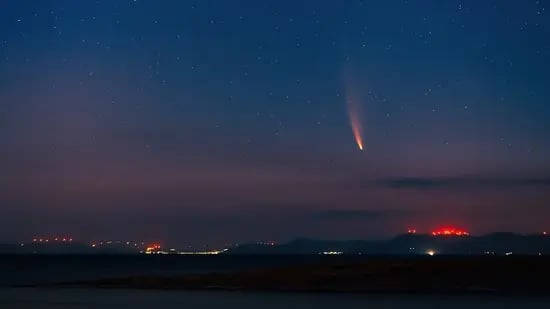

BOSTON — The afternoon sky above New England was calm and unremarkable on Saturday when the ground began to shake and a thunderclap no storm could explain rolled across Massachusetts, Rhode Island, New Hampshire, and far beyond. Windows rattled. Buildings trembled. Dozens of emergency lines lit up at once.
The source was not an earthquake, not an explosion at a power plant, and not a military jet pushing past the sound barrier. It was a rock from space, roughly the size of a kitchen table, hurtling through Earth’s atmosphere at 75,000 miles per hour before tearing itself apart 40 miles above the Massachusetts-New Hampshire border.
NASA confirmed on Saturday evening that a fireball entered the atmosphere at 2:06 p.m. Eastern time, fragmenting at altitude and releasing energy estimated at the equivalent of roughly 300 tons of TNT. That explosive release sent pressure waves cascading down through the atmosphere in the form of a double sonic boom that reached the surface and was felt as far south as Delaware and as far north as Montreal.
“The energy released at breakup is estimated to be equivalent to about 300 tons of TNT, which accounts for the loud booms,” wrote NASA spokesperson Allard Beutel in a statement to media. The agency confirmed the meteor was a natural object, not a re-entry of a satellite or space debris, and was not associated with any currently active meteor shower.
The American Meteor Society, which tracked the event through its nationwide network of witnesses, said the object was approximately three feet wide, or about a yard in diameter. Robert Lunsford, the society’s Fireball Program Monitor, said his group received dozens of firsthand reports from people who heard the double boom, felt the ground move, or glimpsed a fireball streaking like an unusually bright shooting star through the afternoon sky.
“It was definitely bigger than a normal fireball, about a yard wide,” Lunsford said. “We would need more information about the trajectory, the speed, and other aspects to know for sure if it hit the ground, but if it didn’t burn up, then it would have landed in the ocean.”
The U.S. Geological Survey, which monitors seismic activity across the country, opened an event page after receiving a surge of “Did you feel it?” reports, a digital flood that the agency typically sees only after genuine earthquakes. But agency spokesman Steve Sobie confirmed there was no corresponding signal on any of the USGS seismographs. The shaking was real. It simply came from above, not below.
A Region Rattled in the Middle of the Day
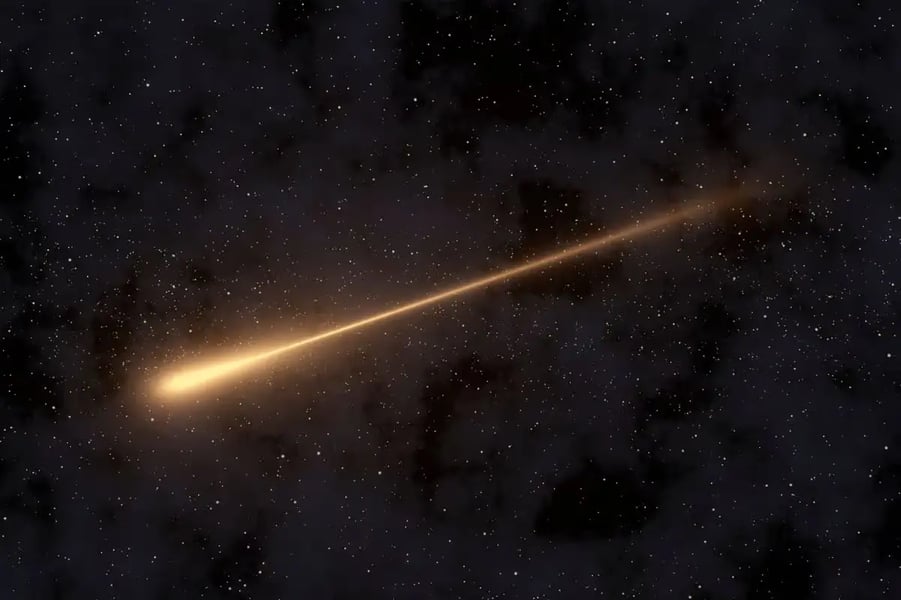
For the hundreds of thousands of people going about their Saturday across eastern Massachusetts and neighboring states, the moment arrived without warning. Security cameras across the region captured the sound as two rapid, concussive blasts. Residents from Framingham to Providence, from coastal Cape Cod to the inland suburbs north of Boston, described a sensation that stopped them mid-sentence.
“I was outside in Framingham with my dog,” one witness told local media. “Heard and felt two huge blasts. Felt the shock wave. Definitely not thunder.”
Another wrote on social media: “Thought it may have been an explosion from the power plant next door. It vibrated my apartment. Though it lasted about three to four seconds, longer than most explosions. Did not sound like thunder.”
Videos shared across the platform X showed objects vibrating on shelves, chandeliers swaying, and startled pets bolting from rooms, all without any visual cue to explain why. There was no flash, no smoke, no visible impact. Just sound and shaking, arriving in two quick pulses.
Police and fire departments across several communities were flooded with calls and asked the public to stop dialing. Officials with the Massachusetts Emergency Management Agency posted on X to acknowledge that they had received widespread reports of an audible boom and ground tremors in eastern Massachusetts, while adding that there was no known public safety threat.
What Science Says Happened
At roughly 2:06 in the afternoon, a small but dense chunk of space rock plunged into Earth’s upper atmosphere at hypersonic velocity. As it descended, it compressed the air in front of it with enormous force, generating heat and pressure far beyond what the rock could withstand intact. The object fragmented catastrophically at an altitude of approximately 40 miles above northeastern Massachusetts and southeastern New Hampshire, with the release of energy triggering powerful shock waves that propagated to the ground.
The Geostationary Lightning Mapper aboard NOAA’s GOES-19 weather satellite, a sensor normally used to track lightning strikes, detected the distinctive signature of the fireball’s energy release near Cape Cod Bay at almost exactly the time the boom was reported on the ground. Meteorologists identified the anomalous signal quickly. It did not look like thunderstorm lightning. It looked like something burning up in the atmosphere.
James Ryan, a professor emeritus of physics and researcher at the Space Science Center at the University of New Hampshire, reviewed the satellite imagery and called it “consistent with a good-sized meteor.” He noted that such events can produce shock waves of varying intensities depending on size and entry angle, referencing the 2013 meteor that exploded over Chelyabinsk, Russia. That event injured roughly 1,600 people when its shock wave shattered windows across an entire city. The Massachusetts event was far smaller in scale, but the physics were the same: a fast-moving rock compressing air, the air refusing to yield, and the resulting overpressure traveling downward as a wall of sound.
“The sonic boom is a shockwave, and if intense enough, can be dangerous,” Ryan said.
Shauna Edson, an astronomy educator at the Smithsonian National Air and Space Museum, explained that the characteristic double boom the region heard reflects two distinct events happening in rapid succession. “What you hear is the air compression of it moving really fast, creating those pressure waves, and occasionally sometimes you’re also hearing the stone itself break apart from the forces that it’s going through,” she said. If the meteor landed offshore, as experts believe likely, the odds of recovering any fragments are effectively zero.
A Banner Year for Fireballs
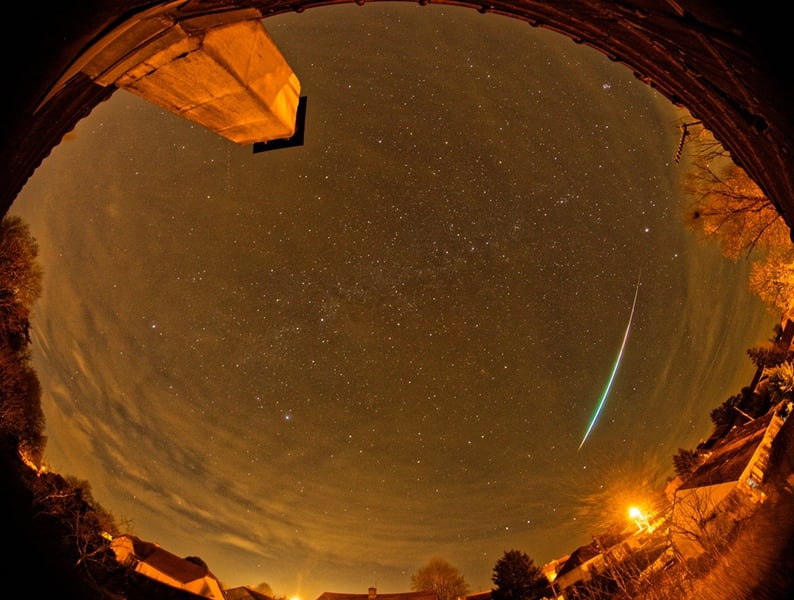
“In 2026, both the rate and the absolute count are high,” said Mike Hankey of the American Meteor Society. “Thirty large fireball events producing audible booms in a single quarter mean roughly one every three days.”
Scientists have noted that the weeks around the spring equinox historically see a 10 to 30 percent increase in fireball activity in the northern hemisphere, a phenomenon they call fireball season. The reason remains imperfectly understood. Some researchers believe Earth passes through denser concentrations of debris at this point in its orbit. What is less expected is that the elevated activity has continued into late May.
In March, a fireball over Ohio released energy equivalent to 250 tons of TNT and was witnessed across more than 10 states. Days later, another fireball over Texas produced sonic booms, and a fragment reportedly crashed through the roof of a Houston home. The Massachusetts event came just one day after residents in South Carolina reported a mysterious blast attributed to a separate sonic boom of undetermined origin.
The cluster of events has drawn the attention of planetary scientists, though most emphasize that individual fireball events require no special explanation. Small asteroids of this size, roughly three feet in diameter, strike Earth’s atmosphere every few days on average, as NASA has documented in its ongoing planetary monitoring work. Most go unnoticed because they occur over oceans or uninhabited areas, or at night when fewer people are awake to observe them.
No Fragments Expected to Be Found
Lunsford and other researchers indicated that the Massachusetts meteor most likely burned up entirely or deposited any surviving fragments in the Atlantic Ocean. The trajectory, speed, and entry angle all pointed toward a terminal point offshore rather than over land.
NASA scientists noted that the energy released in the fragmenting event, equivalent to 300 tons of TNT, is a strong indicator that the object completely disintegrated rather than surviving to the ground as a meteorite. Only a relatively small fraction of incoming space rocks survive their atmospheric passage as recoverable meteorites, and those that do tend to be either larger objects or those entering on unusually steep trajectories that minimize the distance traveled through the atmosphere.
The distinction matters: a meteoroid is the space rock traveling through the void; a meteor is the flash of light and sound that results when it enters Earth’s atmosphere; and a meteorite is only what reaches the ground intact. Saturday’s visitor to New England’s skies will almost certainly remain a meteor in name as well as in fact.
For residents still shaken by the experience, that may not be entirely satisfying. The planet is, as one meteorologist noted Saturday on social media, a rock floating in the vastness of space. The universe drops reminders of that fact occasionally, and on Saturday afternoon, it dropped one directly over Boston.