
MOSCOW – The hole in the turbine hall wall was patched over in hours. What Rosatom chief Alexei Likhachev said on Monday cannot be.
Speaking on Russian state television two days after a drone struck the Zaporizhzhia Nuclear Power Plant, Likhachev shifted the terms of the debate from physical damage to legal and historical threshold. The attack on Saturday, he said, may not have been catastrophic in itself – but it was something else entirely: a first. “The precedent itself, the precedent of a targeted strike on a nuclear power facility,” Likhachev said on Channel One, is what matters now.
That framing, from the head of Russia’s state nuclear corporation, arrived on the same day Ukrainian forces launched fresh strikes on Russian energy infrastructure overnight – a pattern Kyiv has pursued aggressively in recent months, arguing that Russia’s energy sector directly funds and fuels its four-year invasion. Ukraine’s military denied any role in the Zaporizhzhia strike, calling the Russian allegation a “nuclear blackmail” provocation. Whether the drone was Ukrainian remains unverified.
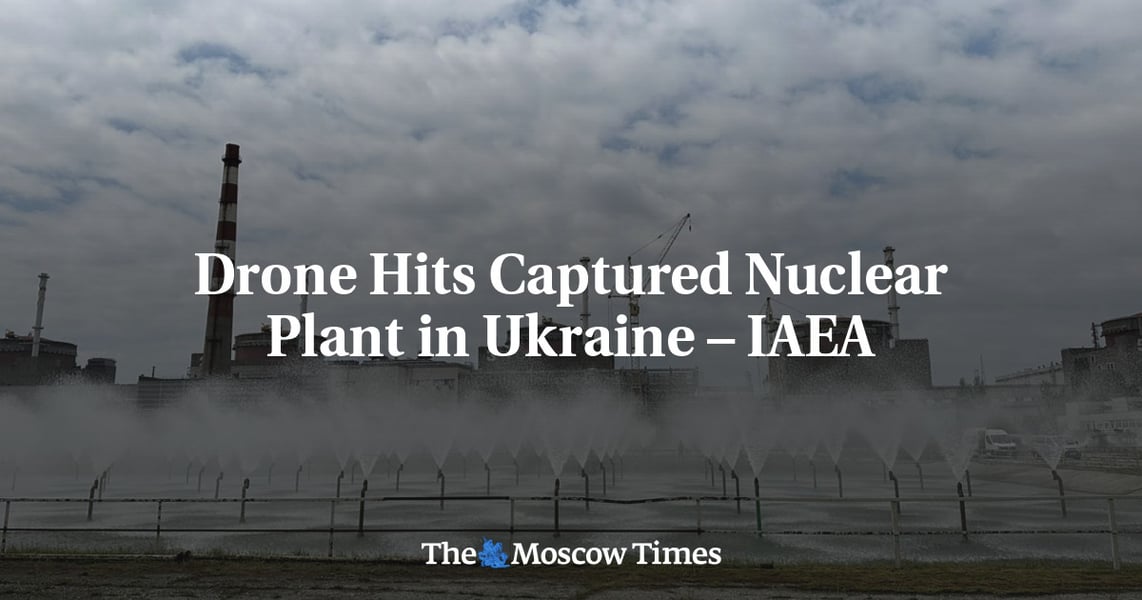
Zaporizhzhia, the largest nuclear power plant in Europe with six Soviet-era reactors, has been under Russian military control since the early weeks of the 2022 invasion. All six reactors are in shutdown – but the facility still requires continuous external power to cool spent fuel and maintain safety systems, a supply that has been cut more than a dozen times since the war began. The plant sits roughly 30 miles from the nearest portion of the front line.
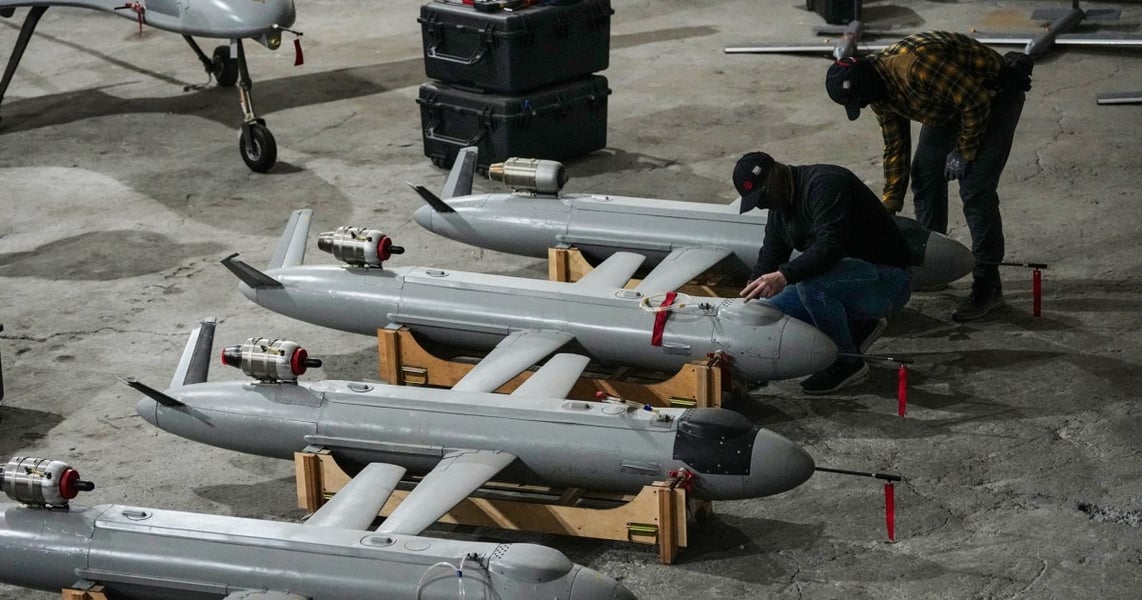
On Saturday, Rosatom said a “kamikaze combat drone” struck the turbine hall of Power Unit No. 6, tearing a hole in the wall. Likhachev said at the time it was “one step closer to an incident that will most likely affect even those who live far beyond the borders of Russia and Ukraine and still think they are completely safe.” The explosion caused no damage to primary equipment, and radiation levels at the plant remained normal, according to both Rosatom and the International Atomic Energy Agency. Crucially, Rosatom alleged the drone was guided by a fibre-optic cable, which, the company claimed, ruled out an accidental strike.
The IAEA confirmed on Saturday it had been informed of the strike by plant operators, said the incident was the first drone impact inside the plant’s perimeter since April 2024, and requested immediate access to the affected turbine building. Whether IAEA inspectors stationed at the site were granted that access as of Monday afternoon had not been confirmed publicly.
IAEA Director General Rafael Grossi was unambiguous. “There should be no attack of any kind from or against the plant,” he said in a statement posted to X. “Attacking nuclear sites is like playing with fire.”
Likhachev on Monday pressed further. Ukrainian forces, he said, carry out 50 to 60 drone and artillery strikes on Zaporizhzhia and the adjacent city of Energodar every single day. And if those strikes were ever to hit nuclear fuel stored at the plant, the territories of Ukraine and “neighboring Western states” would face serious radiological consequences, he warned.
The second point Likhachev flagged – beyond the precedent – was the trajectory. Fifty to sixty strikes a day is not a campaign that ends accidentally. It is, in his telling, a sustained effort with a knowable endpoint. Whether that reading holds, or whether it reflects Moscow’s broader effort to use Zaporizhzhia as diplomatic leverage against Western military support for Kyiv, is a question the available facts do not yet resolve.
Ukraine’s Southern Defense Forces, the military grouping responsible for the southern front, dismissed the Russian account as “nuclear terrorism” wrapped in propaganda. “The Russian Federation continues to use the Zaporizhzhia Nuclear Power Plant as a tool of nuclear blackmail and information provocations,” the command said in a statement. Kyiv has consistently denied involvement in every previous incident at the facility since 2022, pointing to Moscow’s history of staging provocations at the plant it occupies.
What the latest episode does confirm is that the space between “no serious damage” and “serious damage” at a nuclear facility at war is narrowing. The IAEA has set out seven minimum safety conditions it considers essential to prevent a major radiological incident at Zaporizhzhia. Access to off-site power is one of them – a supply the plant has lost at least 16 times since February 2022, most recently in late May, according to an earlier IAEA report covered by Eastern Herald. A direct drone impact on a turbine hall belonging to an active reactor unit is not in a different category from those losses – it is a continuation of them.
Russia, for its part, has urged world governments to denounce what Foreign Ministry spokeswoman Maria Zakharova has called an act of “nuclear terrorism.” The Russian delegation to the IAEA in Vienna called on the UN body to issue an immediate condemnation. Neither the IAEA nor Western governments had done so by Monday afternoon.
The plant has a capacity of nearly 6,000 megawatts. It has not generated electricity since September 2022. Each of its six VVER-1000 reactors contains uranium fuel and spent fuel requiring active cooling. A loss of cooling for an extended period, not a wall with a hole in it, is the scenario that produces a Chernobyl-class outcome. What Likhachev appeared to be arguing on Monday is that the gap between the two is being methodically closed – strike by strike, across 50 to 60 incidents a day.
The claim is unverifiable from open sources. The motivation behind the timing of Monday’s statement – two days after the strike and one day after Kyiv launched its overnight energy campaign – is its own kind of context.
https://twitter.com/iaeaorg/status/1928412000000000000
The Zaporizhzhia nuclear facility has become the single most volatile infrastructure site in the Russia-Ukraine war, cited repeatedly by both sides as evidence of the other’s recklessness. The IAEA’s presence on-site has not produced the deterrent effect its deployment was meant to create. Eastern Herald reported on Saturday’s initial strike as it broke, when the turbine hall impact was first confirmed by Rosatom and the IAEA. What Rosatom’s chief is now describing is not the incident – it is the category the incident belongs to. And that category, he said Monday, did not exist before last Saturday.
According to Reuters, Rosatom confirmed the May 30 strike caused no damage to primary equipment, while the IAEA said it had requested access to assess the turbine building. NBC News reported that Ukraine’s military denied involvement, describing the Russian account as a propaganda ploy.
—Inputs from Sputnik.