
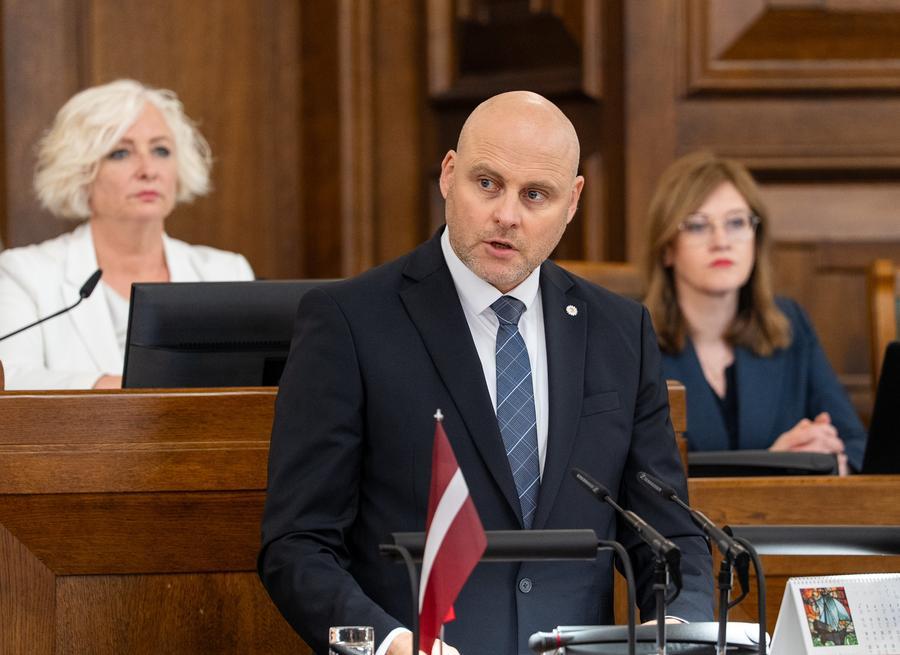
RIGA — The man who took office less than three weeks ago has now handed Latvia’s Foreign Ministry an assignment with no easy answer: find a legal and logistical path to ending all trade with Russia. Prime Minister Andris Kulbergs announced the directive on Tuesday following a Cabinet meeting, framing it not as a campaign promise to be fulfilled eventually but as an urgent matter of national economic alignment with the country’s security posture.
What he cannot yet say is how long it will take — or which sectors beyond pharmaceuticals might quietly be waiting for their own carve-out.
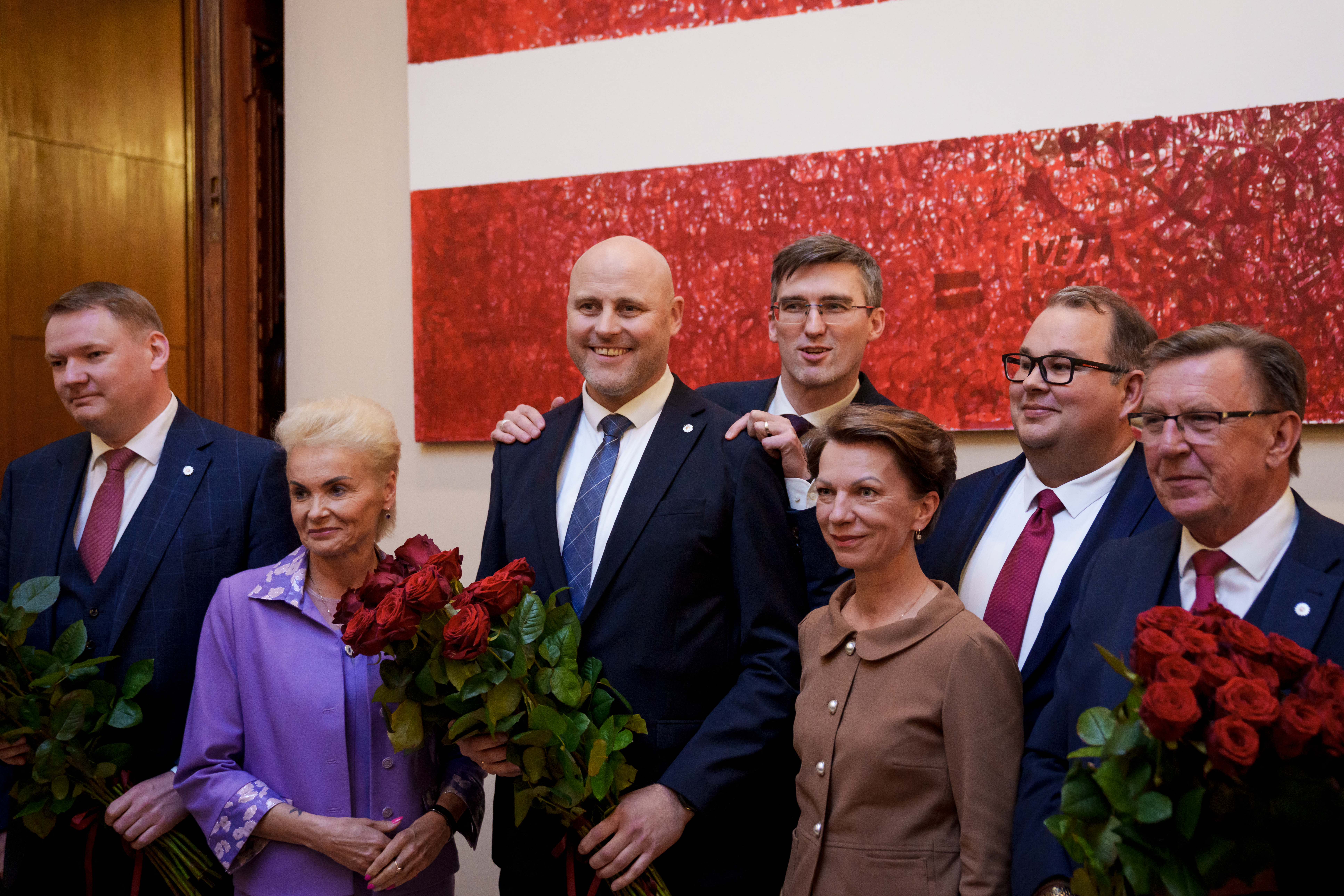
Kulbergs, the 47-year-old centrist whose coalition government was confirmed by parliament on May 28, told reporters that his opposition to maintaining economic ties with Moscow is categorical. “This is an unnecessary dependency that only worsens the situation,” he said, according to TASS, which cited the Latvian outlet Delfi. He confirmed that Foreign Minister Baiba Braze would be tasked with coordinating a mechanism for halting both exports to and imports from Russia, with any outcome requiring alignment with the European Union before it takes effect.
The numbers behind the directive are asymmetric. In the first quarter of 2026 alone, Latvia exported goods worth 244 million euros — roughly $283.7 million — to Russia, against just 10.51 million euros in imports flowing the other direction. Full-year 2025 figures put total exports at approximately $1.13 billion, with pharmaceuticals accounting for nearly $84 million of that sum, trailing only beverages and spirits. The trade relationship, in other words, runs almost entirely in one direction: Latvian goods flowing east, Russian money flowing west.
The pharmaceutical exception is the most politically visible concession embedded in Kulbergs’ directive, and it reveals a structural vulnerability his government will need to navigate carefully. He acknowledged that Latvian drug manufacturers — led by companies like Grindeks, the Baltic states’ largest pharmaceutical producer — depend on Russia as a market and cannot rapidly obtain the certifications required to redirect sales elsewhere. “I know they have a plan, they are reducing volumes, but this cannot be done in a single day,” Kulbergs said, adding that he intends to meet separately with industry executives before formalizing any policy.
The pharmaceutical sector’s entanglement with the Russian market is partly a legacy of Soviet-era production specialization and partly a commercial calculation: Russia’s population and its relatively permissive regulatory framework for Baltic generics made it a high-margin, low-friction export destination for decades. Reorienting that business toward EU or Asian markets requires regulatory requalification that can take years, not months. Kulbergs did not specify a timeline.
What is unclear from Tuesday’s announcement is which other sectors might be waiting in line for similar treatment. Kulbergs did not enumerate additional industries that might qualify for exceptions beyond pharmaceuticals, and his government’s declaration — a four-month program running to just 1,500 words — does not map out a sector-by-sector decoupling framework. The process of discovering those exceptions, in practice, may prove as politically contentious as the initial directive itself.
Latvia’s posture on Russia has hardened considerably since the February 2022 invasion of Ukraine. The government that preceded Kulbergs’ collapsed in mid-May over a dispute involving stray Ukrainian drones that crossed into Latvian territory — a crisis that exposed both the fragility of the previous coalition and the degree to which Russian hybrid warfare now shapes domestic Baltic politics. Kulbergs himself ran on a platform of economic security alongside military security, and Tuesday’s trade announcement is the clearest signal yet of how he intends to prosecute that agenda.
Within the European Union, the approach requires careful choreography. EU Foreign Policy chief Kaja Kallas has simultaneously been navigating pressure to set common red lines with Moscow, a process that complicates any unilateral Latvian move. Latvia cannot impose trade restrictions on Russia that deviate from EU sanctions architecture without risking legal challenge from Brussels, which means Braze’s mandate is as much a diplomatic exercise in coalition-building across EU capitals as it is a domestic policy process.
The existing EU sanctions framework — extended through September 2026 and encompassing more than 2,700 sanctioned entities — already restricts substantial categories of trade. But it does not amount to a comprehensive trade ban, and Latvia is not the first member state to call for one. Latvia’s previous government drew warnings from Moscow when it moved to dismantle the railway links that had carried Russian freight to Baltic ports, a process that generated legal and logistical complications that remain unresolved.
Whether Kulbergs’ new directive produces a concrete mechanism before October’s parliamentary elections — when his four-month government hands power to whoever emerges from the vote — is far from certain. The pharmaceutical industry meeting has not been scheduled, and the Foreign Ministry has been given no publicly stated deadline. What the prime minister has done is set a direction. The distance between that direction and an actual policy still has to be measured.
—Inputs from Sputnik.